

You built a resume that finally looks like you, and someone warned you the ATS will shred it on sight.
That warning is everywhere because a wave of AI-spun sites with no quality control sell optimization hacks and fear of the hiring process. Most of that content never explains how parsing works, and when it tries, the description is years out of date.
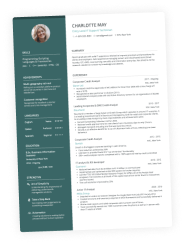
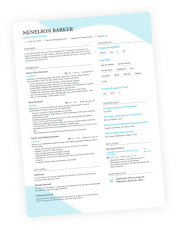
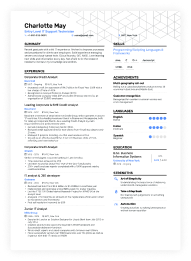
The direct answer is that yes, Enhancv is ATS-friendly. We engineered our two-column templates to export as clean, selectable text that applicant tracking systems read correctly from top to bottom. Columns don't bleed into each other, and your experience, skills, and education read in the right order no matter where they sit on the page.
Here's what "ATS-friendly" actually means, what our own testing found, and how to prove it on your own file.

Key takeaways
- In our testing, Enhancv resumes scored the highest average ATS score of the major resume builders.
- "ATS-friendly" means the software reads your resume correctly. A human still decides. Parsing isn't rejection.
- On a well-built template, columns, fonts, color, and a photo don't break parsing.
- 23 of 25 recruiters we interviewed said their systems don't auto-reject resumes.
- Confirm any resume with Enhancv's ATS check before you apply.
- There's a template built for finance and law as much as for design.
Enhancv is ATS-friendly: here's what "ATS-friendly" really means
Two readers stand between you and the interview. The ATS software parses your resume first, then a person decides.
An ATS reads your resume, pulls the details into fields, and stores them so a recruiter can search and sort. That's parsing, and parsing is neither ranking nor rejection.
"ATS-friendly" simply means the parser reads you correctly so the recruiter sees the real you, not a word salad version of your resume. Plenty of smaller companies and startups still review every resume by hand.
What the data actually says
We ran resumes from the major builders through ATS scoring, then went to the people who actually do the hiring.

Highest ATS score of the major builders
Recruiters on auto-rejection
Their verdict was straightforward: ATS systems don't reject resumes, people do. What feels like a robot rejection is usually human overload, a recruiter with thousands of applications and minutes to scan each one.
Knockout questions are the other culprit. Answer one wrong and the rejection is close to automatic, and candidates later blame their resume format for it.
There's no AI that automatically rejects anybody. There's always a human who has to at least press a button.
Elias Cobb, staffing-firm director and author, in AP's reporting on AI-driven mass applications

Why recruiters lean on the ATS
Mass applications. When anyone can fire off hundreds of identical resumes in an afternoon, recruiters drown in spam. The ATS exists to help them dig out, not to keep you out. The actual villain is the flood of AI-generated resumes, not the system, which can read them just fine. They rarely survive the human review later.
Think twice before handing your job search to a service that promises to auto-apply you into hundreds of roles. Your resume gets stripped down to an AI-generated approximation of itself. It echoes the job description but can't supply the real achievements behind it, and fabrication is a well-documented risk with that approach.
A resume should do the opposite: clear the software and represent you honestly. Tools like Enhancv give you full control over your application, so what lands in front of a recruiter is genuinely you, not a mass-produced guess.
Why every Enhancv template is ATS-friendly
All of our templates are ATS-friendly, two-column ones included. Four things make that a true statement:
- Designed with designers and typographers. The resume's layout stays clean and machine-readable while still looking like a resume a recruiter calls back.
- Shaped with input from recruiters. The sections hiring teams expect are built in: key achievements, skills that map to the job description, and room to show culture fit. The recruiter-approved templates work for the human reader as well as the parser.
- Tested against real ATS parsers. We check that the fields that matter—contact details, experience, and skills—come through correctly, on the same state-of-the-art parsers Fortune 500 companies use.
- Backed by our own ATS research. The guidance here comes from data we gathered ourselves, not guesswork or regurgitated advice online. That's the part a thin "alternatives" page or a random AI-generated Reddit post can't fake.

Pro tip
Copy-paste one of Enhancv's two-column templates into a plain-text editor like Notepad. You'll get a clean, top-to-bottom, single-column read. That's the PDF's underlying structure doing its job, so a text editor, and an ATS, reads it in the right order. Try the same with a two-column file cobbled together from text boxes in a word processor and watch the order fall apart.
Here's the design-vs-ATS fear and the lazy version of it. You'll read it on a hundred near-identical posts and lazy YouTube videos:
"An ATS reads left to right, top to bottom, so a two-column resume gets scrambled into nonsense."
There's a real point buried in there, so let's say it plainly. While a resume built with literal tables, text boxes, or columns slapped together in a tool that was never made for parsing can genuinely confuse a parser, the leap from "a badly-built file can break" to "all two columns are bad" is where the advice goes wrong.
The variable is how the file is built, not the column count. Reading order is what matters, and a well-built template controls it so the parser reads top to bottom in the right order. That's why newer systems handle two columns without trouble when the file is built right and why a sloppy two-column file can still fail. The fix was always to use a template built to parse, not to avoid columns.
Two columns vs one, tested
What matters is the text structure underneath.
Built right, a two-column resume parses as cleanly as a plain one. I tell people the column count was never the problem. The problem is a layout where the text reads out of order, or contact details buried in a header the parser skips. Enhancv's templates are built so the reading order stays intact, which is why design and ATS-safety stop being a choice you have to make.
Gabriela Manova, CPRW
How to check your own resume
Test it yourself in two minutes. Paste your PDF into a plain-text editor. If it reads top to bottom in the right order with nothing missing, an ATS reads it the same way. That one trick tells you more than most "ATS advice" ever will. Any of Enhancv's two-column templates work the same way.
For the fast version, Enhancv's resume checker confirms your resume parses, scores it, and tells you exactly what to fix instead of pretending to reject you.
Pro tip
Is your resume good enough?
Drop your resume here or choose a file. PDF & DOCX only. Max 2MB file size.
One thing on scores: a number like 70% isn't a pass-fail grade. It's a guide that points at what to improve, usually content and keyword alignment, not a verdict on whether you'll get seen.
Match the job, don't stuff keywords
The fastest way to score better is the honest one: align your resume with the job description so both the ATS and the recruiter see what they're looking for. Keyword stuffing reads as spam to the human who decides.
Enhancv's resume tailoring matches your resume to a specific posting and suggests the skills, verbs, and phrasing to add across every section, not just the summary.
The right template for your industry
ATS-friendly doesn't mean one boring template for everyone.
For finance, law, and government, Enhancv's restrained Single Column and Ivy League templates fit the conservative read those fields expect. For consultants, analysts, and tech, the Double Column template shows skills and experience side by side. For marketing and design, the bolder layouts do the talking.
You pick the match for the role, and the wording underneath does the rest. The goal is the same in every field: the reviewer sees your strongest points fast, in the few seconds each resume gets.
The questions people actually ask
The same handful of ATS worries come up in every comment section, so here are the straight answers.
Are two-column resumes ATS-friendly?
On a well-built template, yes, and newer ATS handle two columns without issue. Our testing found Enhancv's two-column layouts parsed as well or better than single-column. The "columns get scrambled" warning is recycled advice that fits files thrown together in tools that weren't built for parsing, not a properly built template. We break the whole question down in our guide to whether two-column resumes are ATS-friendly.
Can an ATS read a PDF?
Yes. Most modern ATS read PDFs fine, as long as the text is selectable rather than a flat image. Enhancv's PDF export is text-based by design. If a job posting asks for a specific format, follow the posting.
Do custom sections like "Strengths" or "Passions" break it?
No. They sit alongside the standard sections, and the standard headings, "Experience," "Education," "Skills," are what the parser maps to fields.
Does a designed, colored resume get auto-rejected?
No. Design isn't a rejection trigger. A recruiter still opens and reads what the parser pulled.
How an ATS actually works, in 30 seconds
Four steps happen between your click and the recruiter's screen.
From submit to shortlist
- Parse. Your resume goes in and the system pulls the details into fields: contact, experience, skills, education.
- Store. Those fields land in a searchable database, alongside a copy of your original PDF, kept exactly as you submitted it.
- Search. A busy recruiter filters by keywords, skills, and experience, then reads the ones that match.
- Read. A diligent one clicks straight into your profile and sees the whole resume, rendered just as you designed it.
That's the whole job. It sorts and surfaces. The myth that it silently trashes a good resume for using properly formatted two columns is exactly that, a myth.
Once you know your file parses, the next step is building the whole thing to match. Our full guide walks through it: How to Create an ATS-Friendly Resume, step by step.
Your resume has to clear the parser and earn the recruiter's ten seconds. Built right, it does both, and you don't have to trade away a resume that actually looks like you to get there.
Make one that's truly you.