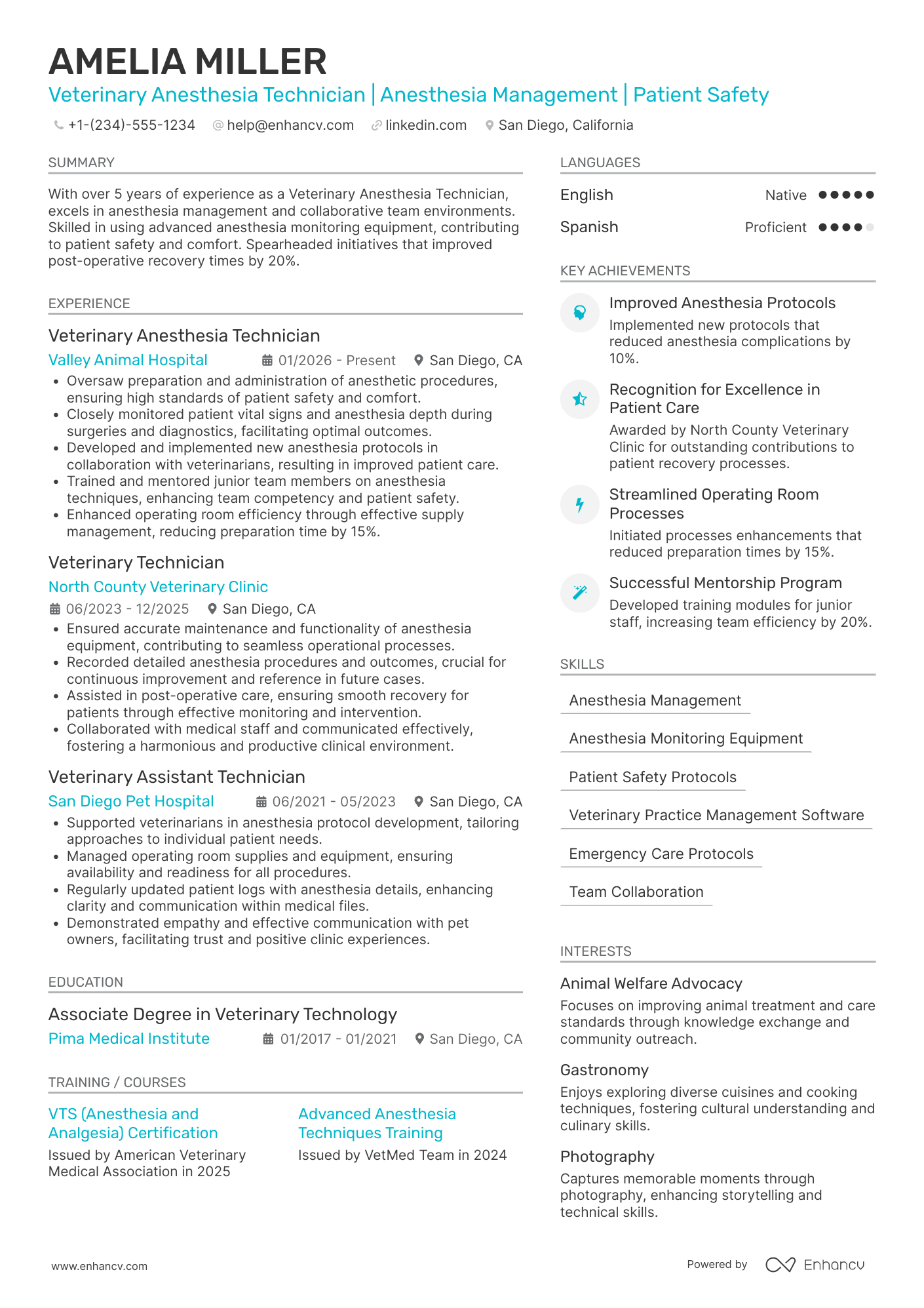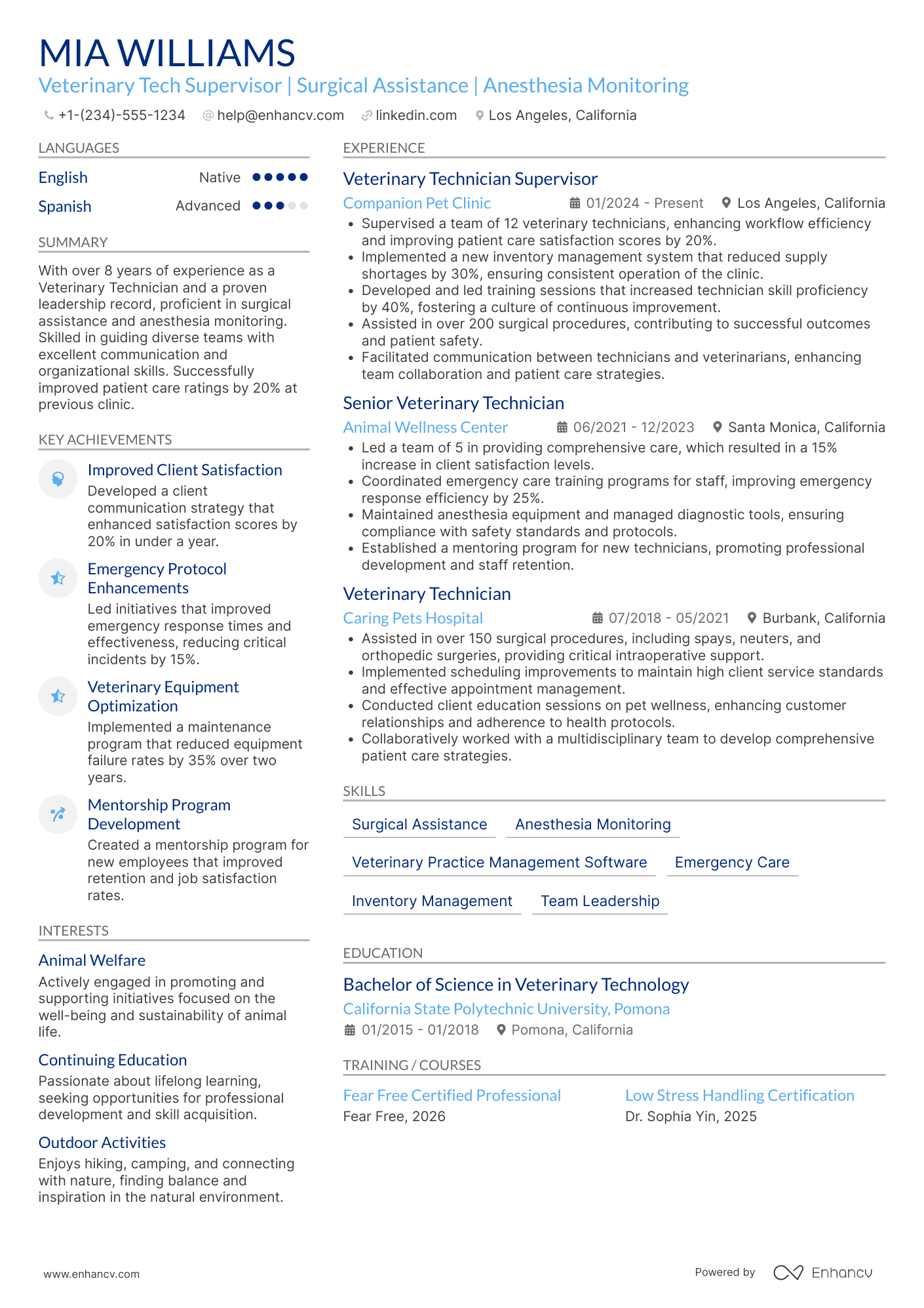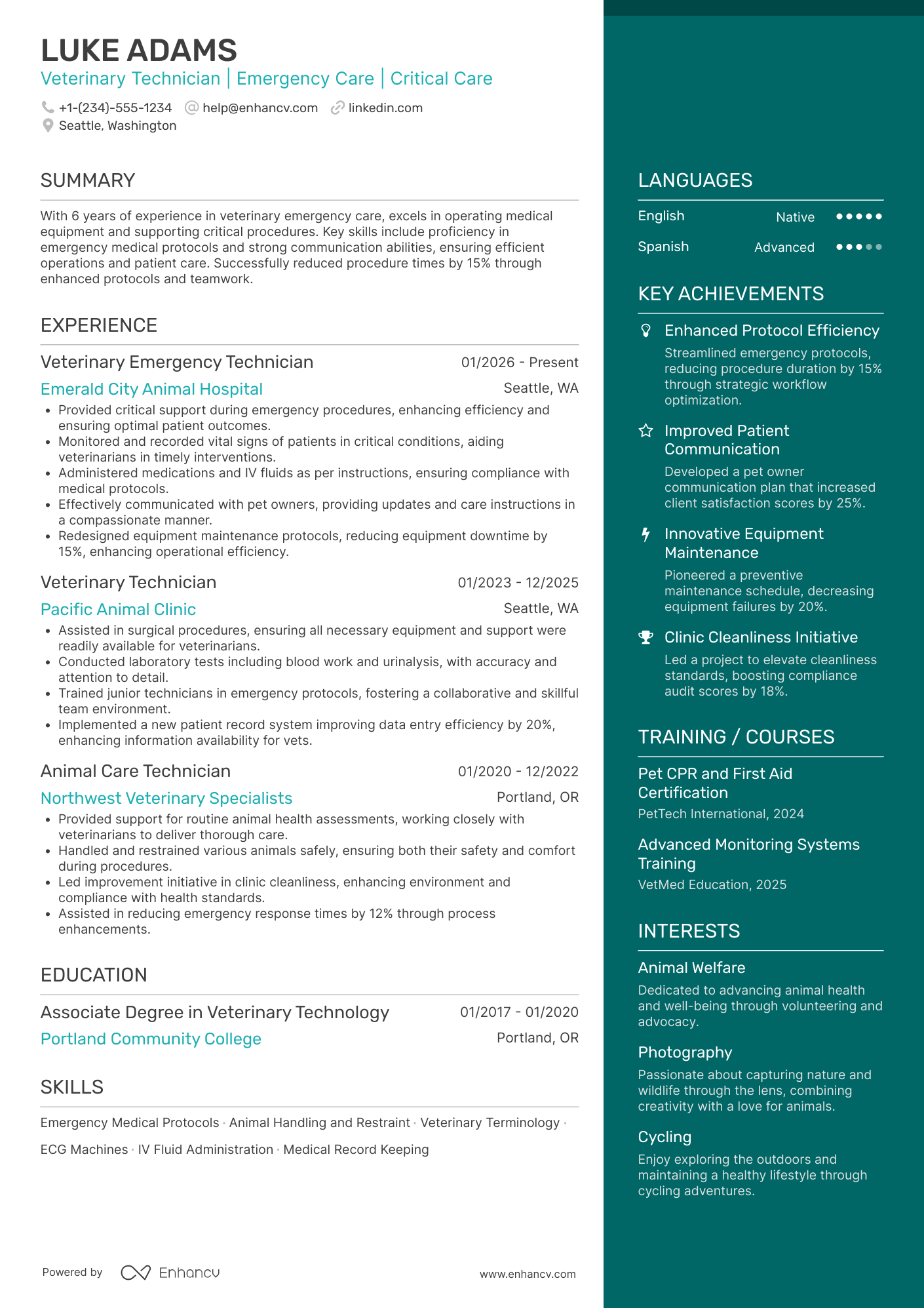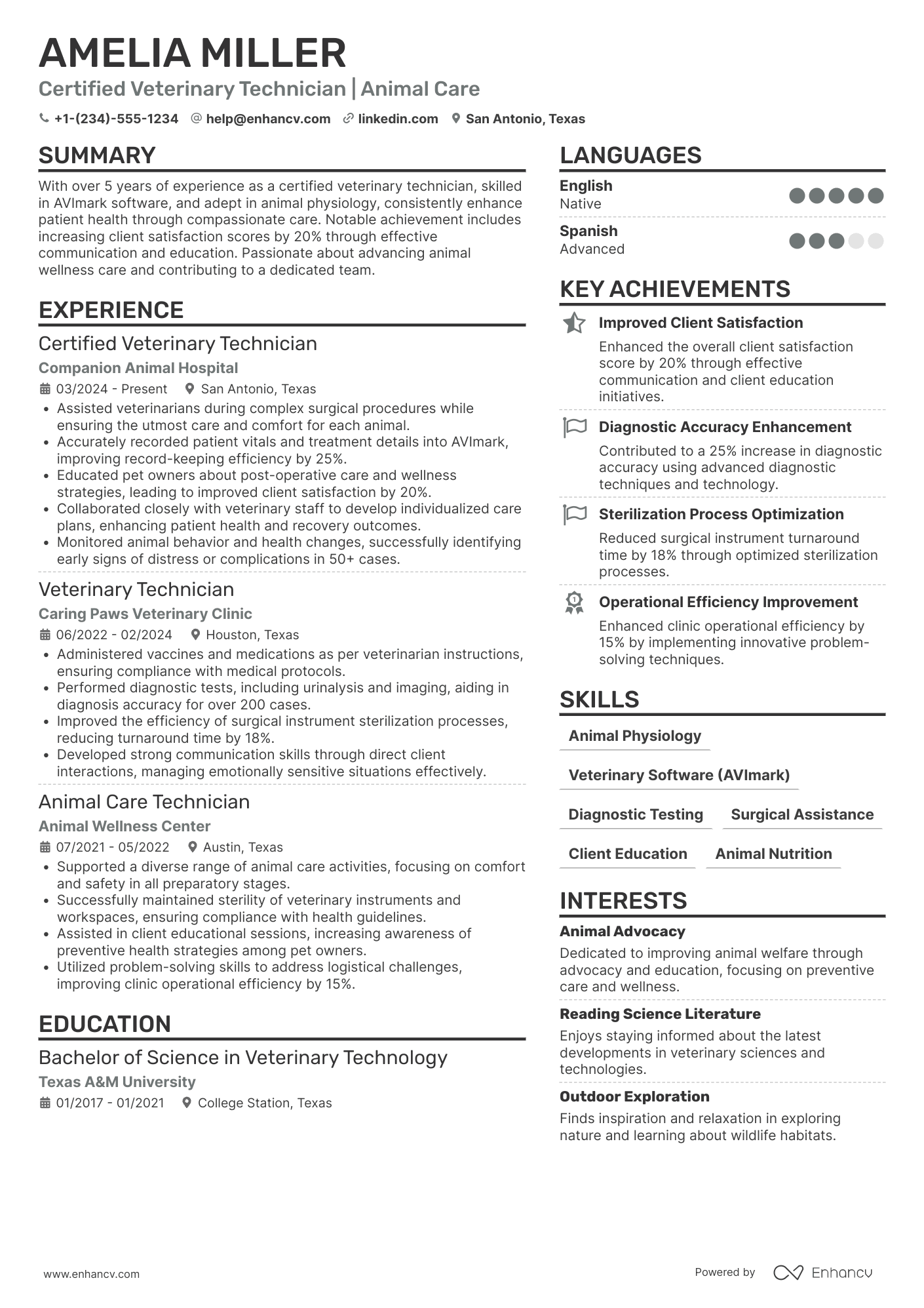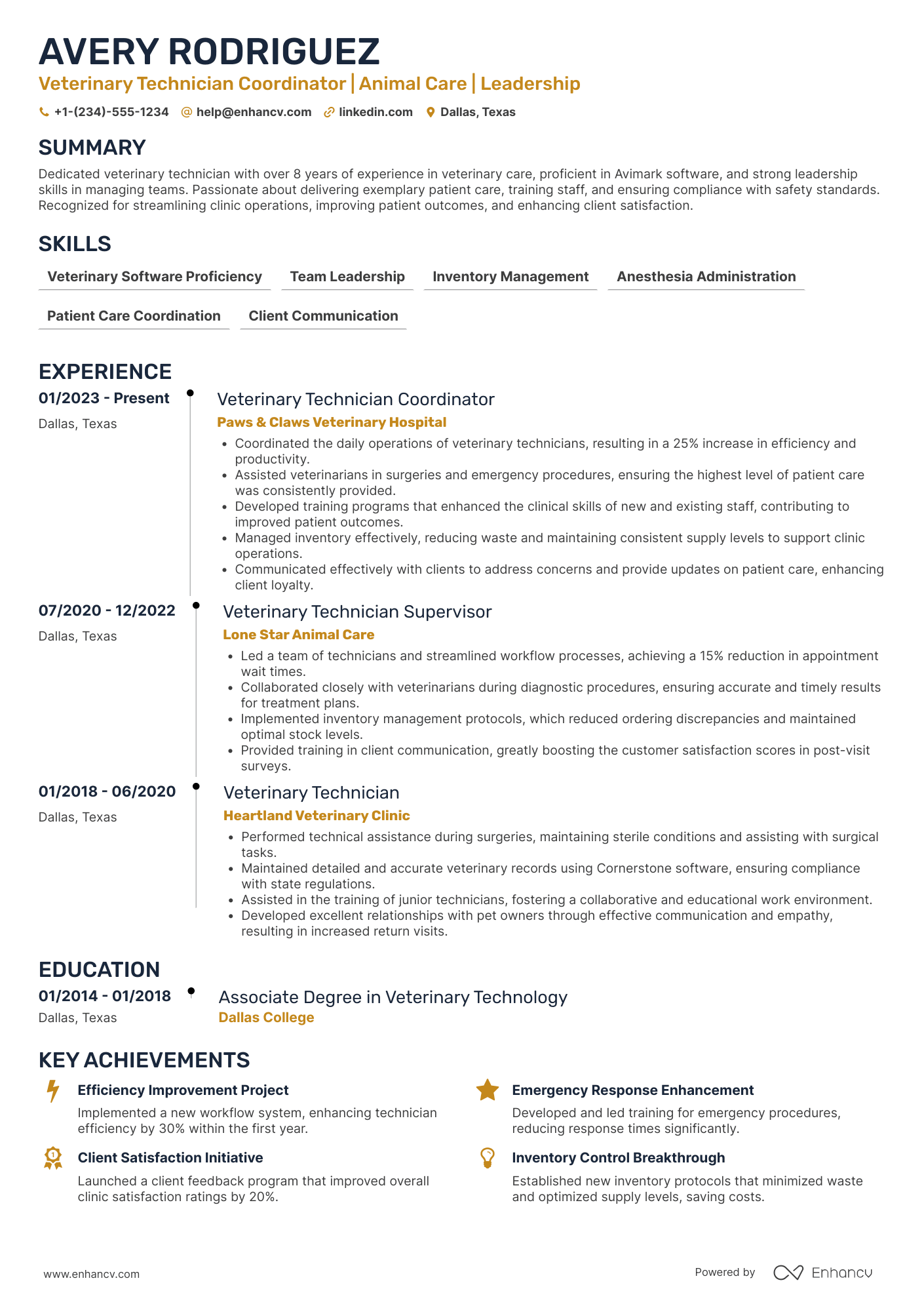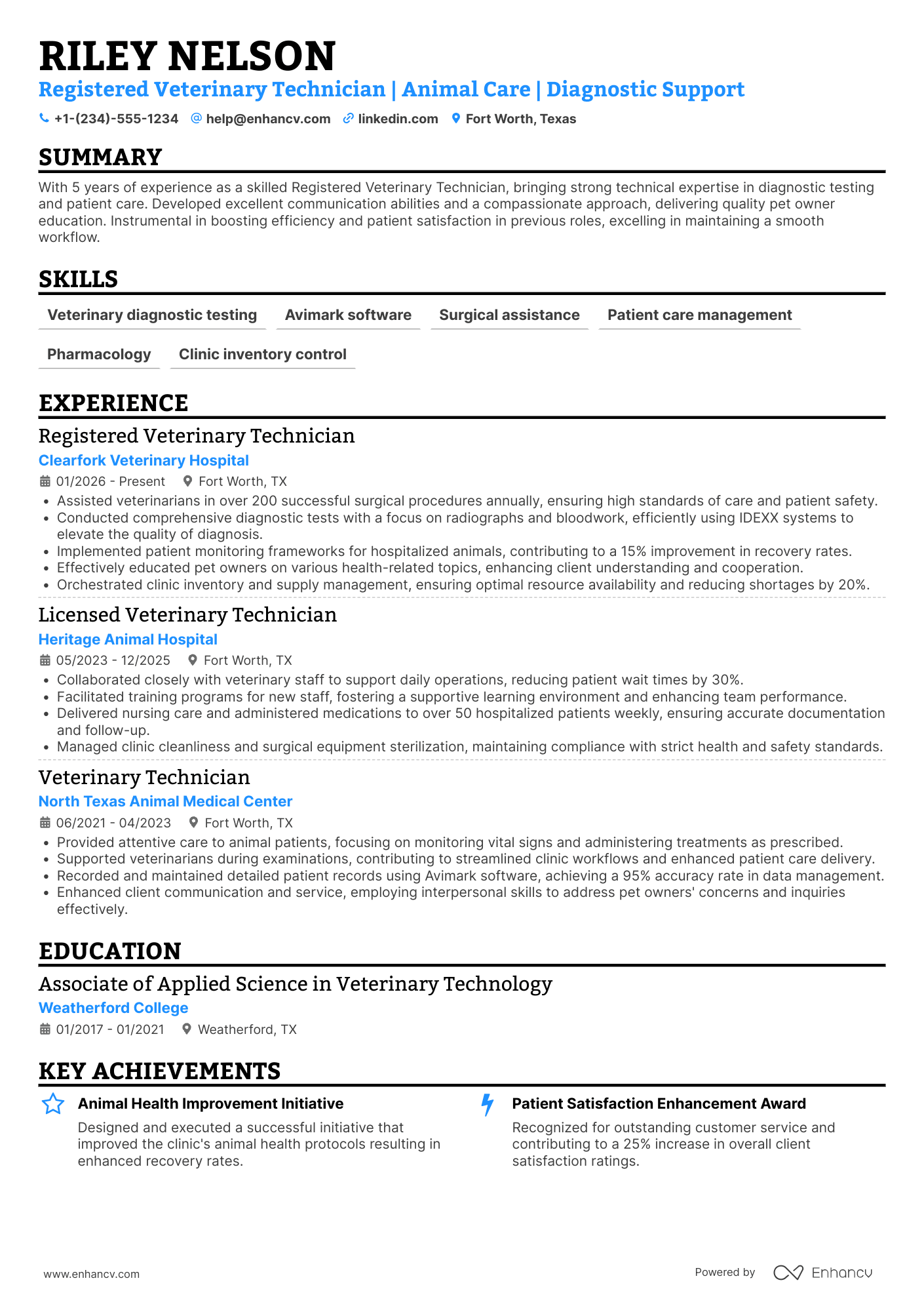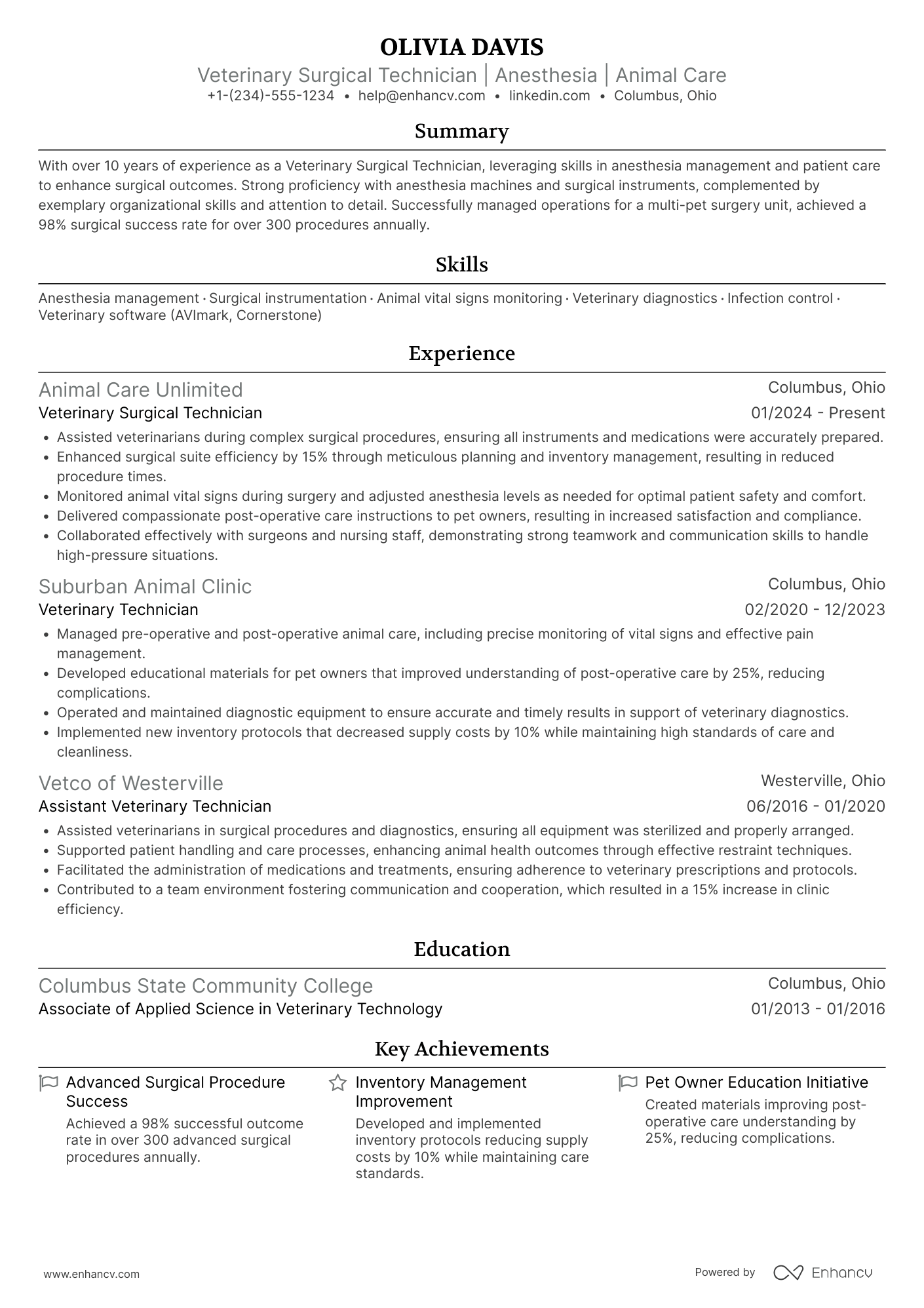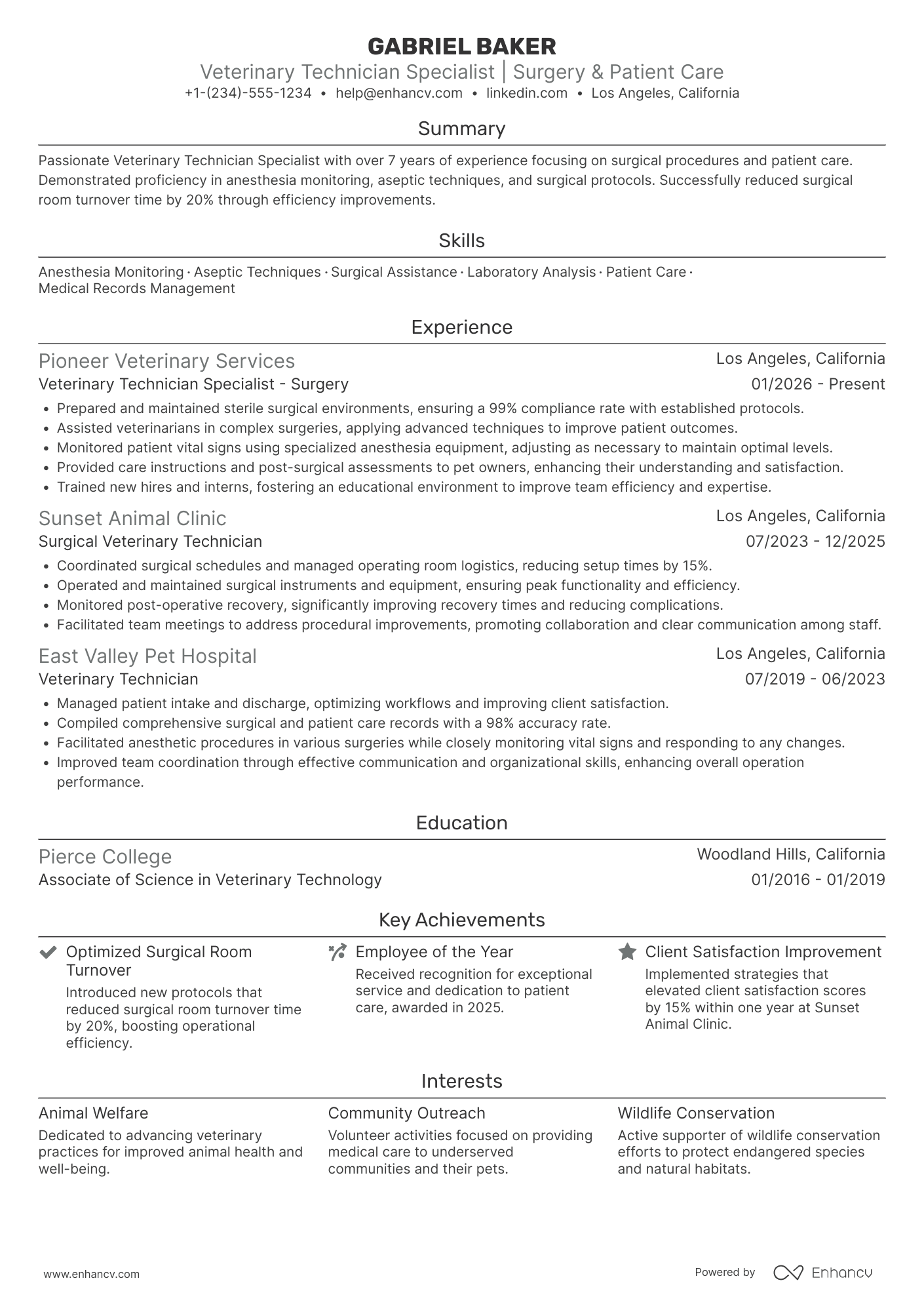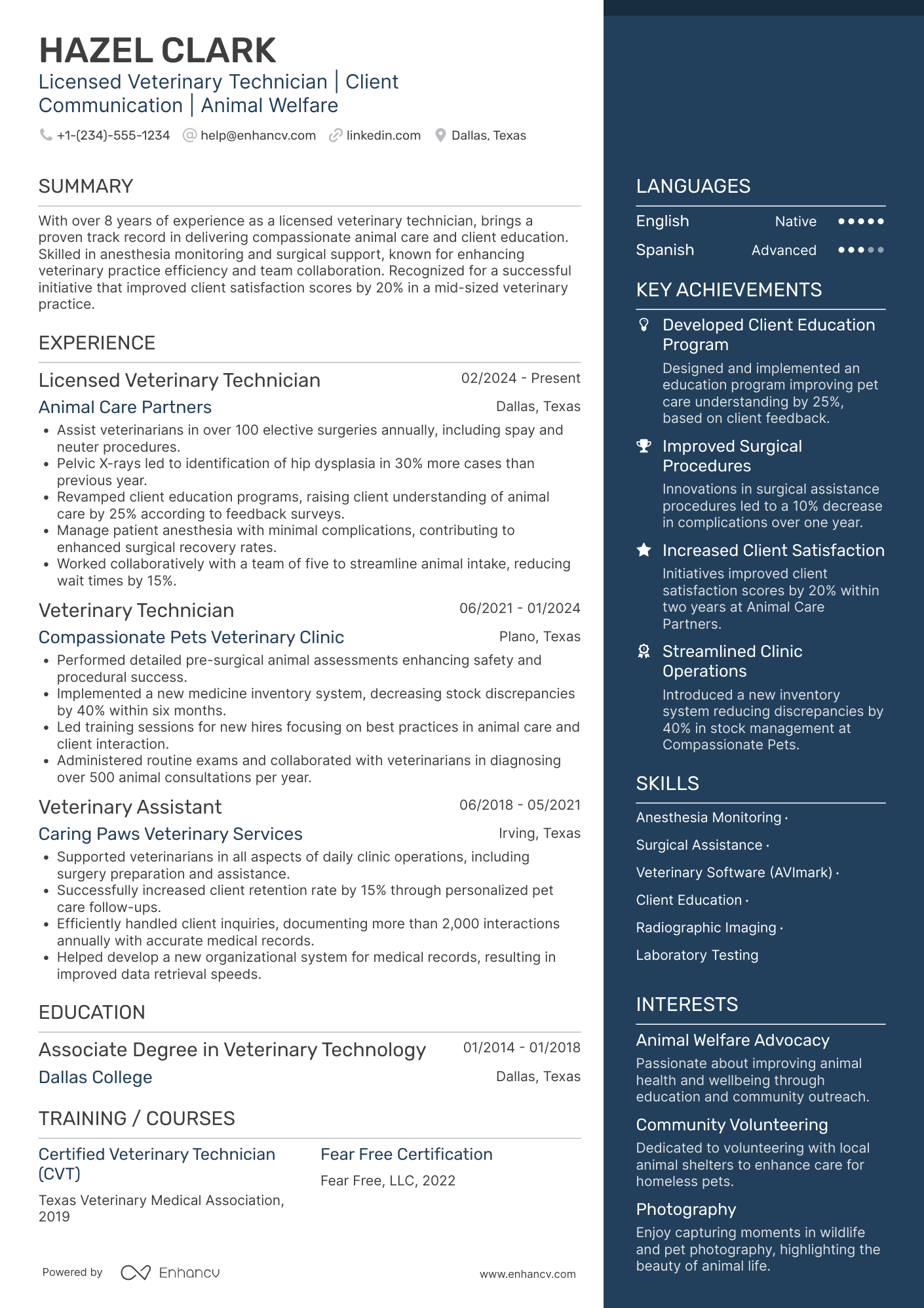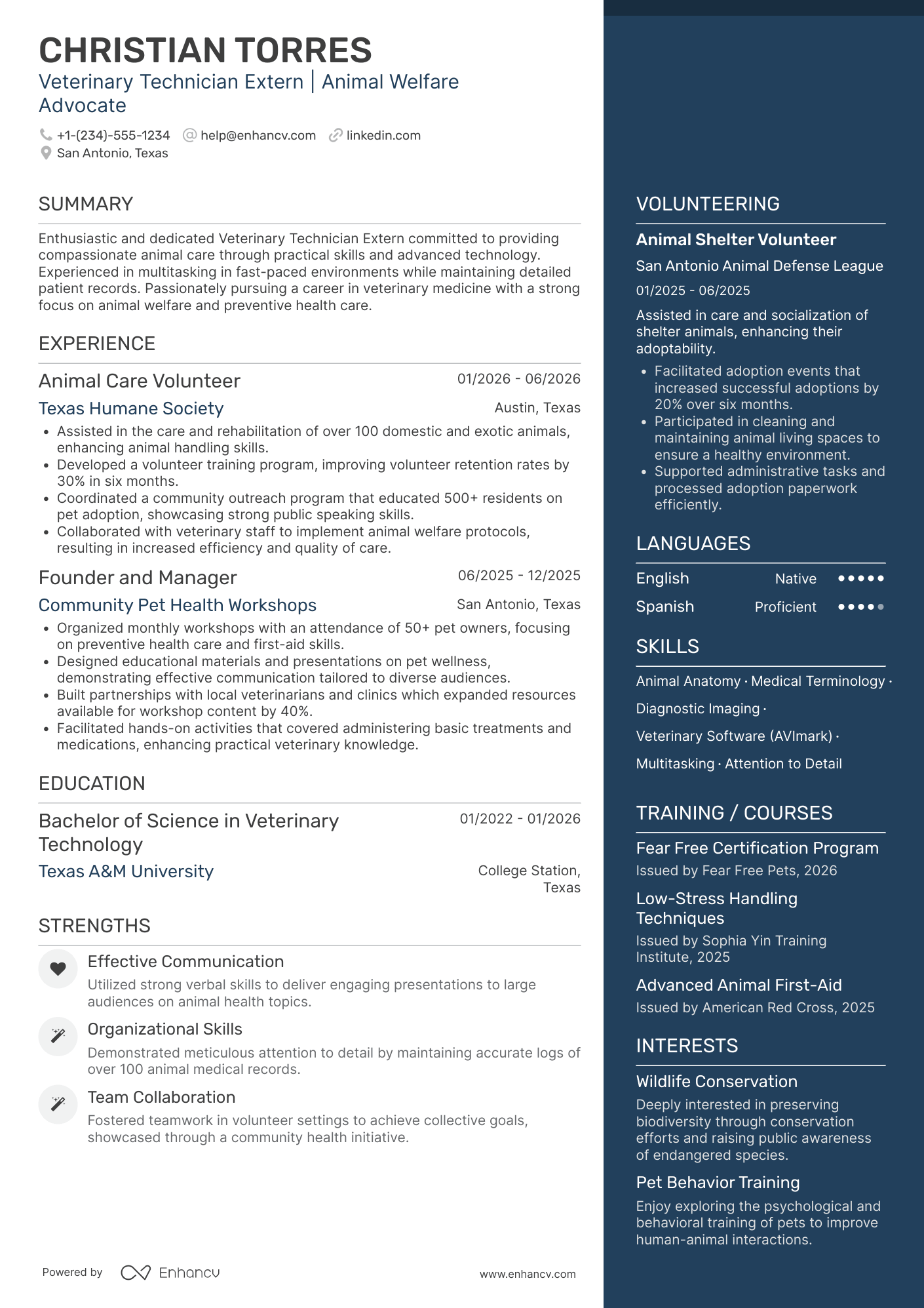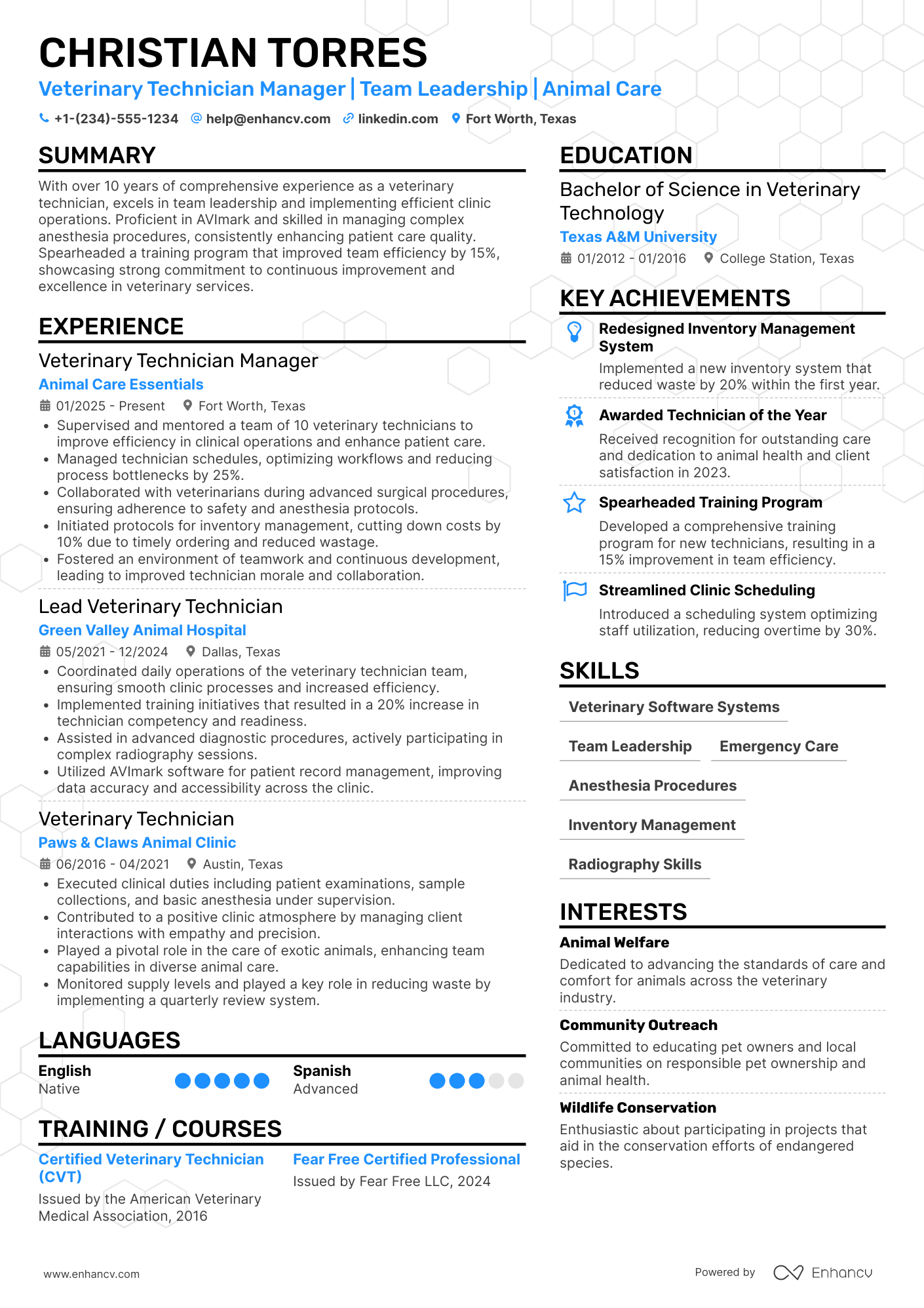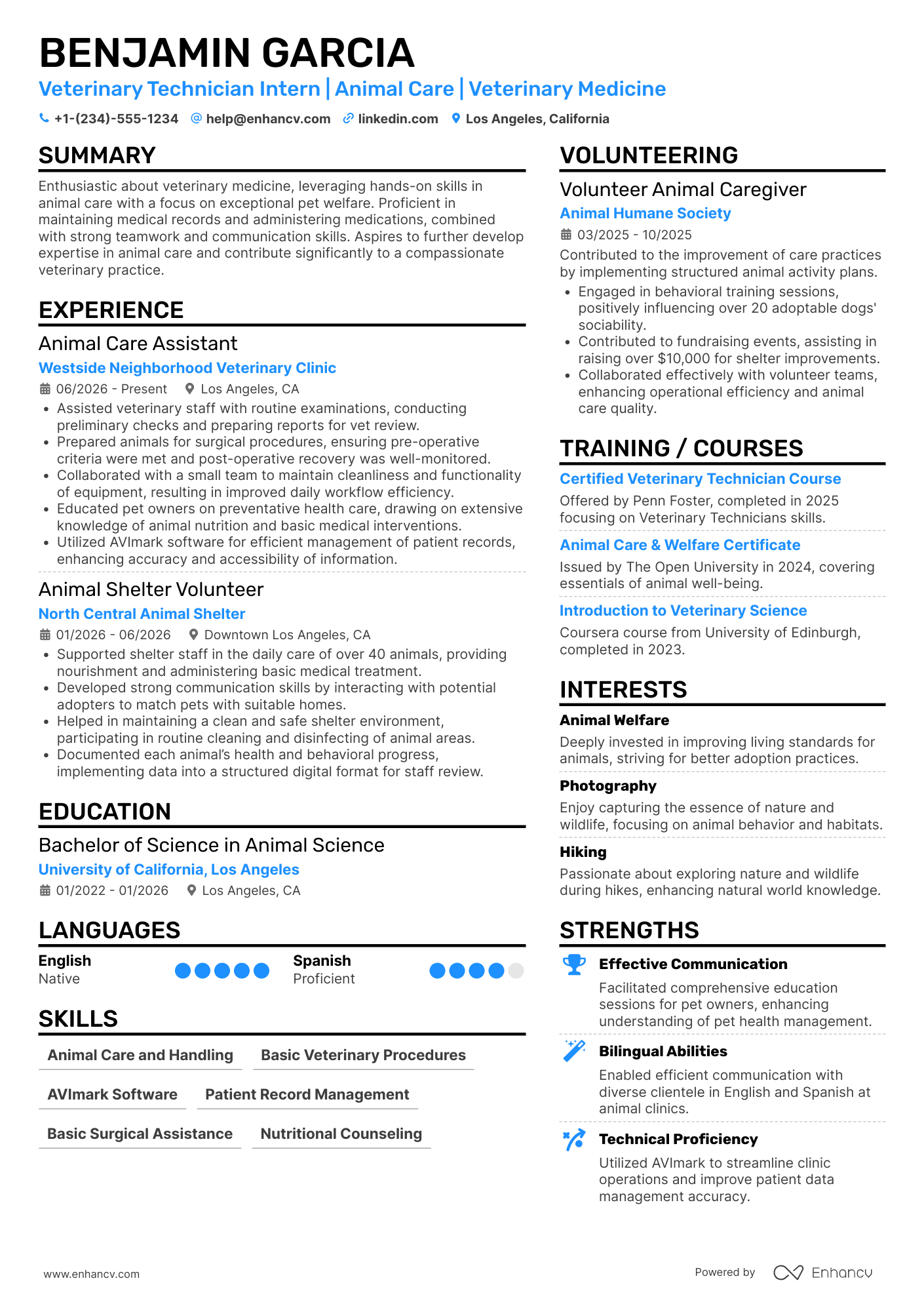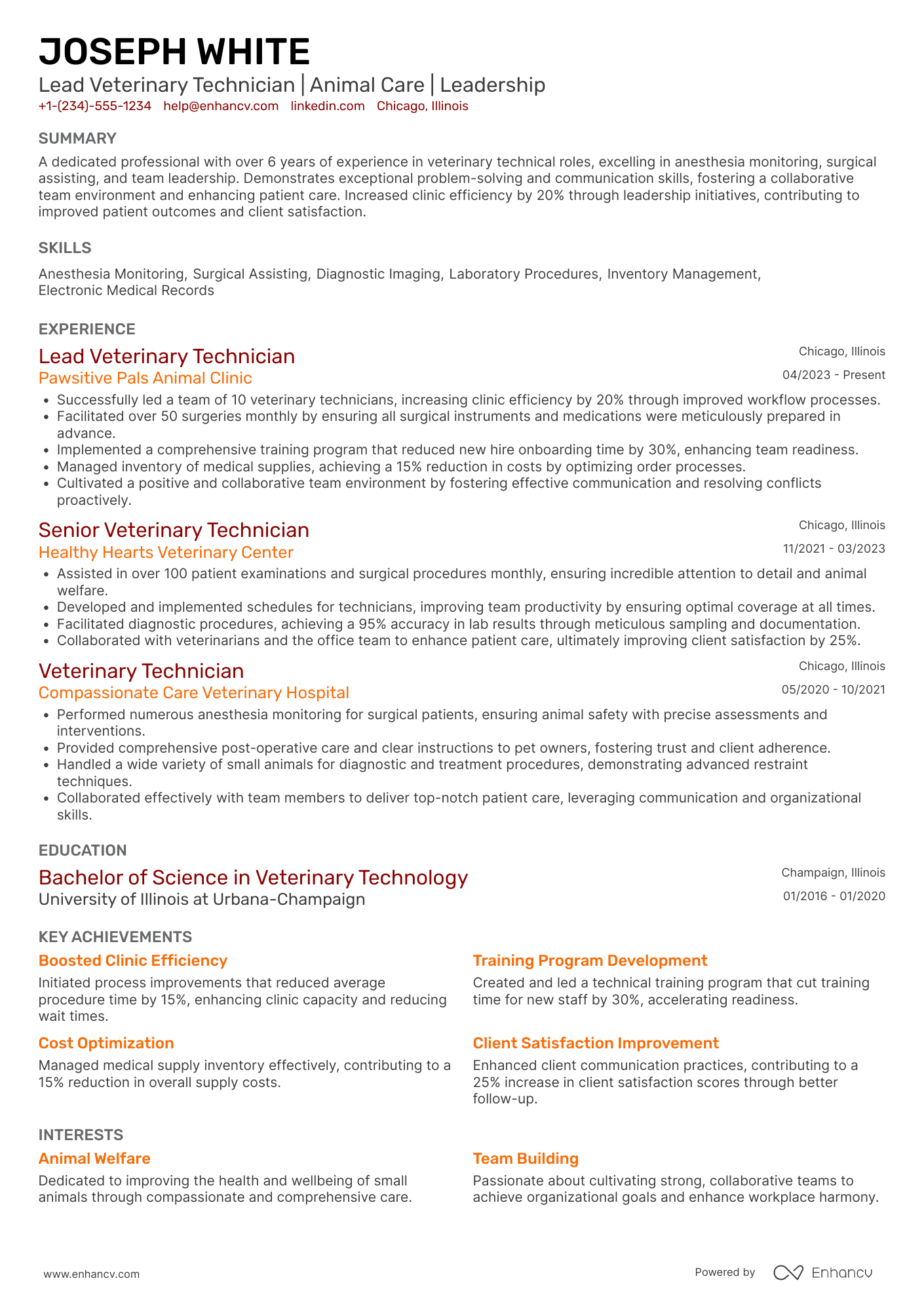
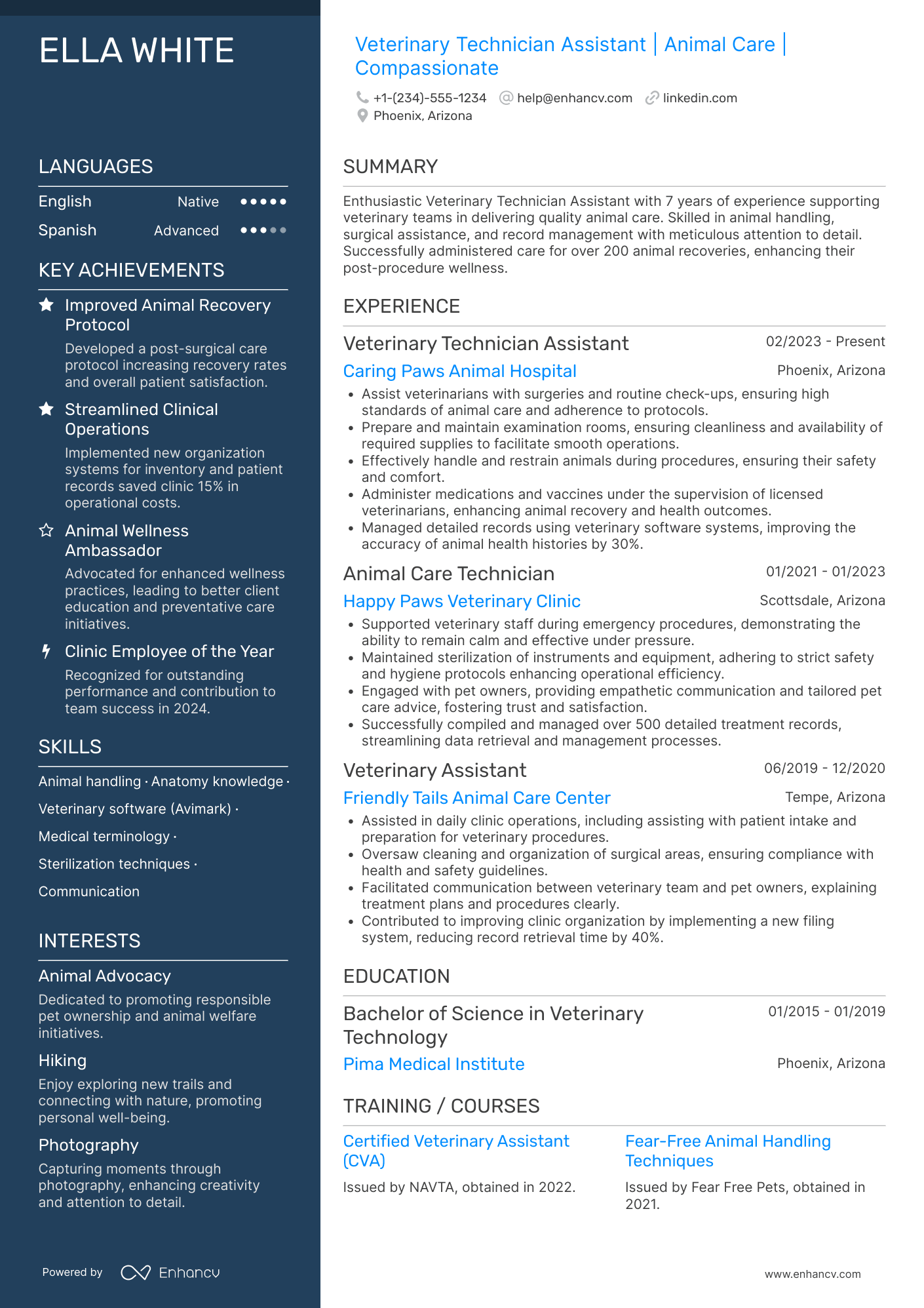
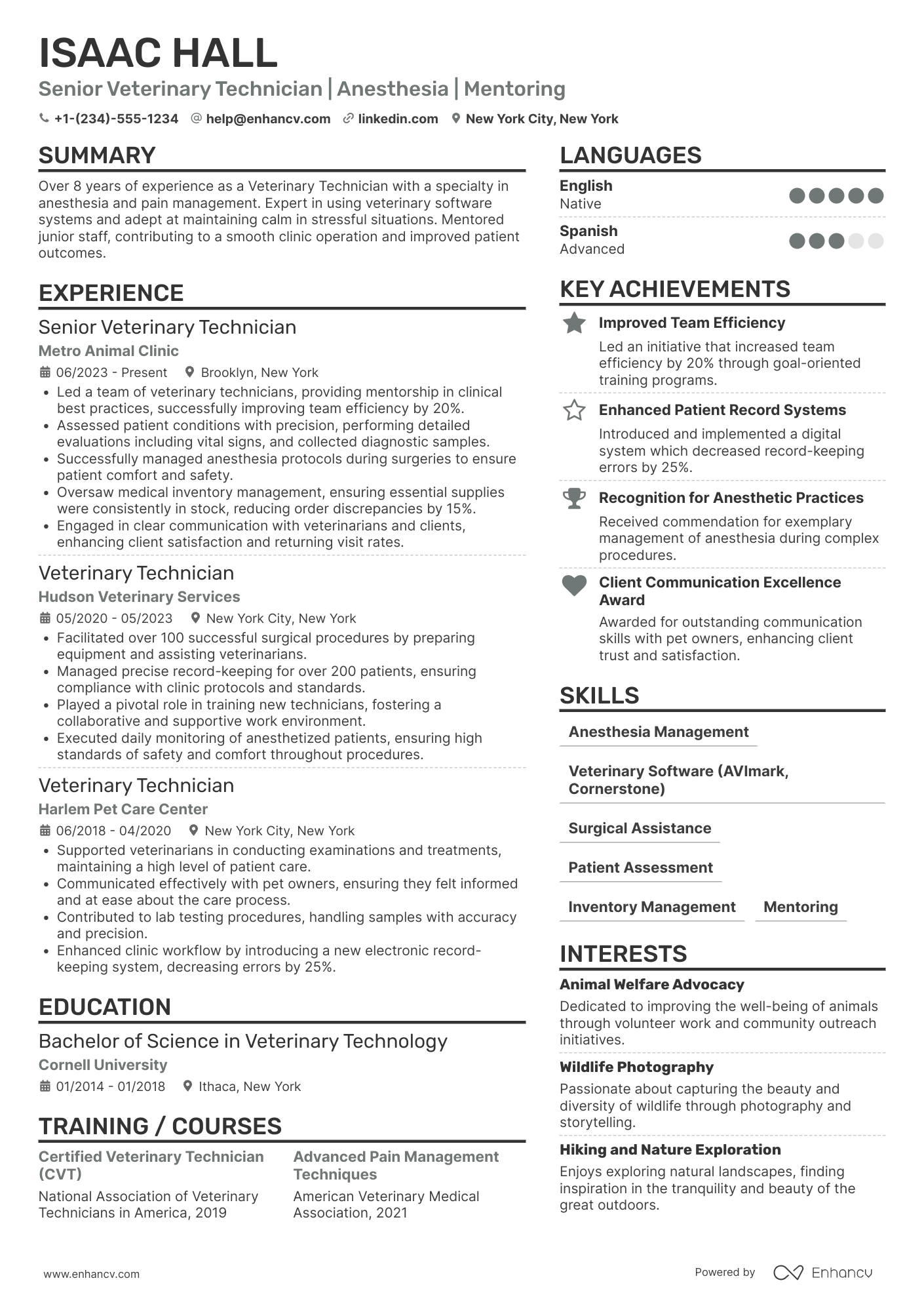
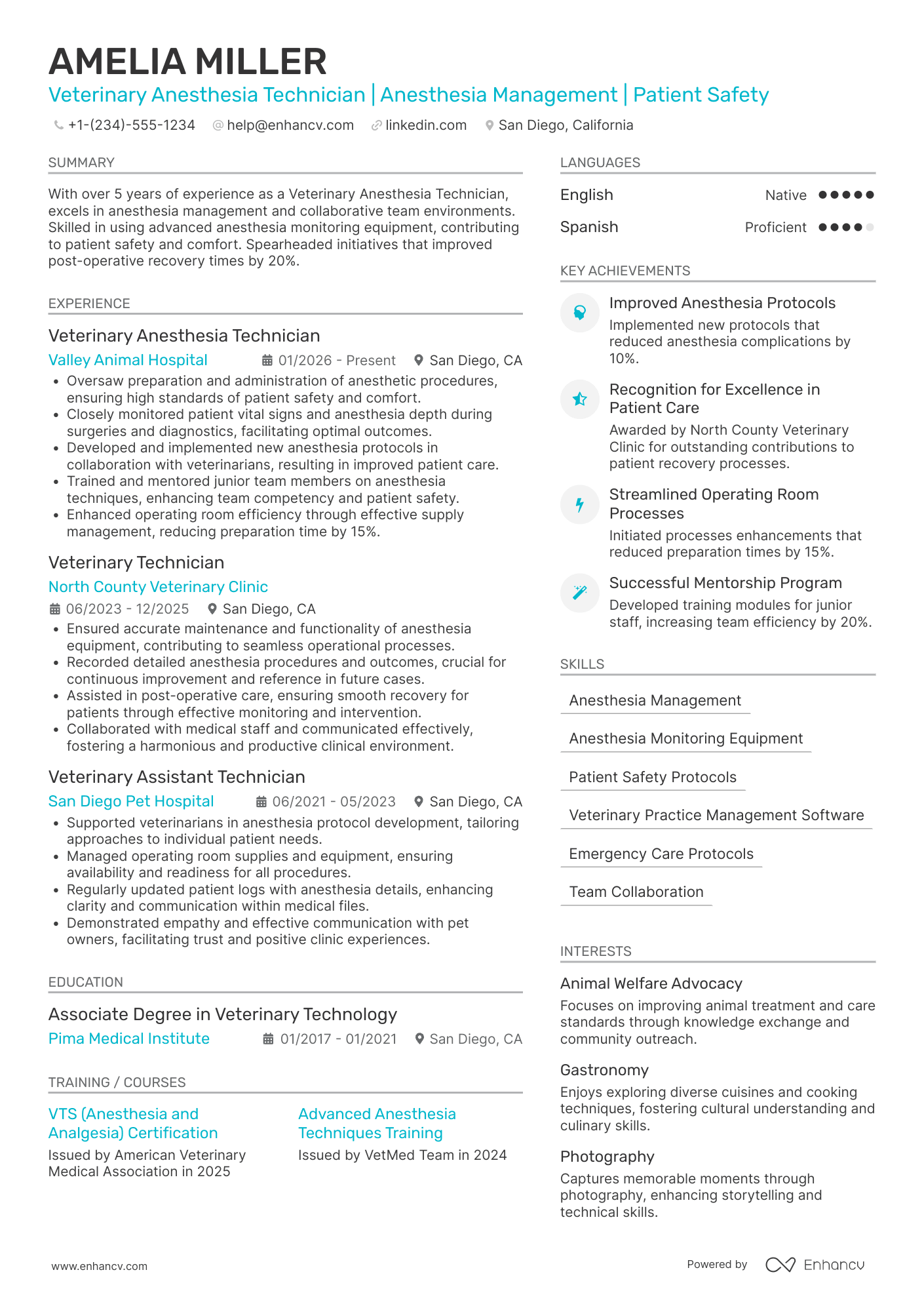
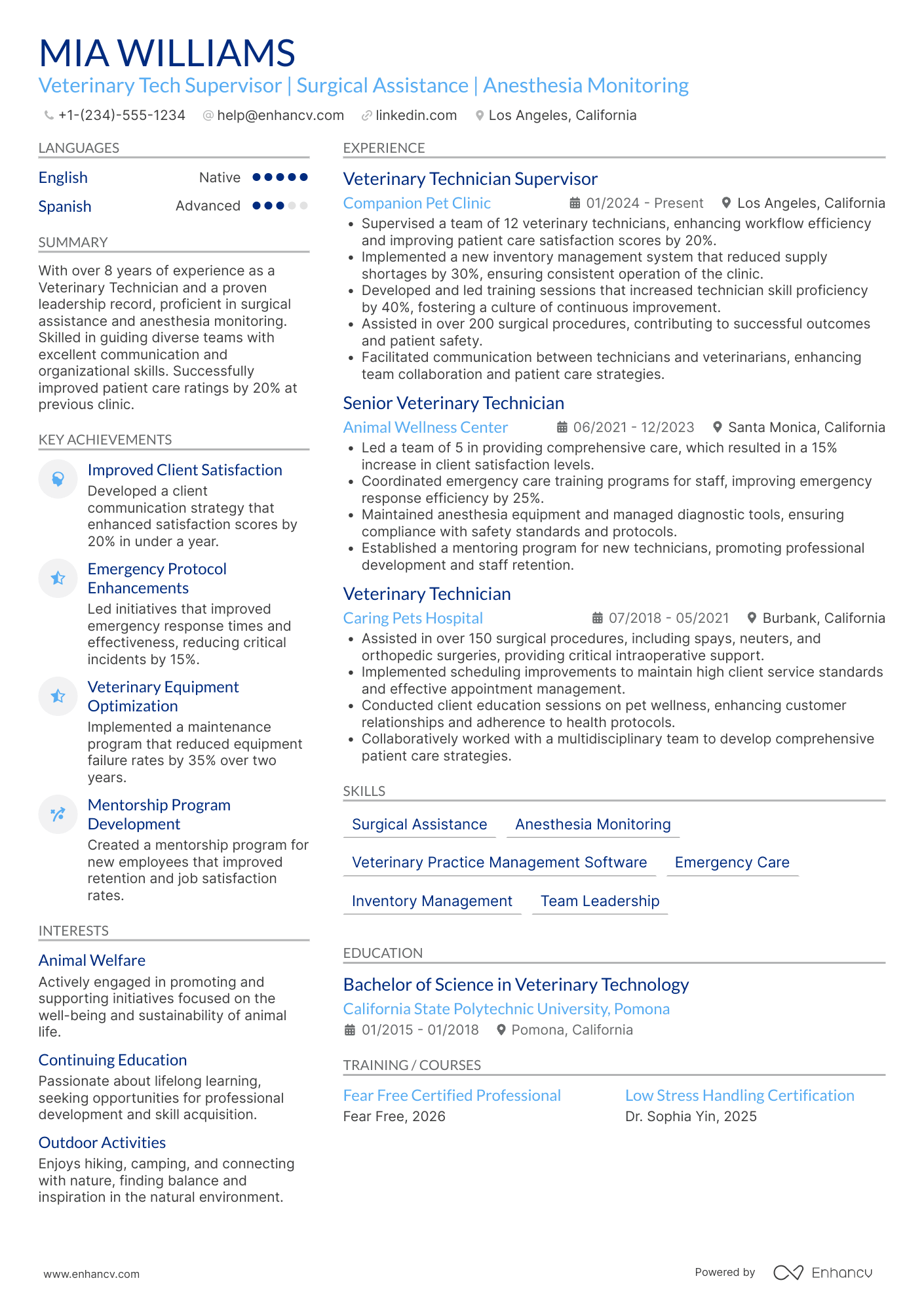
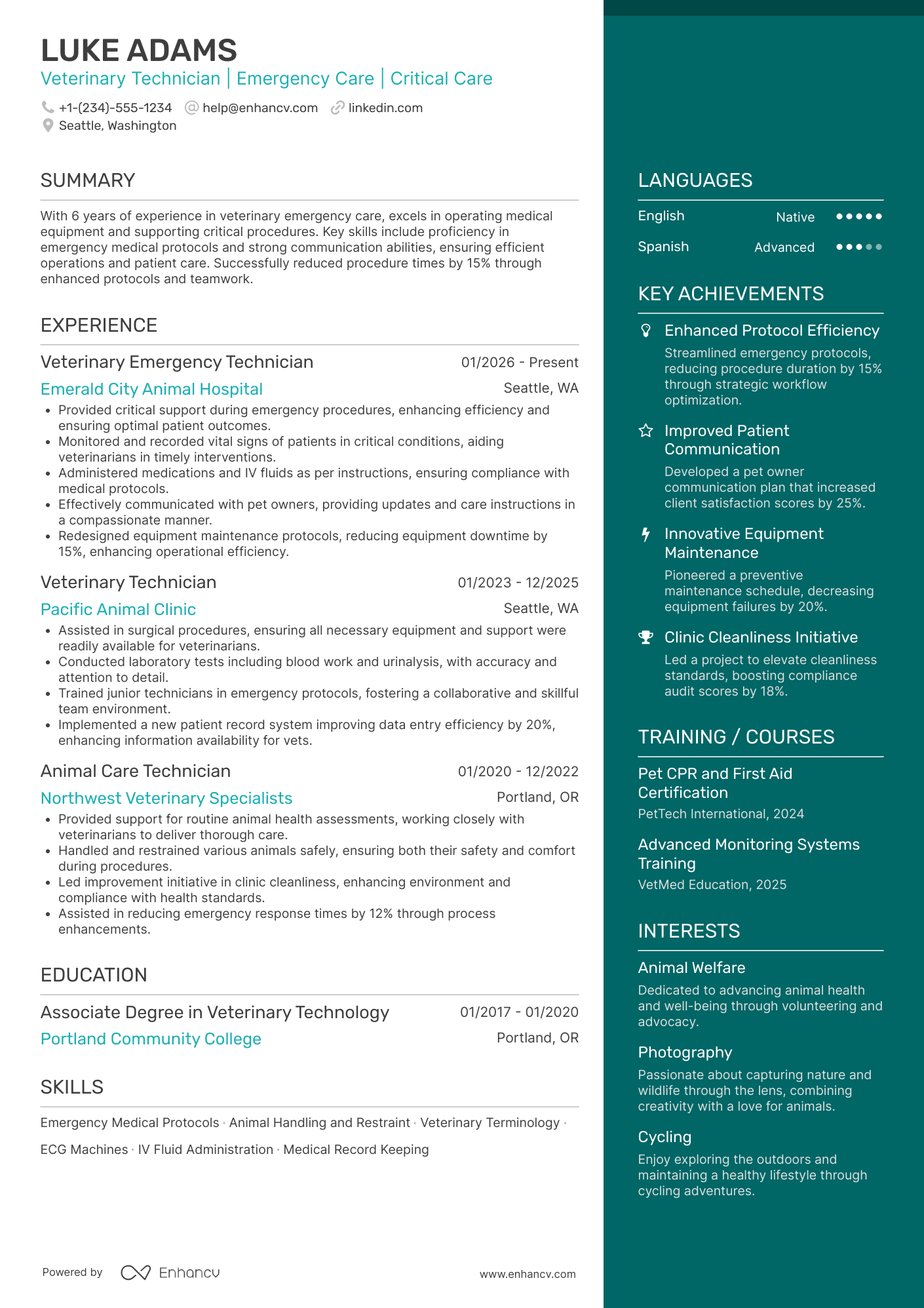
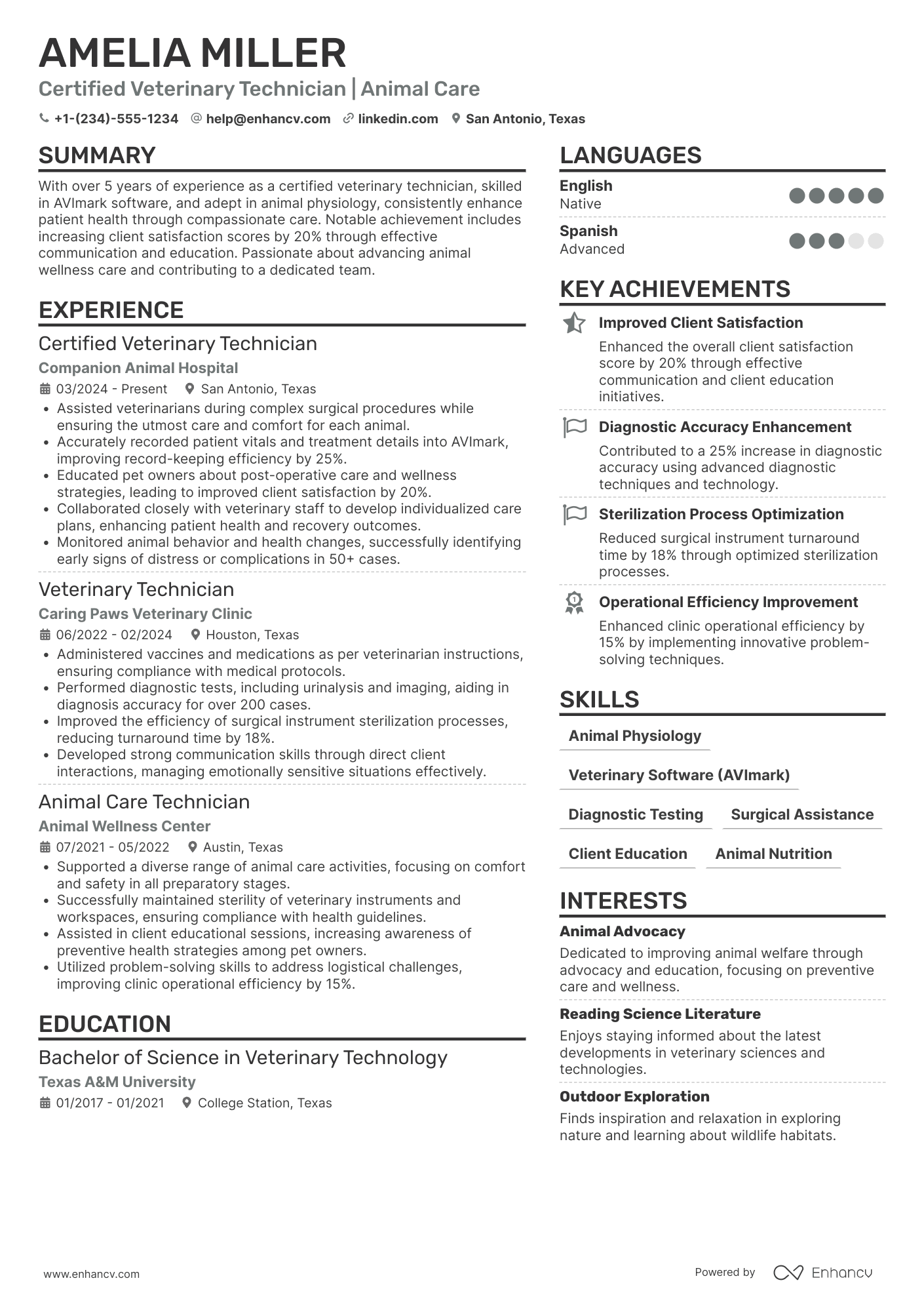
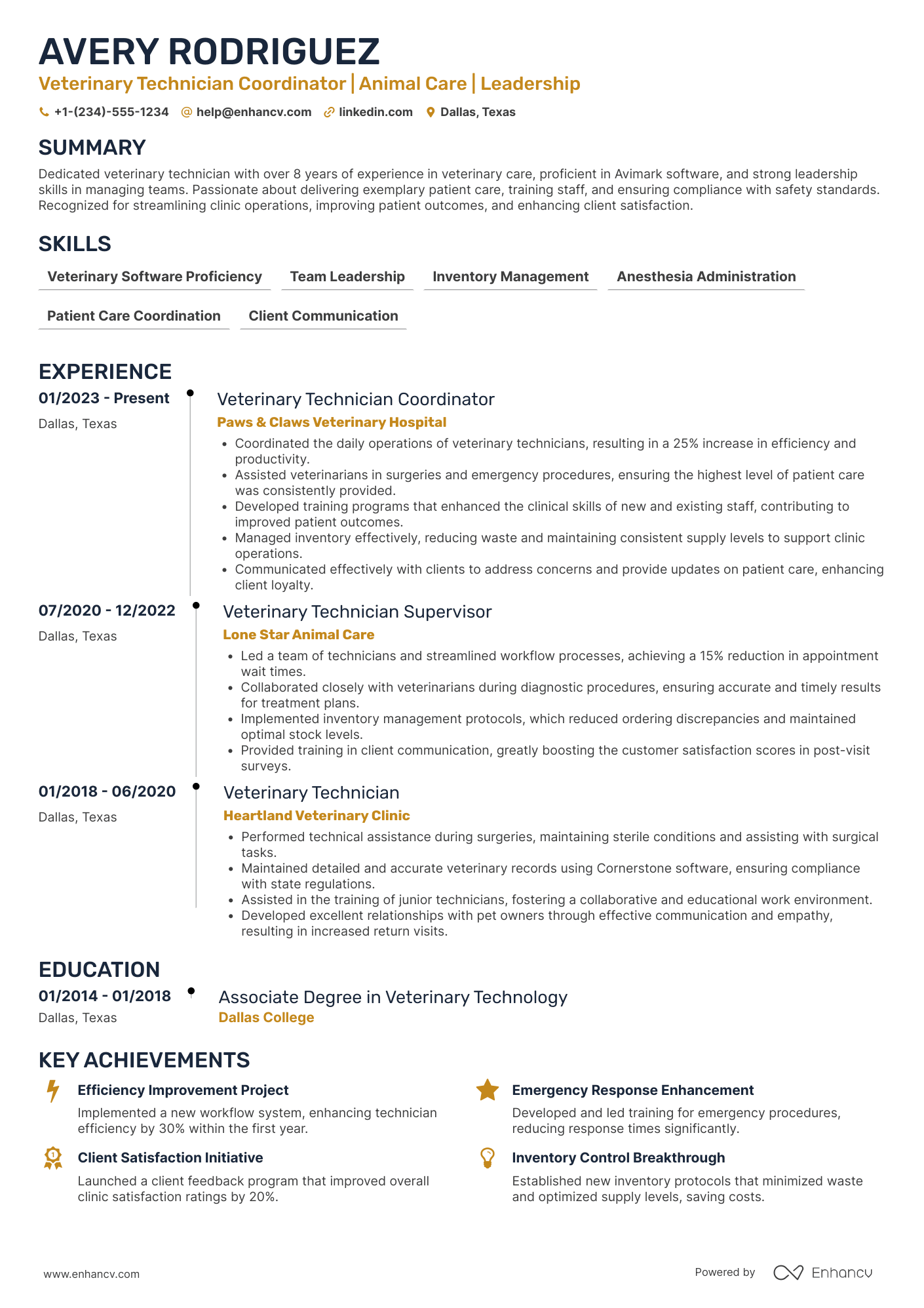
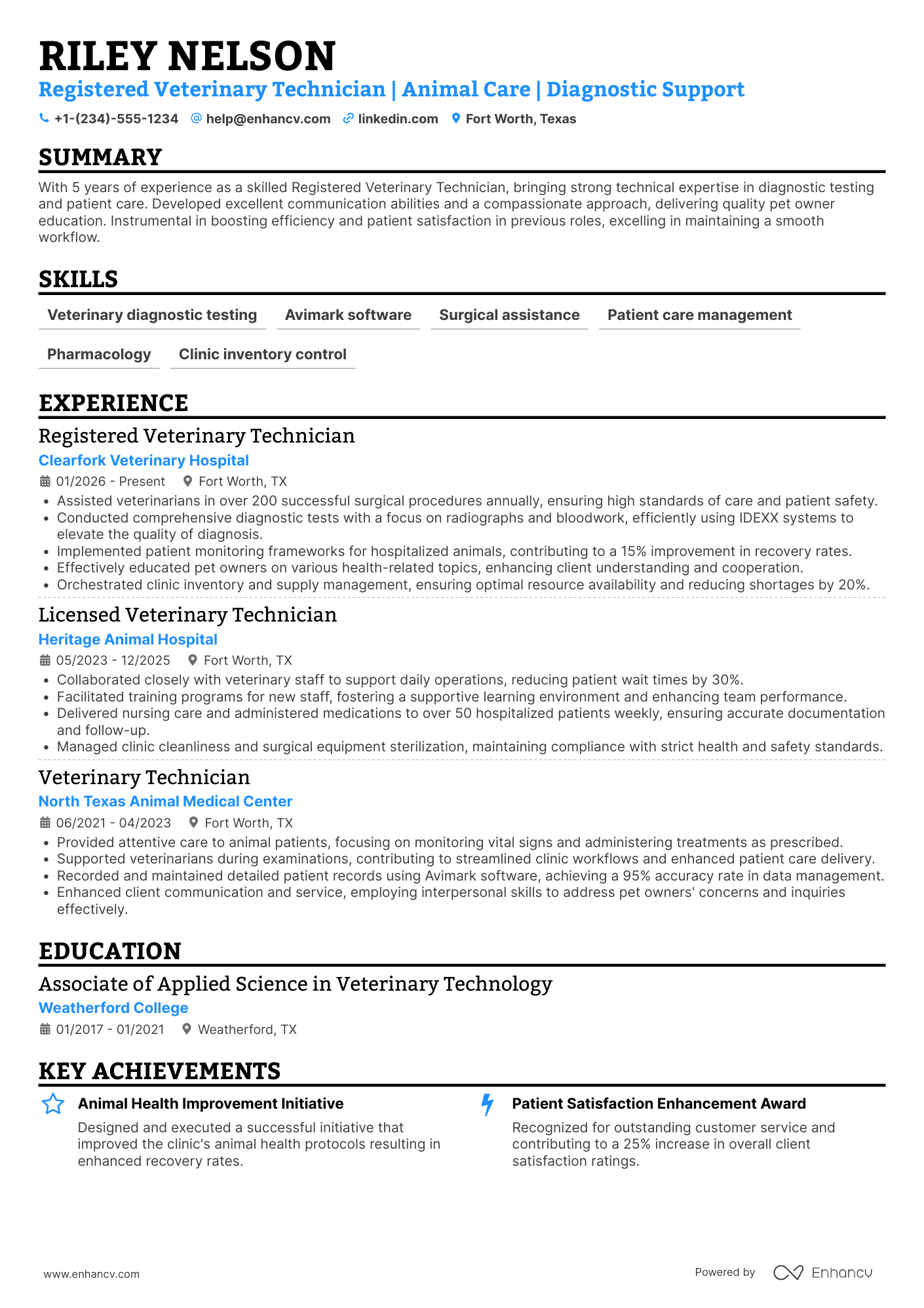
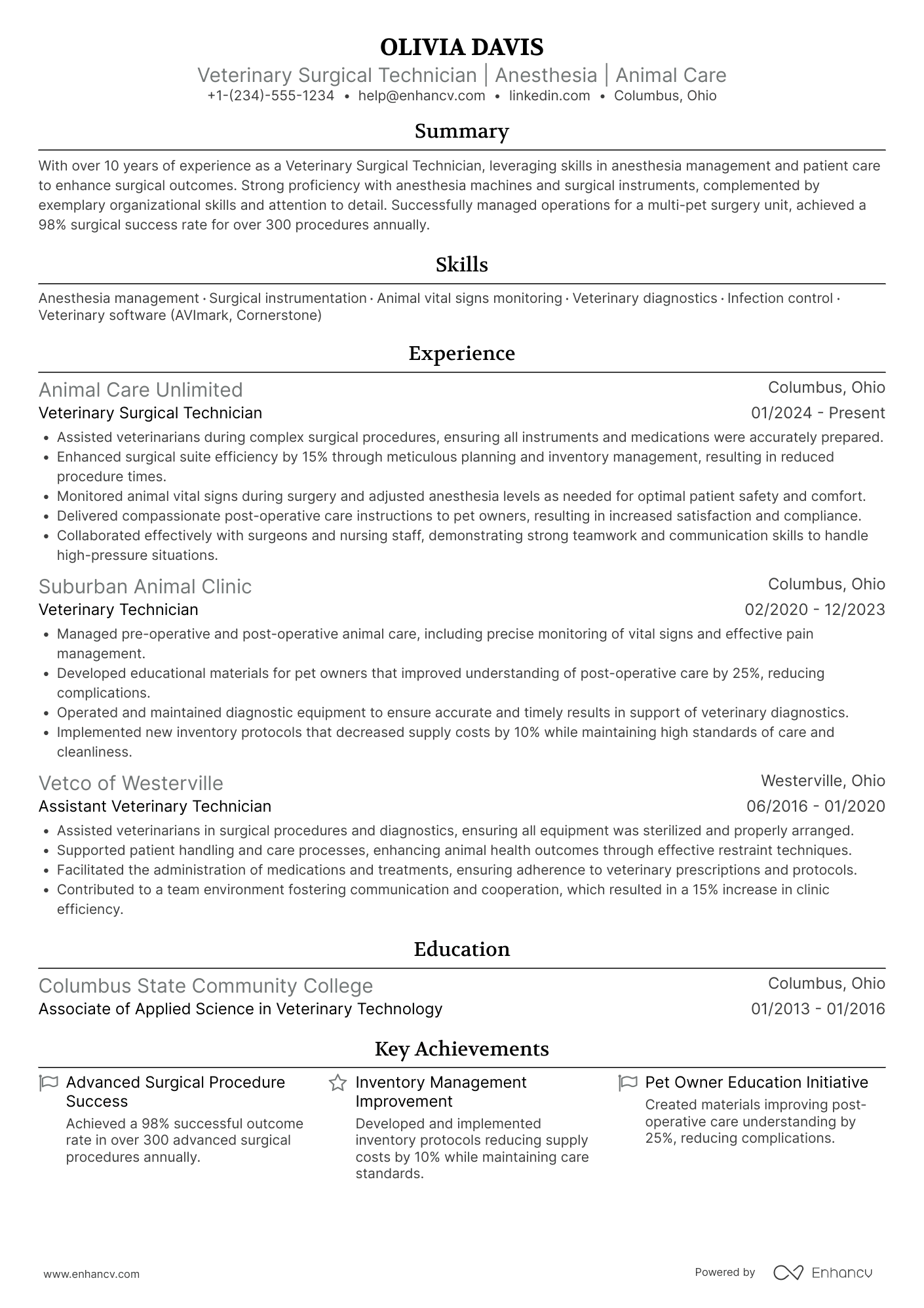
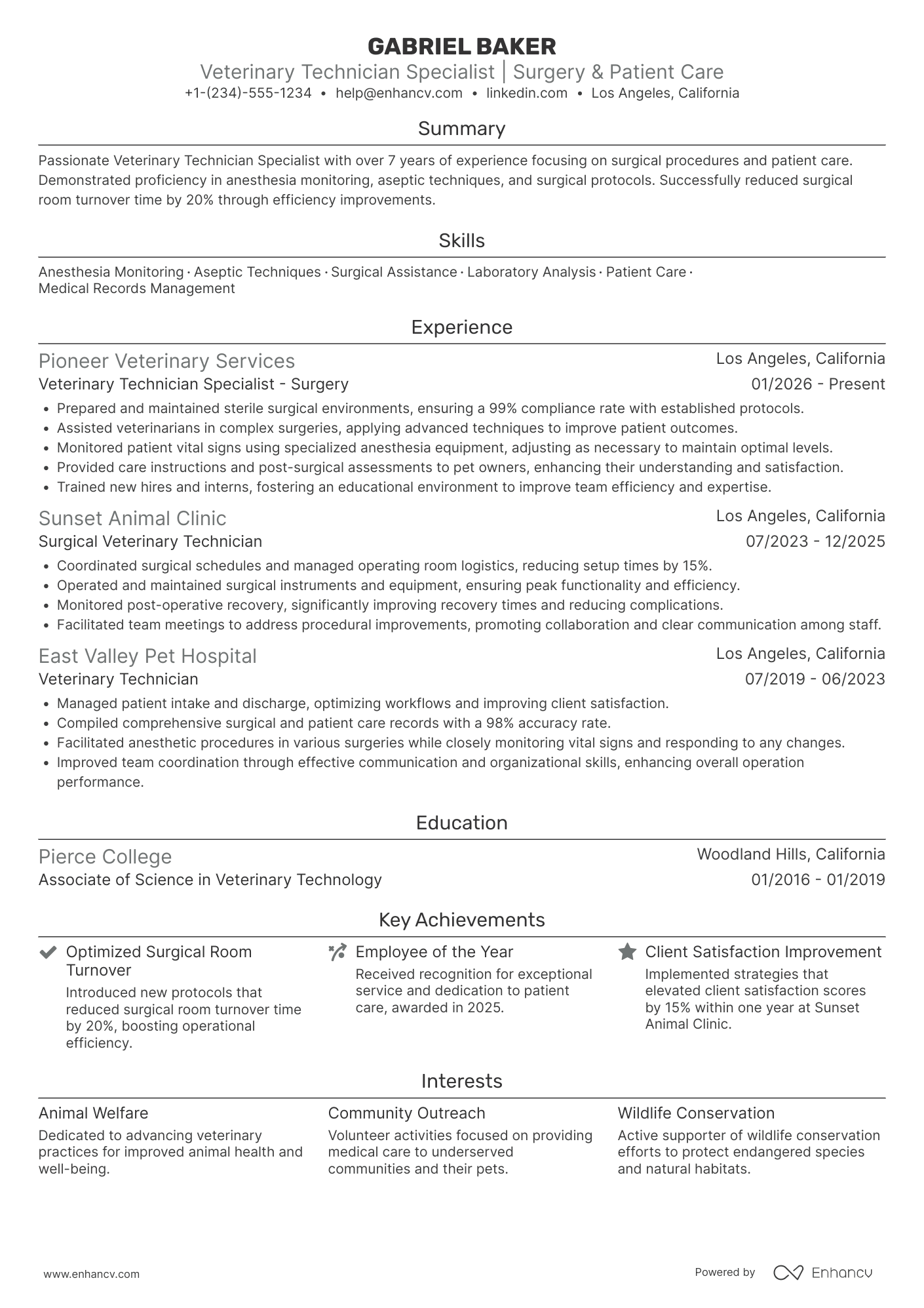
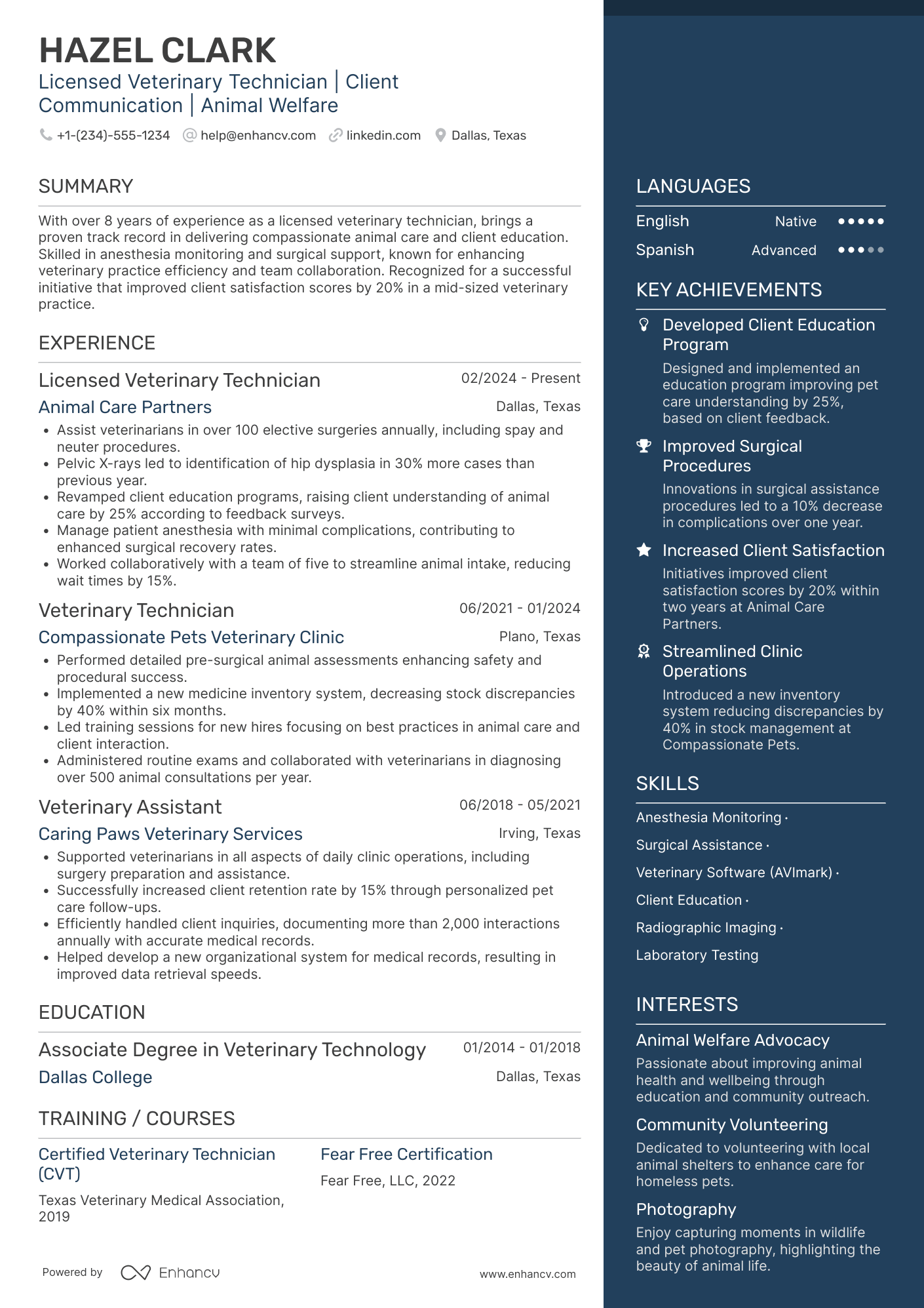
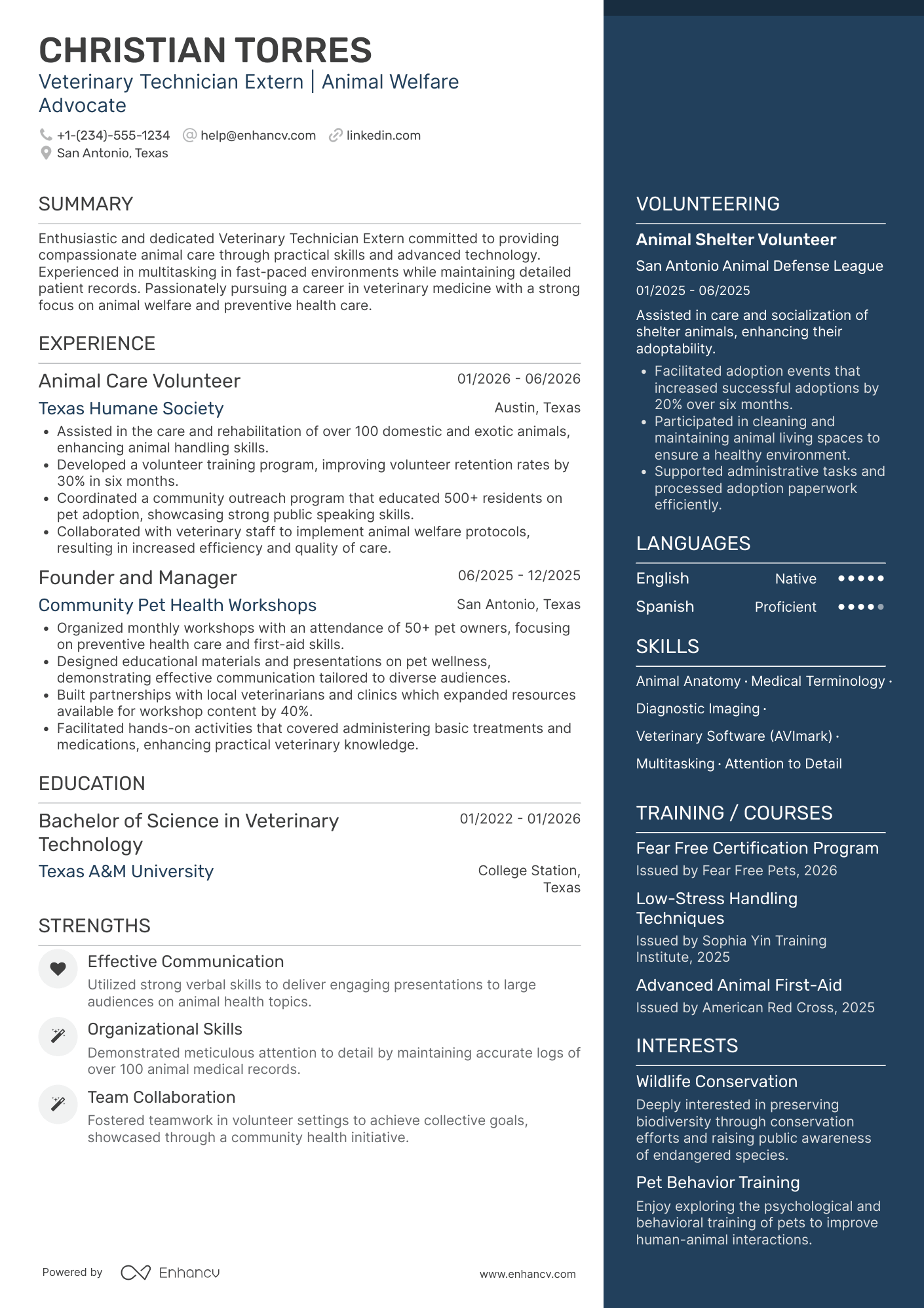
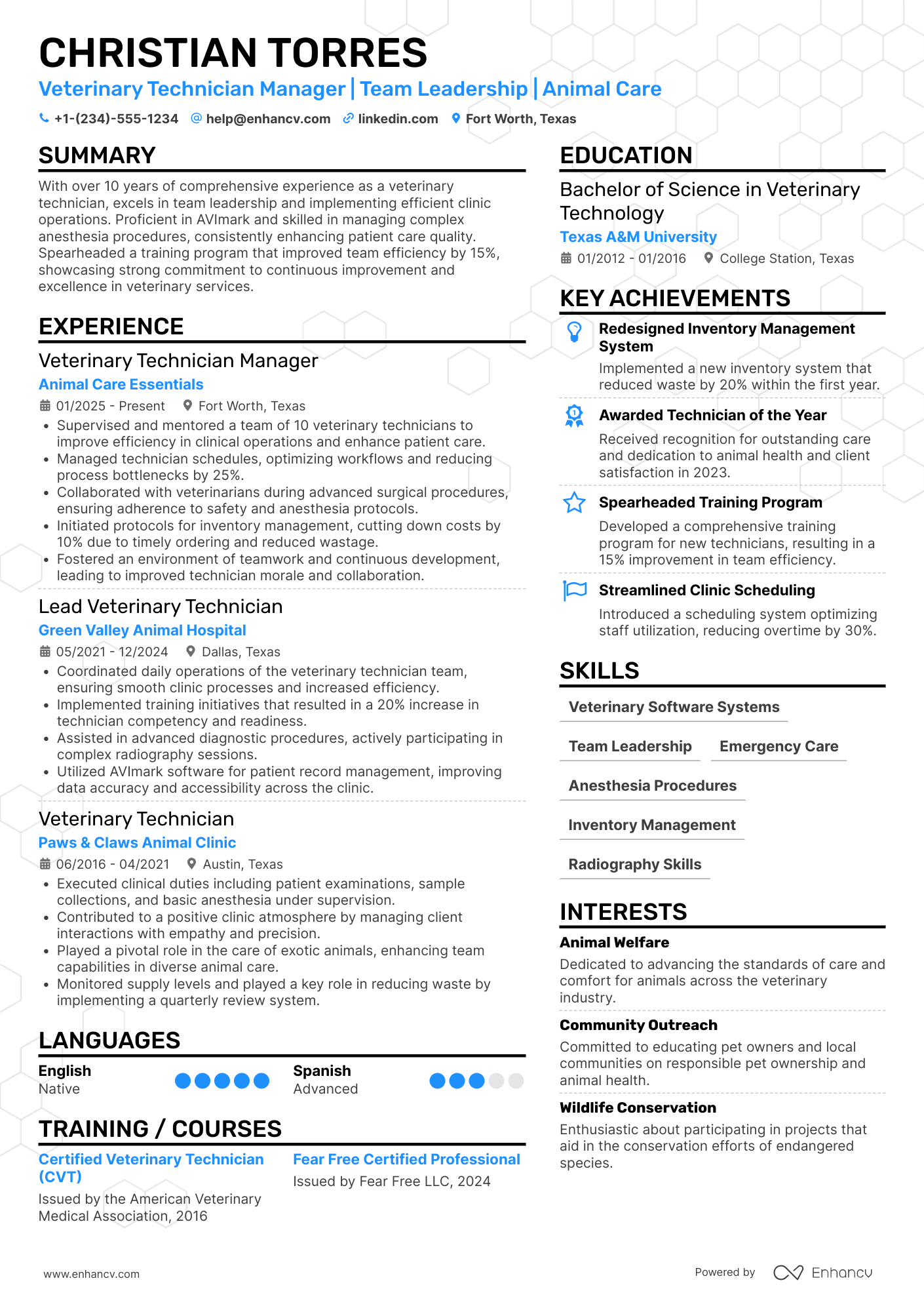
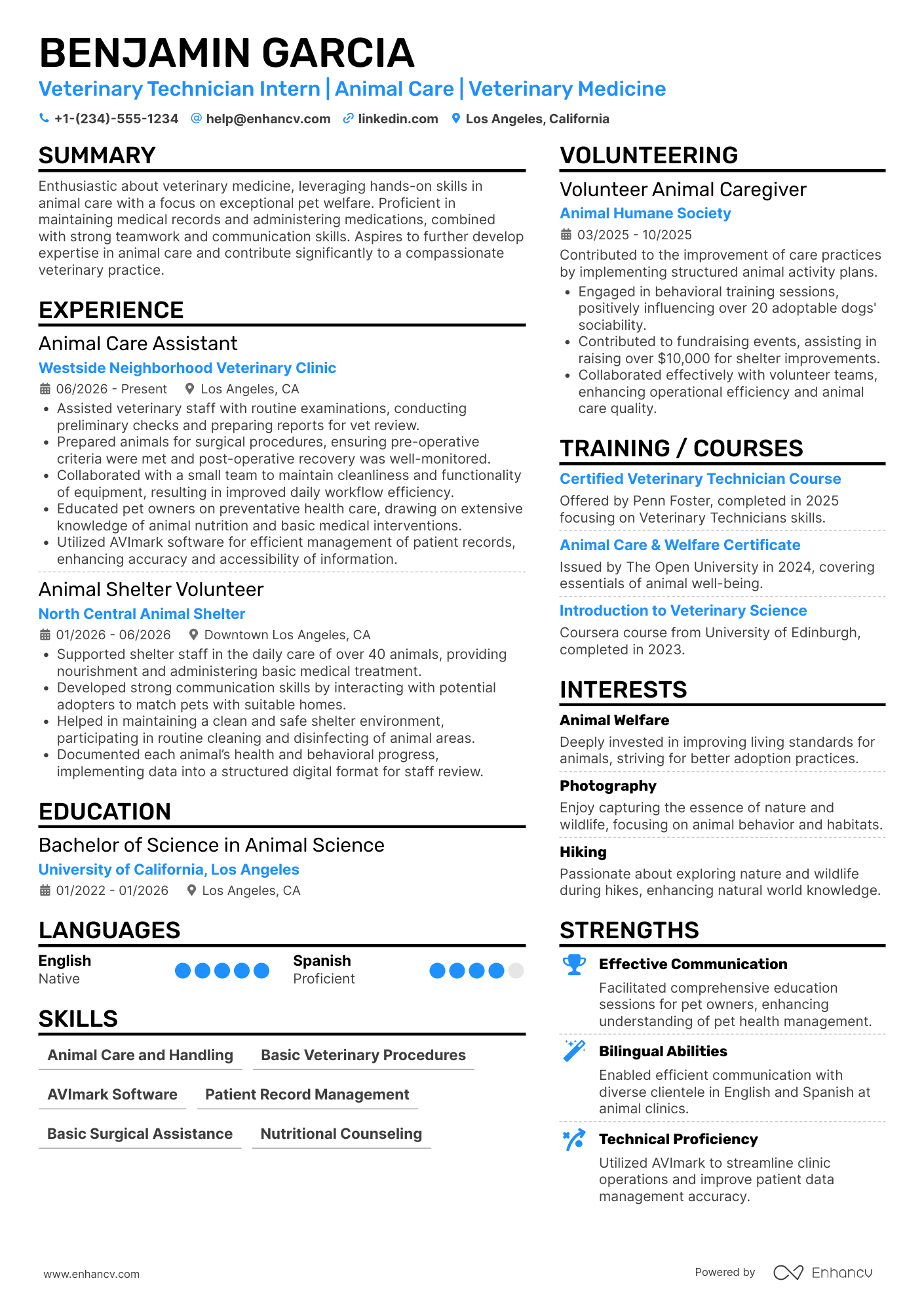
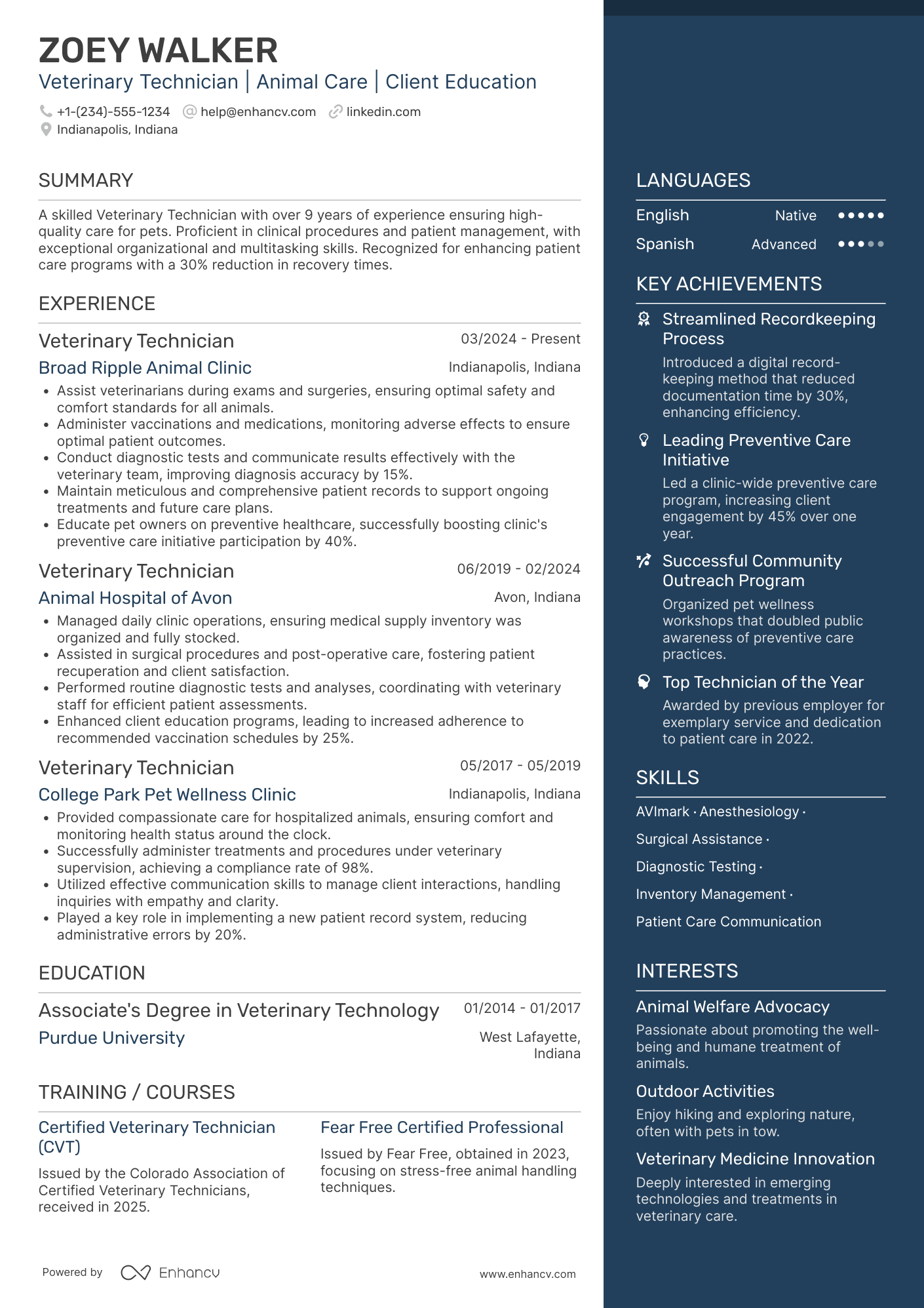
A veterinary technician resume often fails because it reads like a task list and buries measurable clinical impact. That hurts when an ATS screens for keywords and recruiters scan fast in a competitive field.
A strong resume shows what changed because you were on the floor. Knowing how to make your resume stand out means you should highlight reduced appointment wait times, improved anesthesia monitoring compliance, higher vaccine adherence, fewer lab redraws, accurate controlled-substance logs, and calmer patient handling.

Key takeaways
- Quantify clinical impact—patient volume, turnaround times, and safety rates—instead of listing daily tasks.
- Choose reverse-chronological format if you have consistent veterinary work history to show.
- Tailor every experience bullet to match the job posting's specific equipment, software, and protocols.
- Place skills above experience when you're entry-level or changing careers into veterinary technology.
- Pair each listed skill with a measurable outcome in your experience section for proof.
- Use Enhancv's Bullet Point Generator to turn routine duties into recruiter-ready, results-driven statements.
- Add a cover letter only when you need to explain transitions, gaps, or unique clinic fit.
Job market snapshot for veterinary technicians
We analyzed 1,575 recent veterinary technician job ads across major US job boards. These numbers help you understand employer expectations, regional hotspots, career growth patterns at a glance.
What level of experience employers are looking for veterinary technicians
| Years of Experience | Percentage found in job ads |
|---|---|
| 1–2 years | 25.8% (406) |
| 3–4 years | 3.5% (55) |
| 5–6 years | 1.3% (20) |
| 10+ years | 0.5% (8) |
| Not specified | 68.9% (1085) |
Veterinary technician ads by area of specialization (industry)
| Industry (Area) | Percentage found in job ads |
|---|---|
| Healthcare | 69.7% (1097) |
| Finance & Banking | 26.7% (420) |
| Education | 3.6% (56) |
Top companies hiring veterinary technicians
| Company | Percentage found in job ads |
|---|---|
| Thrive Pet Healthcare | 32.6% (513) |
| National Veterinary Associates | 10.9% (172) |
| Mission Pet Health | 8.6% (136) |
| VCA Animal Hospital | 7.3% (115) |
| Alliance Animal Health | 5.5% (86) |
| PetVet Care Centers | 5.3% (84) |
| Veterinary Practice Partners | 4.3% (67) |
| Banfield Pet Hospital | 4.1% (64) |
| Veterinary Emergency Group | 3.8% (60) |
| Petfolk | 2.9% (46) |
Role overview stats
These tables show the most common responsibilities and employment types for veterinary technician roles. Use them to align your resume with what employers expect and to understand how the role is structured across the market.
Day-to-day activities and top responsibilities for a veterinary technician
| Responsibility | Percentage found in job ads |
|---|---|
| Anesthesia | 25.0% (393) |
| Anesthesia monitoring | 20.4% (321) |
| Medical records | 18.1% (285) |
| Surgery | 16.1% (254) |
| Venipuncture | 14.7% (232) |
| Radiology | 14.1% (222) |
| Patient care | 13.1% (206) |
| Client communication | 12.6% (198) |
| Medication administration | 12.5% (197) |
| Iv catheter placement | 11.2% (176) |
| Radiographs | 10.3% (163) |
| Laboratory tests | 10.0% (157) |
How to format a veterinary technician resume
Recruiters hiring veterinary technicians prioritize clinical skills, hands-on patient care experience, and proficiency with diagnostic equipment and veterinary software. A clear, well-organized resume format ensures these qualifications surface quickly during both manual review and applicant tracking system (ATS) scans.

I have significant experience in this role—which format should I use?
Use a reverse-chronological format to showcase your progression through increasingly complex clinical responsibilities and specializations. Do:
- Lead with your most recent position, emphasizing scope of duties such as surgical assistance, anesthesia monitoring, and patient triage across high-volume clinics.
- Highlight proficiency with role-specific tools and domains, including digital radiography, laboratory diagnostics, Cornerstone or Avimark practice management software, and controlled substance protocols.
- Quantify outcomes and contributions that reflect your direct impact on patient care and clinic operations.
- "Administered anesthesia and monitored vitals for 20+ surgical procedures per week, maintaining a 99.4% recovery rate across a 12-month period."
I'm junior or switching into this role—what format works best?
A hybrid format works best because it lets you lead with relevant clinical skills while still providing a timeline of your work or educational experience. Do:
- Place a dedicated skills section near the top of your resume, listing competencies like venipuncture, vaccine administration, radiology positioning, and veterinary pharmacology.
- Include clinical rotations, externships, volunteer work at animal shelters, or veterinary assistant experience as transitional proof of hands-on capability.
- Connect every skill to a specific action and result so recruiters can see your practical application, not just coursework.
- Radiology positioning (skill) → captured diagnostic images for canine and feline patients under veterinarian supervision during a 200-hour clinical externship (action) → contributed to accurate diagnoses in 95% of cases reviewed (result).
When does a functional resume make sense?
A functional format is appropriate only in a narrow set of circumstances for veterinary technicians:
- You're transitioning into veterinary technology from a related field such as human nursing, animal sciences, or laboratory work and lack direct veterinary clinic titles on your resume.
- You have a gap of two or more years in clinical employment and need to foreground retained skills and recent certifications.
- You recently completed a Veterinary Technician National Examination (VTNE) credential or accredited program and have minimal paid experience in the field.
- Edge case: A functional resume may be acceptable if you're a career changer with no direct veterinary titles—but only if you tie every listed skill to specific projects, volunteer cases, or measurable outcomes from your training or adjacent experience.
With your format locked in, it's time to fill each part of your resume with the right sections to showcase your qualifications.
What sections should go on a veterinary technician resume
Recruiters expect a clear, complete resume that shows your hands-on clinical skills, patient care experience, and ability to support veterinarians in a fast-paced setting. Knowing what to put on a resume for this role is essential. Use this structure for maximum clarity:
- Header
- Summary
- Experience
- Skills
- Projects
- Education
- Certifications
- Optional sections: Awards, Volunteering, Languages
Strong experience bullets should emphasize measurable impact, patient volume and case mix, technical procedures performed, and outcomes such as improved efficiency, safety, or client satisfaction.
Is your resume good enough?
Drop your resume here or choose a file. PDF & DOCX only. Max 2MB file size.
Once you’ve organized your resume with the right sections, focus next on writing your veterinary technician experience so each role clearly supports the qualifications you’ve outlined.
How to write your veterinary technician resume experience
The experience section is where you prove you've delivered real clinical results—not just listed daily tasks. Hiring managers at veterinary practices and animal hospitals prioritize demonstrated impact, including the diagnostic tools you've operated, the patient care protocols you've followed, and the measurable outcomes you've achieved over generic descriptions of responsibilities.
Each entry should include:
- Job title
- Company and location (or remote)
- Dates of employment (month and year)
Three to five concise bullet points showing what you owned, how you executed, and what outcomes you delivered:
- Ownership scope: the clinical areas, patient populations, surgical preparation workflows, laboratory functions, or pharmacy inventories you were directly accountable for within the veterinary practice.
- Execution approach: the veterinary diagnostic equipment, anesthesia monitoring protocols, radiology techniques, laboratory procedures, or electronic medical record systems you used to inform clinical decisions and deliver patient care.
- Value improved: the changes you drove in patient recovery rates, diagnostic turnaround times, surgical preparation efficiency, medication accuracy, or infection control compliance within your veterinary setting.
- Collaboration context: how you coordinated with veterinarians, fellow technicians, veterinary assistants, front-desk staff, pet owners, or external laboratories to ensure continuity of care and smooth clinic operations.
- Impact delivered: the tangible results your work produced—expressed through improvements in patient outcomes, clinic throughput, client satisfaction, cost savings, or team performance rather than a simple recounting of activities.
Experience bullet formula
A veterinary technician experience example
✅ Right example - modern, quantified, specific.
Veterinary Technician
Pine Ridge Animal Hospital | Austin, TX
2022–Present
AAHA-accredited small animal hospital providing high-volume preventive care, urgent care, dentistry, and soft-tissue surgery.
- Triaged twenty to thirty patients per shift using SOAP notes and Fear Free handling, cutting average wait time 18% and improving same-day appointment capacity 12%.
- Placed and maintained peripheral intravenous catheters and ran in-house diagnostics (Idexx Catalyst One, ProCyte Dx, SNAP tests), reducing lab turnaround time from forty-five to twenty-five minutes and speeding treatment decisions for urgent cases.
- Monitored anesthesia with multiparameter monitors (capnography, pulse oximetry, blood pressure) and documented in ezyVet, decreasing anesthetic complications 22% through tighter protocol adherence with veterinarians.
- Managed vaccine and controlled-substance inventory in ezyVet with barcode scanning and two-person counts, cutting expired product waste 30% and passing two state audits with zero discrepancies.
- Coordinated discharge education and follow-ups with clients and veterinarians via ezyVet reminders and SMS workflows, improving post-op recheck compliance from 68% to 82% and reducing preventable readmissions 15%.
Now that you've seen how a strong experience section looks in practice, let's focus on adjusting those details to match the specific job you're applying for.
How to tailor your veterinary technician resume experience
Recruiters evaluate your veterinary technician resume through applicant tracking systems and direct review. Tailoring your resume to the job description ensures your qualifications align with what the employer needs.
Ways to tailor your veterinary technician experience:
- Match specific diagnostic equipment or software named in the posting.
- Mirror the exact terminology used for laboratory procedures or protocols.
- Reflect patient care metrics or caseload expectations the employer highlights.
- Include species-specific experience that aligns with the clinic's focus.
- Emphasize anesthesia monitoring or surgical assistance skills when listed.
- Highlight compliance with OSHA or veterinary regulatory standards if mentioned.
- Reference practice management systems the employer identifies by name.
- Align your client communication approach with their stated workflow model.
Tailoring means connecting your real accomplishments to what the employer asks for, not forcing keywords where they don't belong.
Resume tailoring examples for veterinary technician
| Job description excerpt | Untailored | Tailored |
|---|---|---|
| Perform dental prophylaxis, radiographs, and extractions under DVM supervision using Idexx dental imaging systems | Assisted with various dental procedures on animals. | Performed 15+ dental prophylaxis procedures weekly, captured and interpreted digital radiographs using Idexx dental imaging systems, and assisted DVMs during extractions. |
| Place and maintain IV catheters, calculate drug dosages, monitor patients under anesthesia using multi-parameter vital signs monitors | Helped monitor animals during surgery and administered medications. | Placed IV catheters, calculated precise drug dosages based on patient weight, and monitored heart rate, SpO₂, ETCO₂, and blood pressure on multi-parameter monitors throughout 500+ anesthetic events annually. |
| Collect and process laboratory samples, run in-house CBC, chemistry panels, and urinalysis using Abaxis and IDEXX analyzers | Ran lab tests and reported results to the veterinarian. | Collected blood, urine, and cytology samples, then processed in-house CBC, chemistry panels, and urinalysis using Abaxis VetScan and IDEXX Catalyst analyzers—delivering results to DVMs within 20 minutes for same-day diagnosis. |
Once you’ve aligned your experience with the role’s priorities, the next step is to quantify your veterinary technician achievements so hiring managers can see the impact behind your responsibilities.
How to quantify your veterinary technician achievements
Quantifying your achievements shows how you improve patient outcomes and clinic operations. Focus on patient volume, lab turnaround time, anesthesia safety, medication accuracy, client satisfaction, and compliance rates.
Quantifying examples for veterinary technician
| Metric | Example |
|---|---|
| Patient throughput | "Triaged and supported care for 25–35 patients per shift, cutting average room-to-treatment time from 18 to 11 minutes using standardized intake checklists." |
| Lab turnaround | "Reduced in-house laboratory turnaround from 45 to 25 minutes by batching IDEXX runs and pre-labeling samples in Cornerstone." |
| Anesthesia safety | "Maintained 98% on-time vital checks during 120+ anesthetic procedures per quarter using multiparameter monitors and a 5-minute interval log." |
| Medication accuracy | "Cut medication labeling errors from five per month to one per month by implementing double-checks and barcode label printing for controlled substances." |
| Compliance risk | "Improved controlled-substance log compliance from 92% to 100% across three exam rooms by reconciling inventory daily and standardizing end-of-shift counts." |
Turn vague job duties into measurable, recruiter-ready resume bullets in seconds with Enhancv's Bullet Point Generator.
Once you've crafted strong bullet points for your experience section, it's equally important to highlight the specific hard and soft skills that qualify you for a veterinary technician role.
How to list your hard and soft skills on a veterinary technician resume
Your skills section shows you can deliver safe, efficient patient care, and recruiters and an ATS (applicant tracking system) scan this section to match you to the job post, so aim for a mix of hard clinical skills and role-specific soft skills. veterinary technician roles require a blend of:
- Product strategy and discovery skills.
- Data, analytics, and experimentation skills.
- Delivery, execution, and go-to-market discipline.
- Soft skills.
Your skills section should be:
- Scannable (bullet-style grouping).
- Relevant to the job post.
- Backed by proof in experience bullets.
- Updated with current tools.
Place your skills section:
- Above experience if you're junior or switching careers.
- Below experience if you're mid/senior with strong achievements.

Hard skills
- Veterinary anesthesia monitoring
- IV catheter placement, venipuncture
- Phlebotomy, blood smear prep
- Radiography positioning, safety
- Dental prophylaxis, dental radiographs
- Surgical prep, sterile technique
- ECG, pulse oximetry, capnography
- Laboratory analyzers, urinalysis, cytology
- Medication dosing calculations
- Patient triage, vital signs
- Electronic medical records, SOAP notes
- Vaccine handling, cold chain
Soft skills
- Communicate discharge instructions clearly
- De-escalate stressed pet owners
- Prioritize cases in triage flow
- Coordinate handoffs with veterinarians
- Document accurately under time pressure
- Follow protocols with consistency
- Speak up on safety concerns
- Manage competing tasks during peak hours
- Adapt to changing treatment plans
- Maintain composure during emergencies
- Collaborate across front desk and clinical teams
- Coach new staff on procedures
How to show your veterinary technician skills in context
Skills shouldn't live only in a bulleted list on your resume. Explore resume skills examples to see how veterinary technicians present their abilities effectively.
They should be demonstrated in:
- Your summary (high-level professional identity)
- Your experience (proof through outcomes)
Here's how that looks in practice.
Summary example
Senior veterinary technician with 9 years in emergency and critical care. Skilled in anesthesia monitoring, digital radiography, and client education. Reduced patient recovery complications by 18% through improved post-surgical protocols and cross-team triage coordination.
- Reflects senior-level expertise clearly
- Names specific tools and methods
- Includes a measurable clinical outcome
- Highlights collaboration and communication
Experience example
Senior Veterinary Technician
Cascade Veterinary Emergency Center | Portland, OR
March 2019–Present
- Administered anesthesia and monitored vitals for 1,200+ surgical procedures annually, maintaining a 99.4% safety compliance rate across all cases.
- Collaborated with four veterinarians to redesign triage workflows, cutting average patient intake time by 22% during overnight emergency shifts.
- Trained 8 junior technicians on digital radiography positioning and Cornerstone PIMS documentation, improving diagnostic imaging accuracy by 15%.
- Every bullet includes measurable proof.
- Skills appear through real accomplishments naturally.
Once you’ve demonstrated your veterinary technician abilities through specific, real-world examples, the next step is structuring a veterinary technician resume with no experience so those examples carry the most weight.
How do I write a veterinary technician resume with no experience
Even without full-time experience, you can demonstrate readiness through clinical training and hands-on practice. If you're building a resume without work experience, focus on these areas:
- Veterinary clinic shadowing hours.
- Animal shelter treatment assistance.
- Externship in small animal practice.
- Veterinary technician program lab practicums.
- Fear Free handling coursework.
- Venipuncture and catheterization simulations.
- Radiography positioning lab practice.
- Client education role-play assessments.
Focus on:
- Relevant clinical hours and settings.
- Hands-on skills with evidence.
- Documentation accuracy using medical records.
- Safety, sanitation, and compliance.
Resume format tip for entry-level veterinary technician
Use a hybrid resume format. It highlights veterinary technician skills and clinical training first, while still showing a clear timeline for education and roles. Do:
- Put clinical skills in a dedicated section.
- List lab competencies with hours completed.
- Include tools used, like IDEXX.
- Add certifications, like CPR, upfront.
- Quantify outcomes, like error reductions.
- Completed 60 shelter clinic hours, recorded 120 SOAP notes in Avimark, and reduced intake charting errors by 15% through standardized templates.
Once you've structured your resume around transferable strengths rather than direct experience, your education section becomes the next critical area to showcase your qualifications.
How to list your education on a veterinary technician resume
Your education section lets hiring teams quickly confirm you hold the foundational knowledge a veterinary technician needs. It validates your training in animal science, pharmacology, and clinical care.
Include:
- Degree name
- Institution
- Location
- Graduation year
- Relevant coursework (for juniors or entry-level candidates)
- Honors & GPA (if 3.5 or higher)
Skip month and day details—list the graduation year only.
Here's a strong education entry tailored for a veterinary technician resume:
Example education entry
Associate of Applied Science in Veterinary Technology
Purdue University Global, West Lafayette, IN
Graduated 2022
GPA: 3.8/4.0
- Relevant Coursework: Animal Anatomy & Physiology, Veterinary Pharmacology, Clinical Pathology, Anesthesia & Surgical Nursing, Radiography Techniques
- Honors: Dean's List (all semesters), Outstanding Veterinary Technology Student Award
How to list your certifications on a veterinary technician resume
Certifications on your resume show a veterinary technician's commitment to ongoing learning, confidence with clinical tools, and alignment with current standards in animal care.
Include:
- Certificate name
- Issuing organization
- Year
- Optional: credential ID or URL
- Place certifications below education when they're older, less role-relevant, or used mainly to round out your training history.
- Place certifications above education when they're recent, required for the job, or strongly tied to your current specialty focus.
Best certifications for your veterinary technician resume
- Veterinary Technician Specialist (VTS)
- Fear Free Certified Professional
- RECOVER Basic Life Support (BLS)
- RECOVER Advanced Life Support (ALS)
- Cat Friendly Veterinary Professional (CFVP)
- AAHA Diabetes Educator Certificate Program
Once you’ve positioned your credentials so employers can verify them quickly, use the next section to write your veterinary technician resume summary that highlights those qualifications upfront.
How to write your veterinary technician resume summary
Your resume summary is the first thing a recruiter reads, so it needs to earn their attention fast. A strong opening frames you as a capable veterinary technician ready to contribute from day one.
Keep it to three to four lines, with:
- Your title and total years of hands-on veterinary experience.
- The type of practice or clinical setting you know best.
- Core technical skills like anesthesia monitoring, radiology, or laboratory diagnostics.
- One or two measurable contributions from previous roles.
- Practical soft skills tied to real results, such as client communication that improved retention.

PRO TIP
At the veterinary technician level, emphasize clinical skills, relevant certifications, and early wins that show initiative. Highlight specific tools and procedures you've mastered. Avoid vague phrases like "passionate animal lover" or "hard-working team player." Recruiters want proof of competence, not motivation statements.
Example summary for a veterinary technician
Certified veterinary technician with three years of experience in small-animal emergency care. Skilled in anesthesia monitoring, digital radiology, and IV catheter placement. Reduced patient intake processing time by 20% through improved triage workflows.
Optimize your resume summary and objective for ATS
Drop your resume here or choose a file.
PDF & DOCX only. Max 2MB file size.
Now that your summary captures your strongest qualifications, make sure the header above it presents your contact details correctly so hiring managers can actually reach you.
What to include in a veterinary technician resume header
A resume header lists your key contact details and role summary, helping your veterinary technician application stand out during recruiter screening and credibility checks.
Essential resume header elements
- Full name
- Tailored job title and headline
- Location
- Phone number
- Professional email
- GitHub link
- Portfolio link
A LinkedIn link helps recruiters verify experience quickly and supports faster screening.
Do not include photos on a veterinary technician resume unless the role is explicitly front-facing or appearance-dependent.
Match your header job title to the posting and keep every detail consistent across your resume and online profiles.
Veterinary technician resume header
Jordan Taylor
Veterinary technician | Small animal care, anesthesia monitoring, and client education
Austin, TX
(512) 555-78XX
jordan.taylor@enhancv.com
github.com/jordantaylor yourwebsite.com linkedin.com/in/jordantaylor
Once your contact details and professional identifiers are set, you can strengthen your application with additional sections that add relevant context to your veterinary technician resume.
Additional sections for veterinary technician resumes
Adding extra sections helps you stand out when your core qualifications match other candidates, highlighting unique strengths relevant to animal care.
- Languages
- Certifications and licenses
- Volunteer work with animal shelters or rescues
- Professional memberships (e.g., NAVTA)
- Continuing education and specialized training
- Publications or conference presentations
- Hobbies and interests related to animal welfare
Once your resume sections are polished and complete, pairing them with a strong cover letter can significantly boost your chances of landing an interview.
Do veterinary technician resumes need a cover letter
A cover letter isn't required for a veterinary technician, but it helps in competitive roles or clinics that expect one. If you're unsure what a cover letter is or when to use one, it can make a difference when your resume needs context, or when the hiring team compares many similar applicants.
Use a cover letter to add details your resume can't:
- Explain role and team fit: Match your strengths to the clinic's caseload, workflow, and collaboration style with veterinarians and assistants.
- Highlight one or two relevant outcomes: Describe a project or improvement, like reducing lab turnaround time or improving anesthesia monitoring consistency.
- Show understanding of the clinic's context: Reference the patient population, client communication needs, and standards that shape daily work.
- Address career transitions or non-obvious experience: Connect transferable skills from another role to veterinary technician duties, like restraint, triage support, or inventory control.
Drop your resume here or choose a file.
PDF & DOCX only. Max 2MB file size.
Once you’ve decided whether an extra document will strengthen your application, you can use AI to improve your veterinary technician resume by sharpening the content hiring teams review first.
Using AI to improve your veterinary technician resume
AI can sharpen your resume's clarity, structure, and overall impact. It helps reframe weak bullets and tighten language fast. But overuse strips authenticity. Once your content reads clearly and fits the role, step away from AI entirely. If you're wondering which AI is best for writing resumes, the answer depends on how you use it.
Here are 10 practical prompts you can copy and paste to strengthen specific sections of your resume:
Strengthen your summary
Quantify experience bullets
Tailor skills to a job post
Improve action verbs
Refine certification details
Tighten education entries
Clarify project descriptions
Remove filler language
Align bullets with job duties
Check tone and consistency
Conclusion
A strong veterinary technician resume highlights measurable outcomes, role-specific skills, and a clear structure. It shows patient care, anesthesia monitoring, laboratory work, radiology support, pharmacy tasks, and client communication with accurate, trackable results.
Keep your veterinary technician resume easy to scan and consistent from top to bottom. When your impact and skills are clear, you look ready for today’s hiring market and the roles clinics will need next.
Veterinary Technician resume examples
By Experience
By Role