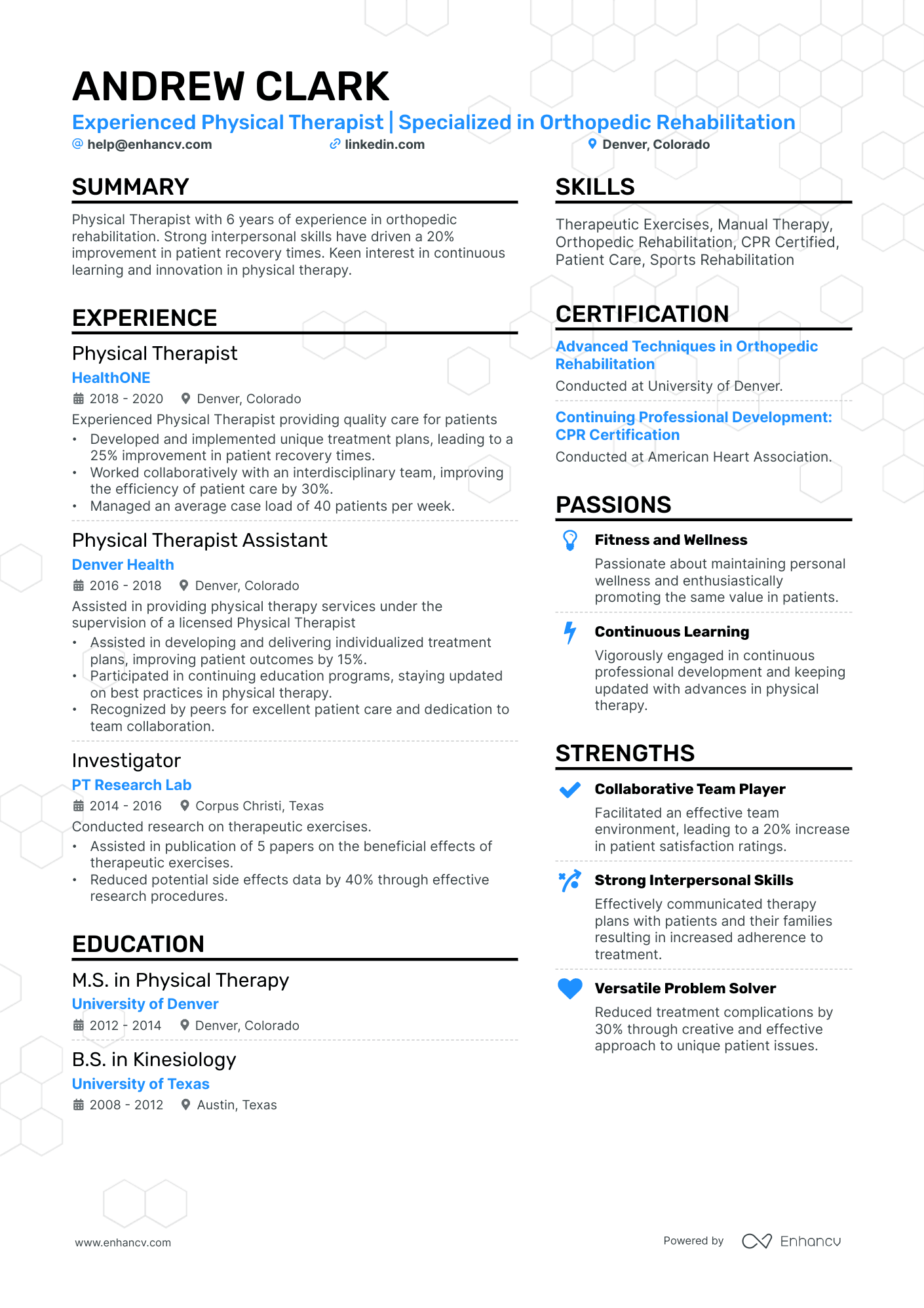
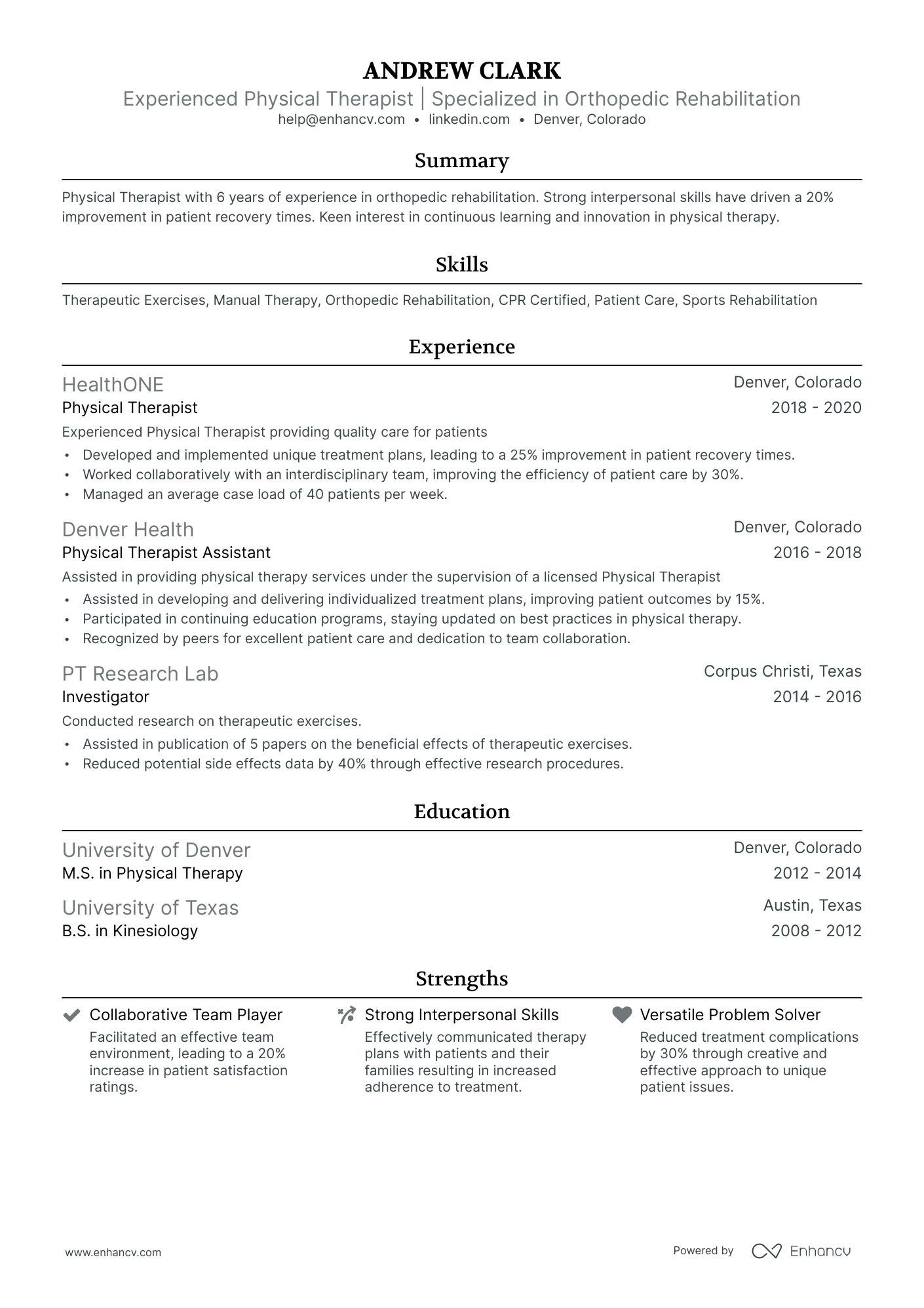
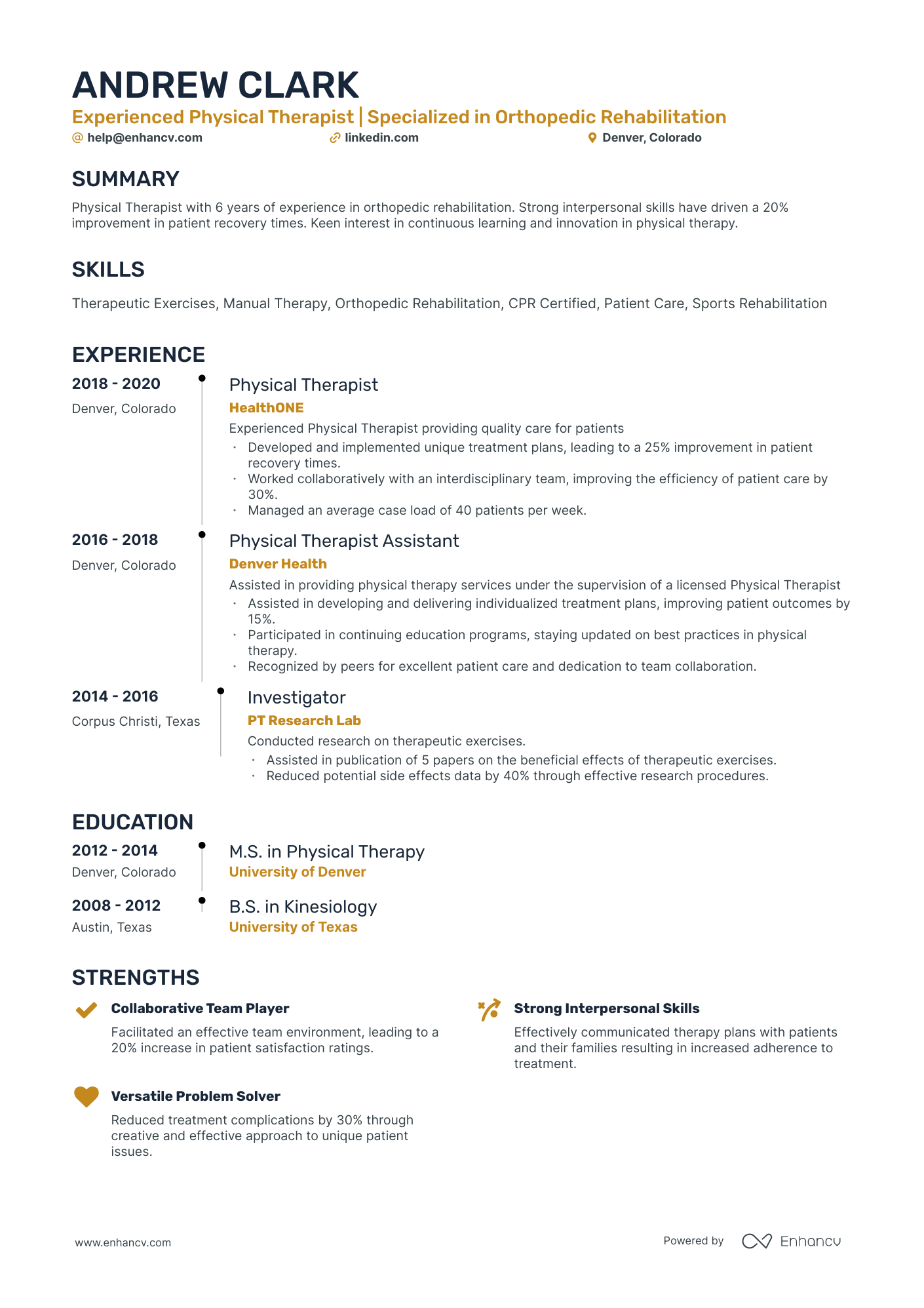
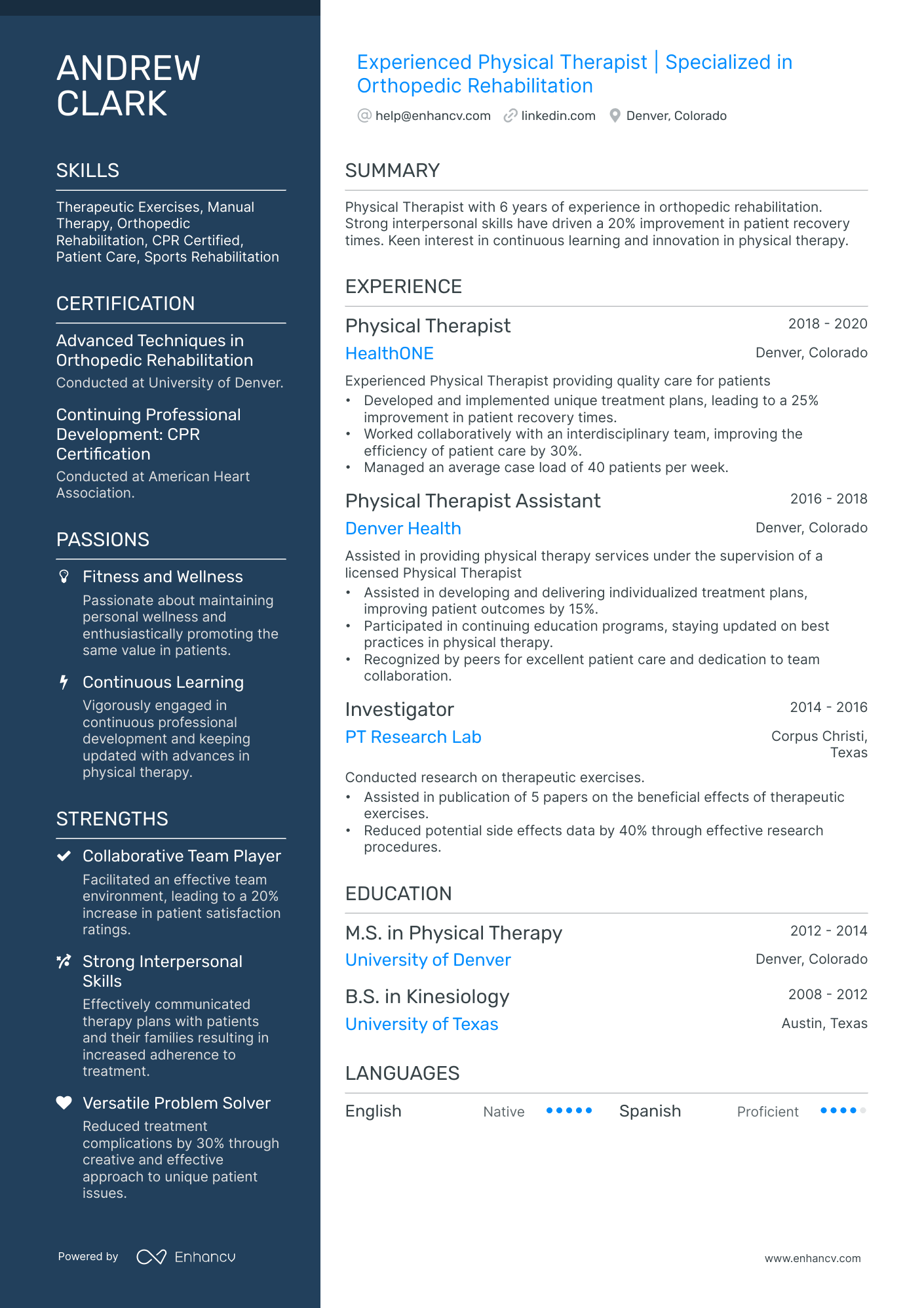
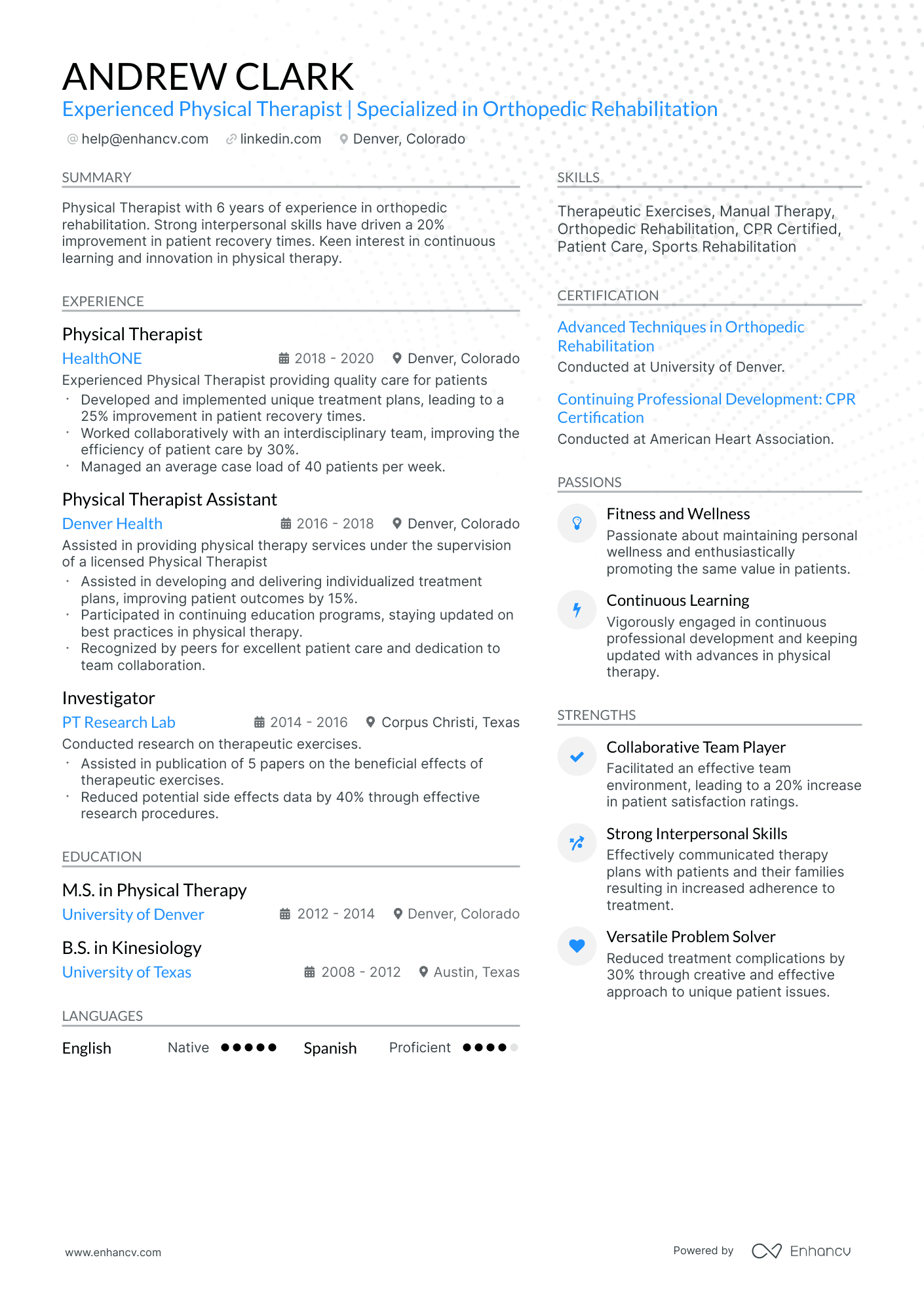
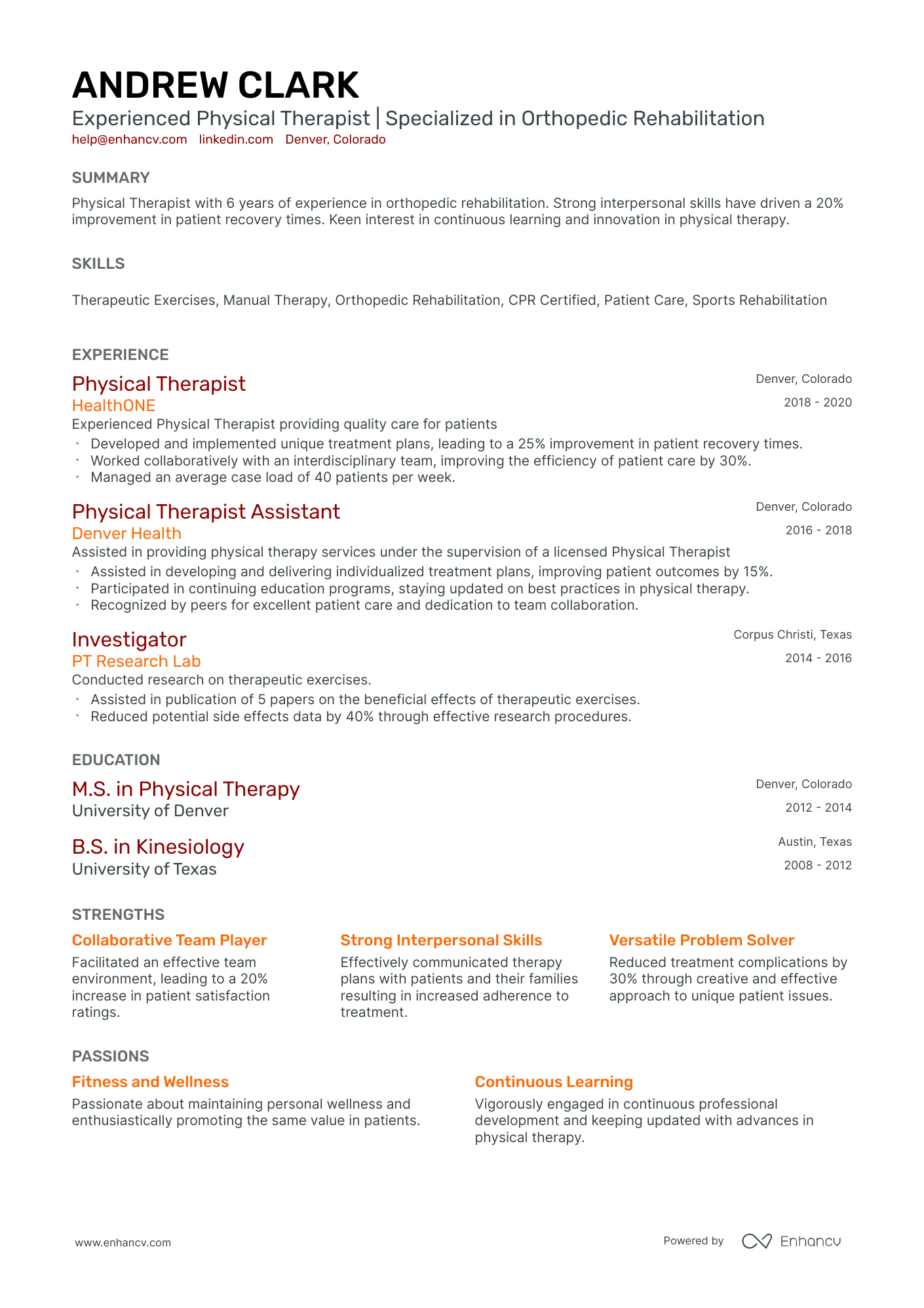
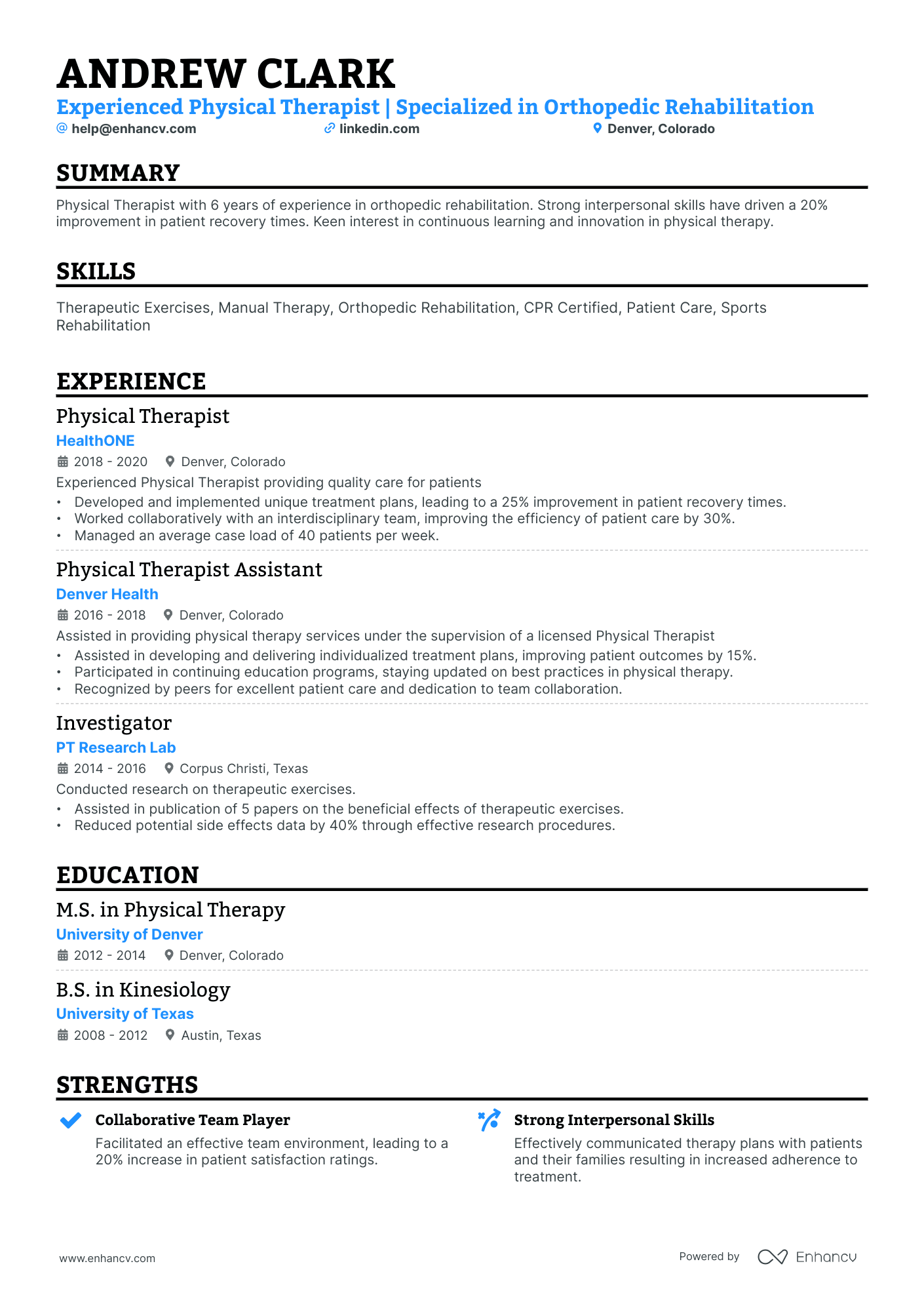
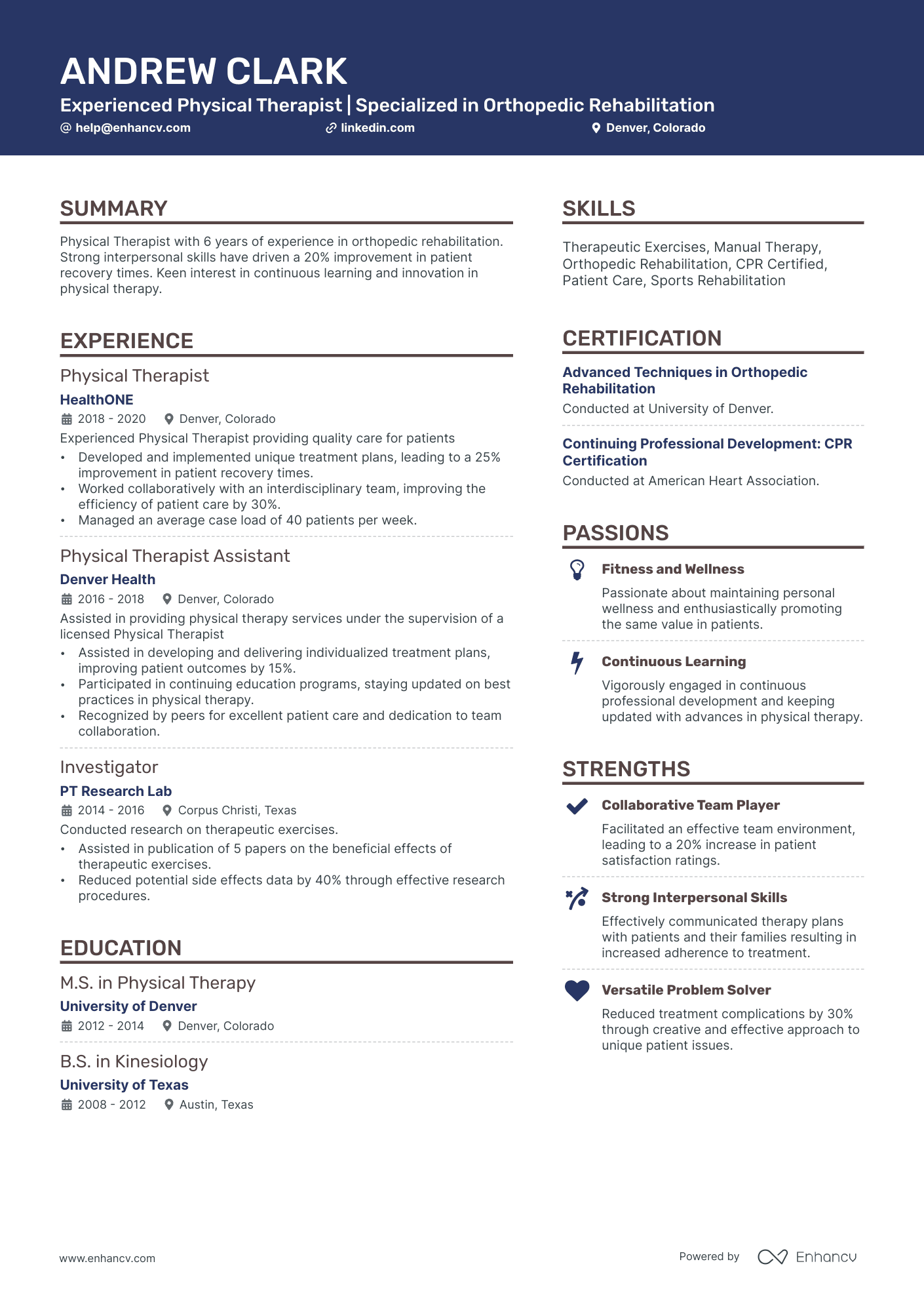
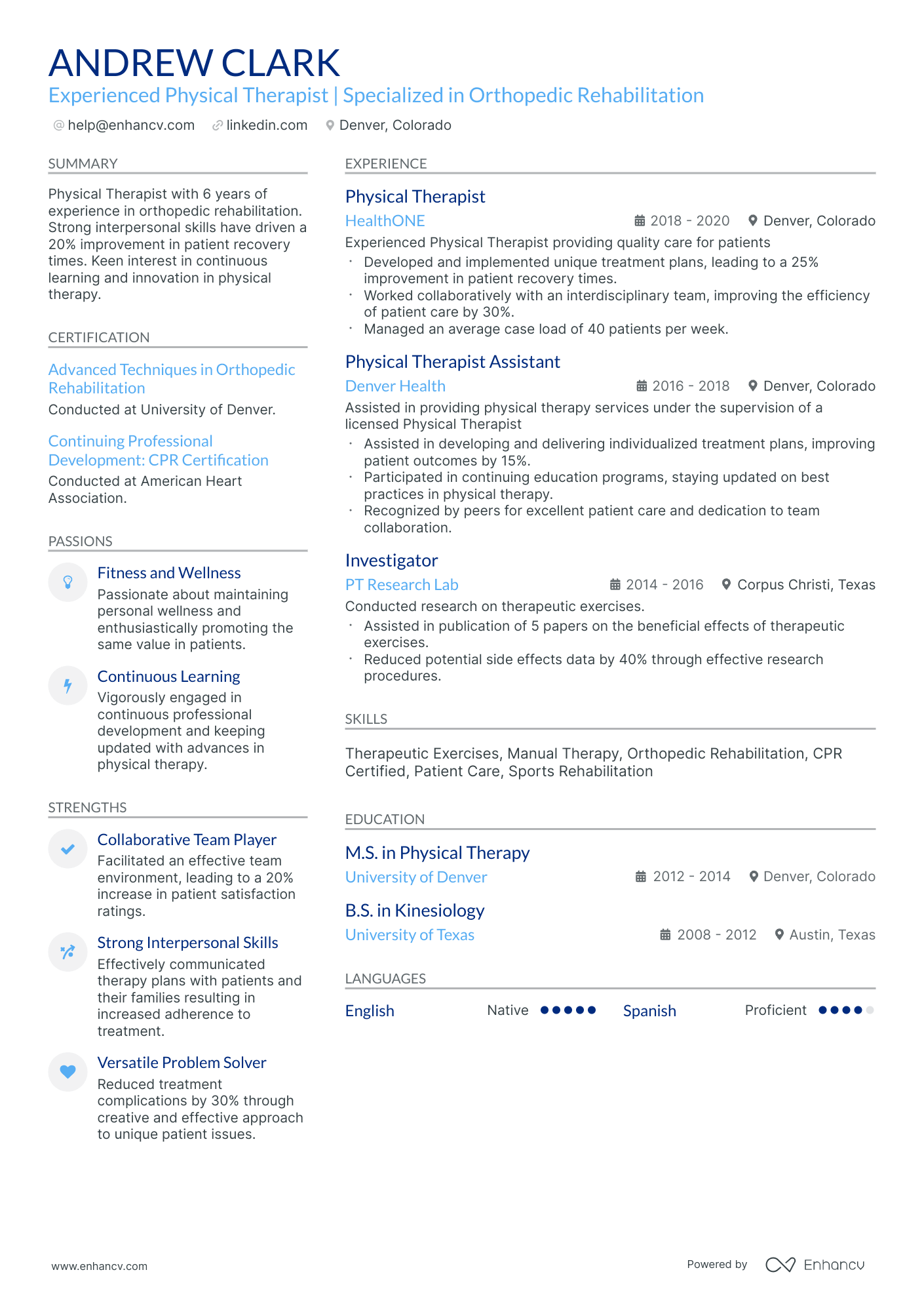
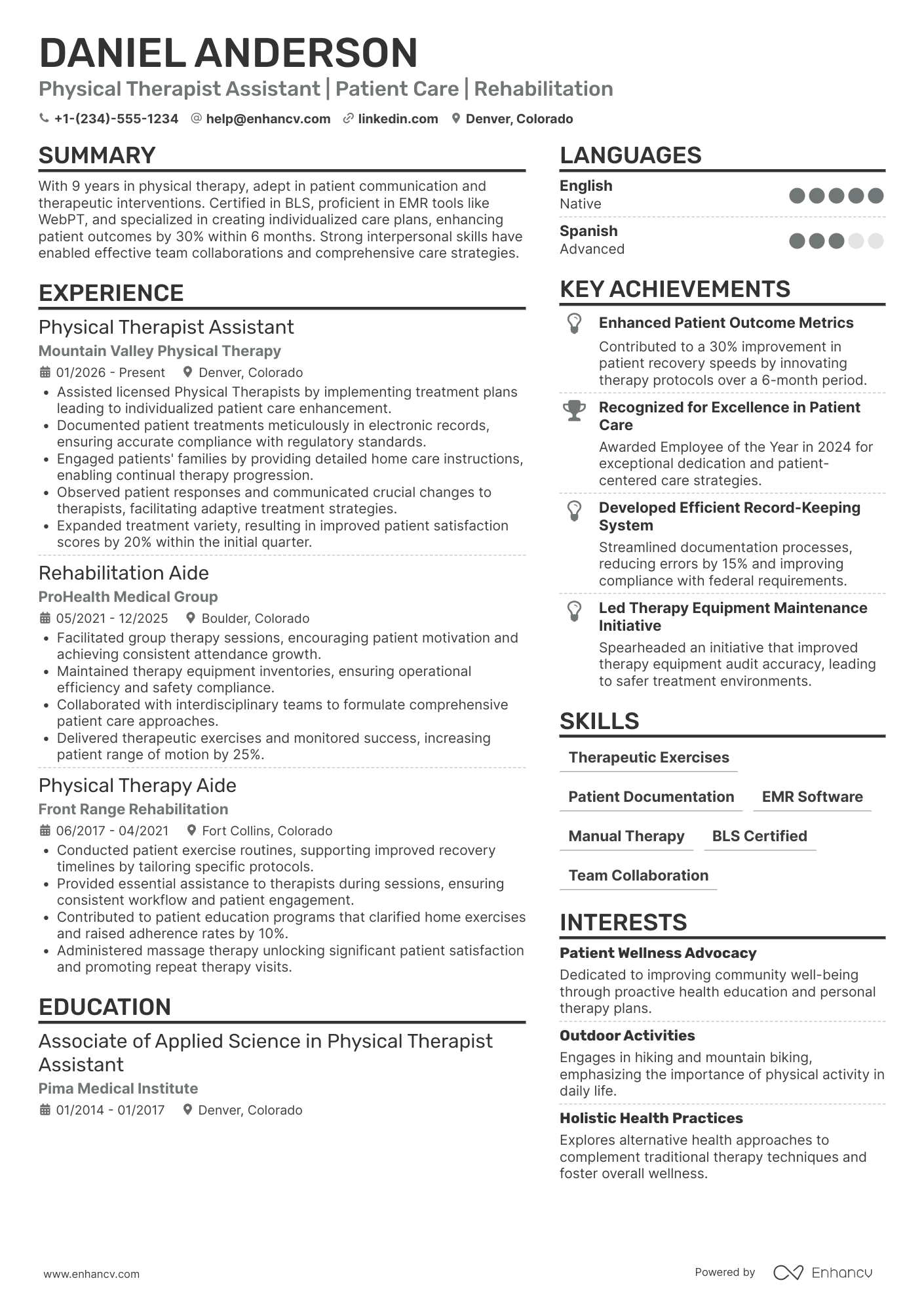
A common reason a PT assistant resume fails is that it buries hands-on patient support under generic duties and inconsistent terminology. That slows ATS matching and loses recruiters who scan fast in a crowded applicant pool.
A strong resume shows outcomes you drove, not just tasks you completed. Knowing how to make your resume stand out means you can highlight patient volume supported per shift, safe transfers, improved documentation accuracy, reduced setup time, higher patient satisfaction notes, and smoother clinic flow during peak hours.

Key takeaways
- Quantify patient outcomes, caseload volume, and efficiency gains instead of listing generic duties.
- Choose reverse-chronological format with experience or hybrid format without it.
- Tailor each experience bullet to mirror the job posting's terminology and clinical priorities.
- Demonstrate skills through measurable results in your summary and experience, not just a list.
- Place certifications strategically—above education when they're required, below when supportive.
- Use AI to tighten phrasing and fill metric gaps, but stop before it invents experience.
- Build your resume faster with Enhancv, then pair it with a cover letter for competitive roles.
How to format a PT assistant resume
Recruiters reviewing physical therapy assistant resumes prioritize clinical competencies, patient care experience, and relevant certifications—typically scanning for these signals in under 10 seconds. The resume format you choose determines how quickly a hiring manager spots your hands-on skills, treatment knowledge, and measurable patient outcomes.

I have significant experience in this role—which format should I use?
Use a reverse-chronological format to lead with your most recent and relevant clinical experience. Do:
- Highlight the scope of your caseload, treatment settings (outpatient, inpatient, pediatric, geriatric), and any supervisory or mentorship responsibilities.
- Feature role-specific tools and skills such as therapeutic exercise protocols, modality administration, electronic medical records systems, and documentation standards.
- Quantify patient outcomes, productivity benchmarks, or efficiency improvements to demonstrate measurable impact.
I'm junior or switching into this role—what format works best?
Use a hybrid format to place your clinical skills and certifications prominently while still showing relevant experience in chronological order. Do:
- Position a dedicated skills section near the top of your resume featuring PTA-specific competencies such as gait training, manual therapy assistance, CPR/BLS certification, and EMR proficiency.
- Include clinical rotations, fieldwork, volunteer hours, or transitional healthcare experience that demonstrates hands-on patient interaction.
- Connect each listed experience to a clear action and result so recruiters can evaluate your readiness for direct patient care.
Why not use a functional resume?
A functional format strips away the clinical context and timeline that hiring managers need to verify where, when, and how you applied your patient care skills—making it harder to assess your readiness for the role. Avoid a functional format unless you have no alternative way to present your qualifications.
- A functional resume may be acceptable if you're changing careers into physical therapy assisting, have a significant gap in your work history, or lack formal clinical employment—but only if every listed skill is tied directly to specific projects, fieldwork, or measurable patient outcomes.
Now that you've established a clean, readable layout, it's time to fill each part of your resume with the right content.
What sections should go on a PT assistant resume
Recruiters expect a clean, standard resume that quickly proves you can support physical therapists and deliver safe, effective patient care. Understanding which resume sections to include ensures maximum clarity.
Use this structure for maximum clarity:
- Header
- Summary
- Experience
- Skills
- Projects
- Education
- Certifications
- Optional sections: Volunteering, Languages, Awards
Your experience bullets should emphasize measurable patient outcomes, caseload volume, treatment support scope, and documentation accuracy.
Is your resume good enough?
Drop your resume here or choose a file. PDF & DOCX only. Max 2MB file size.
Once you’ve organized the key resume components, focus next on writing your physical therapy assistant resume experience section so employers can see how you applied those elements in patient care and clinical support.
How to write your PT assistant resume experience
The experience section of your physical therapy assistant resume should spotlight the treatments you've delivered, the therapeutic tools and methods you've applied, and the measurable patient outcomes you've achieved. Hiring managers prioritize demonstrated clinical impact—improved mobility, reduced recovery timelines, stronger patient adherence—over descriptive task lists. Building a targeted resume ensures every bullet point speaks directly to the role's priorities.
Each entry should include:
- Job title
- Company and location (or remote)
- Dates of employment (month and year)
Three to five concise bullet points showing what you owned, how you executed, and what outcomes you delivered:
- Ownership scope: the patient populations, treatment programs, caseloads, or clinic operations you were directly accountable for as a physical therapy assistant.
- Execution approach: the therapeutic techniques, modalities, exercise protocols, documentation systems, or evidence-based methods you used to carry out treatment plans and track patient progress.
- Value improved: changes to patient mobility, functional independence, pain reduction, treatment adherence, session efficiency, or clinical documentation accuracy tied to your work as a physical therapy assistant.
- Collaboration context: how you coordinated with supervising physical therapists, occupational therapists, physicians, insurance coordinators, or patients' families to ensure cohesive care delivery.
- Impact delivered: outcomes expressed through patient recovery results, caseload scale, program effectiveness, or clinic performance rather than a list of daily duties.
Experience bullet formula
A PT assistant experience example
✅ Right example - modern, quantified, specific.
Physical Therapy Assistant
Summit Orthopedic & Sports Rehab | Austin, TX
2022–Present
Outpatient orthopedic clinic supporting high-volume sports medicine and post-operative recovery programs.
- Delivered therapeutic exercise and neuromuscular reeducation using MedBridge Home Exercise Program, blood flow restriction cuffs, and goniometry—improving average Lower Extremity Functional Scale scores by 18 percent across ninety discharge cases.
- Documented treatments, charges, and functional outcomes in WebPT and ensured Medicare compliance using built-in alerts—cut note completion time by 22 percent and reduced claim denials from 4.1 percent to 1.6 percent.
- Coordinated care plans with physical therapists, orthopedic surgeons, and front-desk staff via secure messaging and daily huddles—cut missed-visit rate by 15 percent and improved plan-of-care adherence by 12 percent.
- Applied manual therapy, gait training, and post-operative protocols for total knee arthroplasty and rotator cuff repair patients—reduced average time to independent ambulation by six days and decreased pain scores by 1.3 points on a ten-point scale.
- Managed equipment readiness and infection prevention using clinic checklists and sterilization logs—passed two internal audits with zero critical findings and reduced treatment delays from equipment issues by 30 percent.
Now that you've seen how a strong experience section comes together, let's look at how to adjust those details to match the specific job you're applying for.
How to tailor your PT assistant resume experience
Recruiters evaluate your PT assistant resume through both human review and applicant tracking systems (ATS). Tailoring your resume to the job description ensures your qualifications stand out in both screening methods.
Ways to tailor your PT assistant experience:
- Match specific therapeutic equipment and modalities named in the posting.
- Mirror the exact terminology used for treatment protocols and procedures.
- Reflect patient outcome measures or recovery benchmarks the employer prioritizes.
- Include experience with the electronic health record system they use.
- Highlight compliance with state licensure and documentation standards mentioned.
- Emphasize collaboration with physical therapists and interdisciplinary care teams referenced.
- Reference relevant clinical settings such as outpatient or acute care environments.
- Align your experience with patient population types specified in the listing.
Tailoring means aligning your real accomplishments with what the employer needs—not forcing keywords into sentences where they don't belong.
Resume tailoring examples for PT assistant
| Job description excerpt | Untailored | Tailored |
|---|---|---|
| "Assist licensed physical therapist with therapeutic exercises, gait training, and ultrasound modalities for orthopedic patients." | Helped patients with exercises and treatments as directed. | Assisted licensed physical therapist with therapeutic exercise programs, gait training, and ultrasound modality application for 15+ orthopedic patients daily, contributing to improved mobility outcomes. |
| "Maintain accurate patient records in WebPT, track attendance, and communicate progress updates to supervising PT." | Updated patient information and kept records organized. | Documented patient attendance, treatment notes, and progress updates in WebPT for a caseload of 40+ patients weekly, ensuring the supervising physical therapist had accurate data for plan-of-care adjustments. |
| "Prepare treatment areas, manage equipment inventory, and instruct patients on home exercise programs (HEPs) under PT supervision." | Set up equipment and helped patients understand their routines. | Prepared treatment areas between sessions, tracked inventory for resistance bands and balance equipment, and instructed patients on individualized home exercise programs prescribed by the supervising PT, improving HEP adherence by 20%. |
Once you’ve aligned your experience with the role’s priorities, the next step is to quantify your physical therapy assistant achievements so employers can see the impact of your work.
How to quantify your PT assistant achievements
Quantifying shows the real impact of your support work, not just your tasks. Focus on volume handled, turnaround time, accuracy, compliance, and risk reduction—plus satisfaction scores when you support customers or internal teams. Learning how to use numbers on your resume effectively can transform vague duties into compelling proof of your contributions.
Quantifying examples for PT assistant
| Metric | Example |
|---|---|
| Volume handled | "Processed 120+ patient intake forms per week in Epic, keeping same-day entry above 98% during peak clinic hours." |
| Turnaround time | "Cut appointment confirmation turnaround from forty-eight to twenty-four hours by using Outlook rules and a daily call-back queue." |
| Accuracy rate | "Reduced billing entry errors from 3.2% to 1.1% by adding a two-step verification checklist in Google Sheets." |
| Compliance | "Maintained 100% HIPAA-compliant document handling across 300+ records by standardizing file naming and access permissions." |
| Risk reduction | "Prevented missed visits by reconciling schedules daily, lowering no-show-related gaps by 12% over eight weeks." |
Turn vague job duties into measurable, recruiter-ready resume bullets in seconds with Enhancv's Bullet Point Generator.
Once you've crafted strong, impact-driven bullet points for your experience section, the next step is ensuring your skills section effectively showcases the hard and soft skills that physical therapist assistant roles demand.
How to list your hard and soft skills on a PT assistant resume
Your skills section shows recruiters and applicant tracking systems (ATS) you can support roadmaps, research, and execution, so list role-specific keywords they scan for and balance hard skills with collaboration and delivery skills to match most PT assistant job posts. Including the right soft skills demonstrates that you can communicate effectively with patients and care teams. PT assistant roles require a blend of:
- Product strategy and discovery skills.
- Data, analytics, and experimentation skills.
- Delivery, execution, and go-to-market discipline.
- Soft skills.
Your skills section should be:
- Scannable (bullet-style grouping).
- Relevant to the job post.
- Backed by proof in experience bullets.
- Updated with current tools.
Place your skills section:
- Above experience if you're junior or switching careers.
- Below experience if you're mid/senior with strong achievements.

Hard skills
- Jira, Confluence
- Asana, Trello
- Product requirements documents
- User stories, acceptance criteria
- Backlog grooming, sprint planning
- Agile, Scrum ceremonies
- User research support, interview notes
- Survey tools, Typeform, Google Forms
- SQL basics, data pulls
- Excel, Google Sheets
- GA4, Amplitude, Mixpanel
- A/B testing support, Optimizely
Soft skills
- Translate needs into requirements
- Ask sharp discovery questions
- Align stakeholders on scope
- Prioritize tasks under deadlines
- Communicate status and risks early
- Run tight meetings and follow-ups
- Write clear, actionable documentation
- Coordinate cross-functional handoffs
- Resolve blockers with ownership
- Give and receive direct feedback
- Balance speed with quality
- Manage competing requests calmly
How to show your PT assistant skills in context
Skills shouldn't live only in a bulleted list on your resume. Browse examples of resume skills to see how top candidates integrate them throughout their applications.
They should be demonstrated in:
- Your summary (high-level professional identity)
- Your experience (proof through outcomes)
Here's what this looks like in practice.
Summary example
Licensed physical therapist assistant with eight years in outpatient orthopedics. Skilled in therapeutic exercise programming, manual therapy, and Net Health documentation. Improved patient discharge rates by 18% through individualized treatment progressions and consistent interdisciplinary communication.
- Reflects senior-level experience clearly
- Names role-relevant tools and methods
- Includes a concrete, measurable outcome
- Highlights communication as a soft skill
Experience example
Senior Physical Therapist Assistant
Summit Orthopedic & Sports Rehab | Portland, OR
March 2019–Present
- Delivered therapeutic exercise and manual therapy interventions for 45+ patients weekly, improving functional outcome scores by 22% over two years.
- Collaborated with physical therapists and athletic trainers to adjust treatment plans using Net Health documentation, reducing plan-of-care delays by 15%.
- Trained three new PTA hires on clinic protocols and patient flow systems, cutting average onboarding time from six weeks to four.
- Every bullet includes measurable proof
- Skills appear naturally within real outcomes
Once you’ve tied your relevant strengths to real responsibilities and outcomes, the next step is structuring a physical therapist assistant resume with no experience so those connections still come through clearly.
How do I write a PT assistant resume with no experience
Even without full-time experience, you can demonstrate readiness through clinical exposure and transferable skills. Our guide on writing a resume without work experience walks you through the process step by step. Consider highlighting:
- Physical therapy clinic shadowing hours
- Related coursework lab practicals
- Volunteer patient transport assistance
- Sports team athletic training support
- Senior center mobility class assistance
- Healthcare front desk check-in support
- CPR and first aid certification
Focus on:
- Patient handling and transfer training
- Documentation accuracy in medical records
- Modalities setup and safety checks
- HIPAA compliance in clinical settings
Resume format tip for entry-level PT assistant
Use a hybrid resume format because it highlights skills, training, and projects first, while still showing education and any clinical exposure. Do:
- Lead with a targeted skills section.
- Add a projects section with outcomes.
- List relevant coursework with labs.
- Include certifications with dates.
- Quantify hours, sessions, or patients.
- Supported eight senior center mobility sessions by setting up gait belts and resistance bands, tracking attendance in Google Sheets, and improving on-time starts by 20%.
Even without hands-on experience, your education section can demonstrate the clinical knowledge and training that qualify you for the role.
How to list your education on a PT assistant resume
Your education section helps hiring teams confirm you have the foundational knowledge needed for patient care. It validates your training in anatomy, therapeutic techniques, and rehabilitation principles.
Include:
- Degree name
- Institution
- Location
- Graduation year
- Relevant coursework (for juniors or entry-level candidates)
- Honors & GPA (if 3.5 or higher)
Skip month and day details—list the graduation year only.
Here's a strong education entry tailored to the PT assistant role.
Example education entry
Associate of Applied Science in Physical Therapist Assistant
Broward College, Fort Lauderdale, FL
Graduated 2023
GPA: 3.7
- Relevant Coursework: Kinesiology, Therapeutic Modalities, Musculoskeletal Rehabilitation, Patient Care Techniques, and Clinical Pathology
- Honors: Dean's List, 2022–2023
How to list your certifications on a PT assistant resume
Certifications show you keep learning, can use key clinical tools, and understand current standards that matter for a PT assistant role.
Include:
- Certificate name
- Issuing organization
- Year
- Optional: credential ID or URL
- Place certifications below education when your degree is recent and your certifications add support, not the main proof of readiness.
- Place certifications above education when they're recent, highly relevant, or required, and you want them noticed fast by hiring teams.
Best certifications for your PT assistant resume
- CPR and AED Certification
- Basic Life Support (BLS) Certification
- First Aid Certification
- OSHA Safety Certificate
- HIPAA Compliance Training Certificate
- Bloodborne Pathogens Training Certificate
- Certified Physical Therapy Aide (CPTA)
Once you’ve positioned your credentials so employers can verify them quickly, move to your PT assistant resume summary to tie those qualifications to the value you’ll bring in the role.
How to write your PT assistant resume summary
Your resume summary is the first thing a recruiter reads when reviewing your PT assistant application. A strong opening signals relevant skills and real clinical value within seconds.
Keep it to three to four lines, with:
- Your title and years of hands-on experience in physical therapy settings.
- The clinical domain or patient population you've supported most.
- Core skills such as therapeutic exercise instruction, modality application, or documentation platforms.
- One or two measurable achievements that show your contributions.
- Interpersonal strengths tied to specific patient or team outcomes.

PRO TIP
At this level, emphasize clinical skills, relevant tools, and early wins that prove your readiness. Highlight hands-on patient care contributions and efficient workflow habits. Avoid vague phrases like "passionate team player" or "hard-working self-starter." Recruiters want proof, not personality claims.
Example summary for a PT assistant
PT assistant with two years of outpatient orthopedic experience. Skilled in therapeutic exercise programs, ultrasound modalities, and WebPT documentation. Improved patient adherence rates by 18% through structured home exercise education.
Optimize your resume summary and objective for ATS
Drop your resume here or choose a file.
PDF & DOCX only. Max 2MB file size.
Now that your summary highlights your strongest qualifications, make sure your header presents the essential contact and professional details recruiters need to reach you.
What to include in a PT assistant resume header
A resume header lists your key contact details and role focus, helping PT assistants boost visibility, build credibility, and pass recruiter screening fast.
Essential resume header elements
- Full name
- Tailored job title and headline
- Location
- Phone number
- Professional email
- GitHub link
- Portfolio link
A LinkedIn link helps recruiters verify experience quickly and supports screening.
Do not include photos on a PT assistant resume unless the role is explicitly front-facing or appearance-dependent.
Match your job title and headline to the posting's wording, and keep every link current, professional, and easy to scan.
PT assistant resume header
Jordan Lee
PT assistant | Outpatient orthopedic support and patient care
Austin, TX
(512) 555-01XX
jordan.lee@enhancv.com
github.com/jordanlee
yourwebsite.com
linkedin.com/in/jordanlee
Once your contact details, credentials, and role focus are clear at the top, add additional sections to reinforce your qualifications and round out your physical therapist assistant resume.
Additional sections for PT assistant resumes
Adding extra sections helps you stand out when your core qualifications match other applicants. They build credibility and show well-rounded relevance to patient care. For example, listing language skills can demonstrate your ability to communicate with diverse patient populations.
- Languages
- Certifications and continuing education
- Volunteer experience in healthcare or rehabilitation settings
- Professional affiliations (e.g., APTA membership)
- Hobbies and interests related to fitness or wellness
- First aid and CPR training
Once you've rounded out your resume with the right supplementary sections, it's equally important to pair it with a strong cover letter that reinforces your qualifications.
Do PT assistant resumes need a cover letter
A cover letter isn't required for a PT assistant, but it helps when roles attract many applicants or hiring teams expect one. If you're unsure where to start, learn what a cover letter is and how it complements your resume. It can make a difference when your resume needs context or your fit isn't obvious.
Use a cover letter to add details your resume can't:
- Explain role and team fit by connecting your strengths to the clinic's patient population, care model, and daily workflow.
- Highlight one or two relevant projects or outcomes, such as improving patient adherence, reducing no-shows, or streamlining documentation.
- Show you understand the product, users, or business context, such as the electronic health record, scheduling flow, or patient experience.
- Address career transitions or non-obvious experience by tying transferable skills to PT assistant tasks and clinical priorities.
Drop your resume here or choose a file.
PDF & DOCX only. Max 2MB file size.
Even if you decide to include a cover letter to add context beyond your resume, AI tools can help you sharpen your PT assistant resume faster and more consistently.
Using AI to improve your PT assistant resume
AI can sharpen your resume's clarity, structure, and impact. It helps you find stronger phrasing and tighten wordy bullets. But overuse kills authenticity. Once your content is clear and role-aligned, step away from AI. If you're wondering which AI is best for writing resumes, focus on tools that enhance rather than fabricate your experience.
Here are 10 practical prompts you can copy and paste to strengthen specific sections of your resume:
- Strengthen summary focus: "Rewrite my PT assistant resume summary to highlight hands-on patient care skills and measurable contributions in three sentences or fewer."
- Quantify experience bullets: "Add specific metrics to these PT assistant experience bullets, such as patient volumes, session counts, or efficiency improvements."
- Tighten wordy descriptions: "Shorten each PT assistant experience bullet to one concise line while keeping the core action and outcome intact."
- Align skills to job posts: "Compare my PT assistant skills section against this job description and suggest missing keywords I should add."
- Improve action verbs: "Replace weak or repetitive verbs in my PT assistant experience section with stronger, more specific clinical action verbs."
- Clarify certification details: "Reformat my PT assistant certifications section so each entry clearly lists the credential name, issuing body, and date."
- Refine education entries: "Rewrite my PT assistant education section to emphasize relevant coursework, clinical rotations, and academic honors."
- Highlight project contributions: "Describe my PT assistant clinic project involvement using outcome-driven language that shows initiative and teamwork."
- Remove redundant content: "Identify and remove any repeated or unnecessary information across all sections of my PT assistant resume."
- Check role alignment: "Review my entire PT assistant resume and flag any bullet that doesn't directly relate to physical therapy support responsibilities."
Stop using AI once your resume sounds accurate, specific, and aligned with real experience. AI should never invent experience or inflate claims—if it didn't happen, it doesn't belong here.
Conclusion
A strong PT assistant resume highlights measurable outcomes, role-specific skills, and a clear structure. It shows what you improved, how you supported patient care, and how you worked with the physical therapist.
Keep your resume focused, easy to scan, and consistent from top to bottom. This approach matches today’s hiring market and near-future expectations, and it shows you’re ready to contribute on day one.