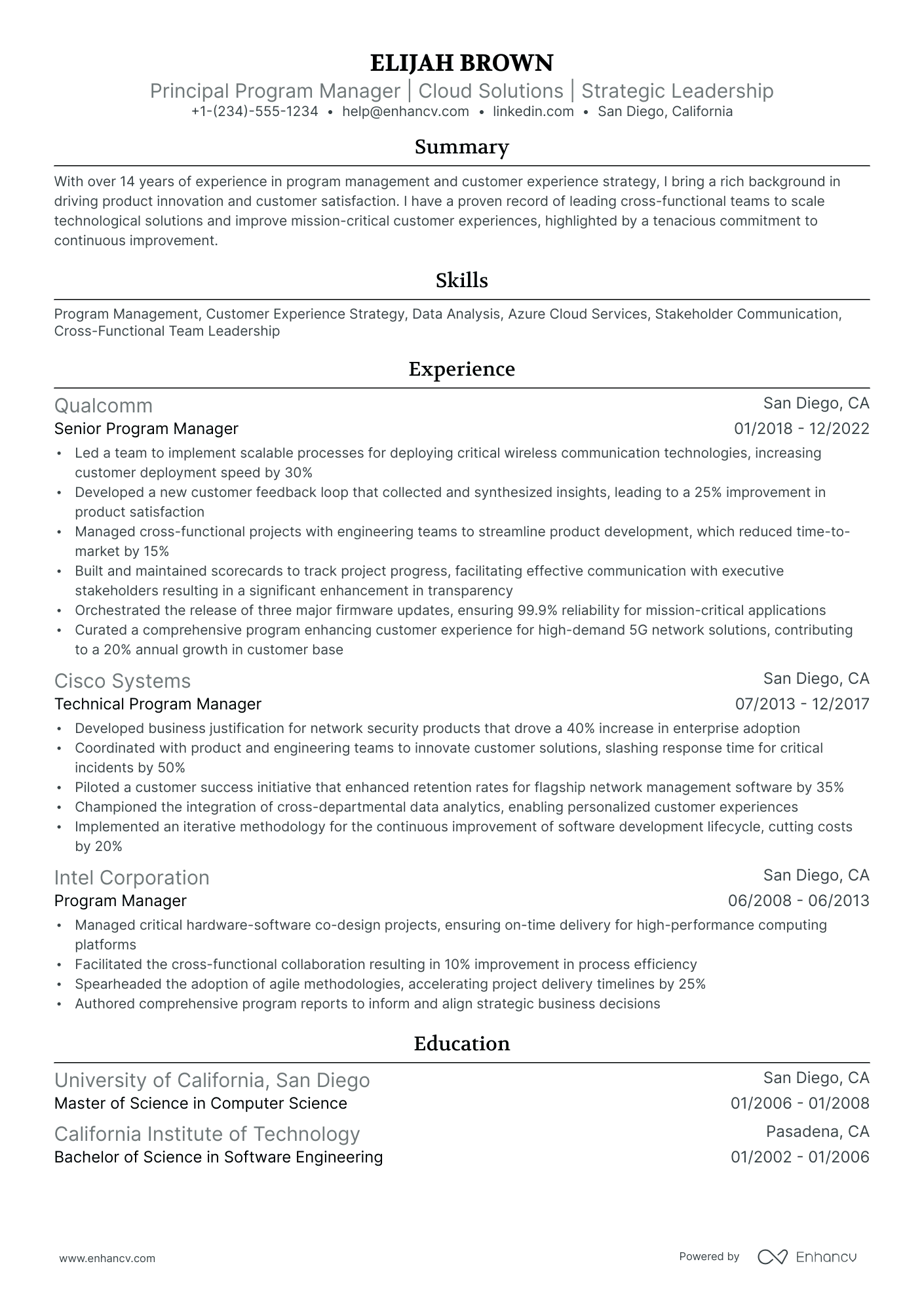
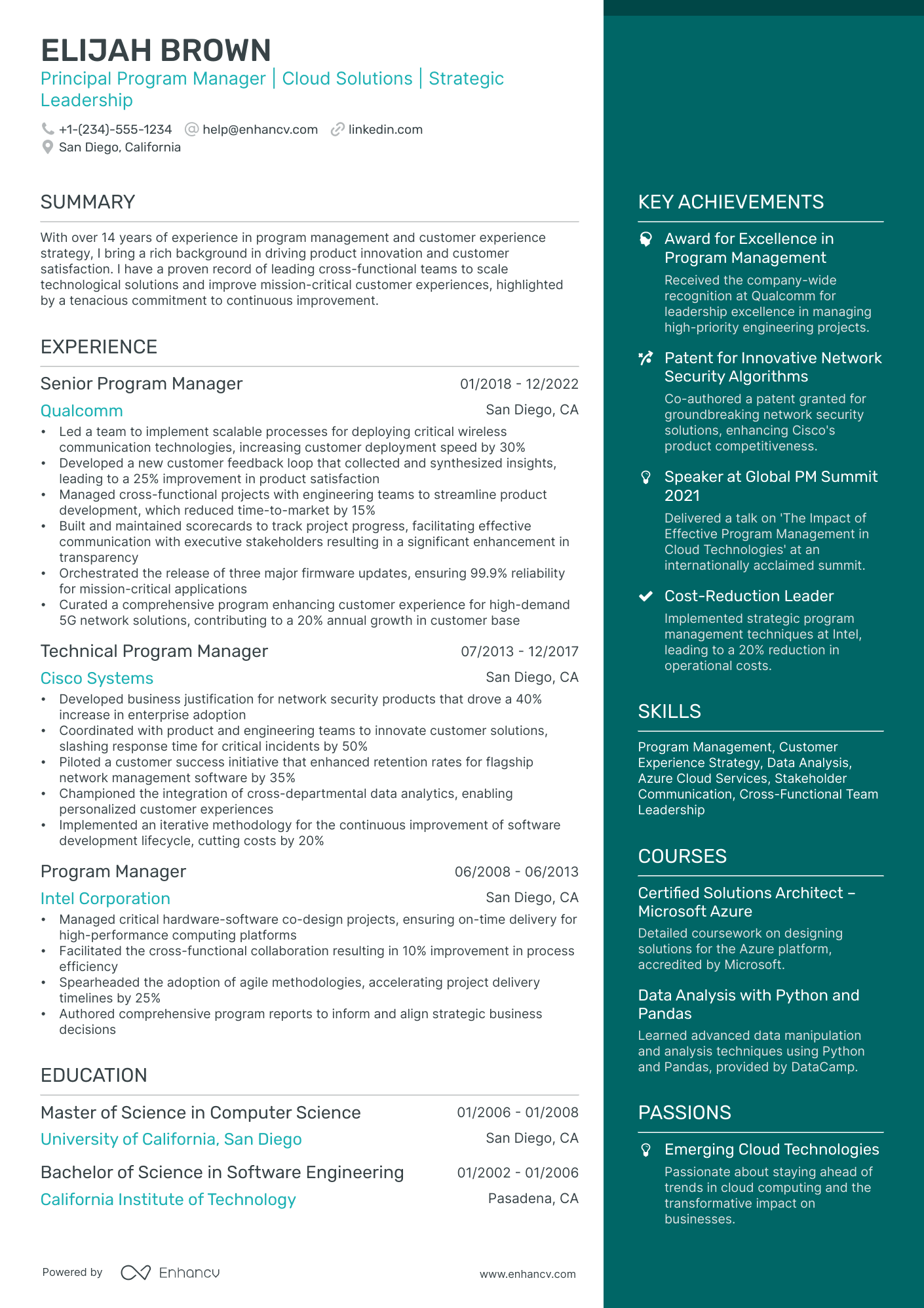
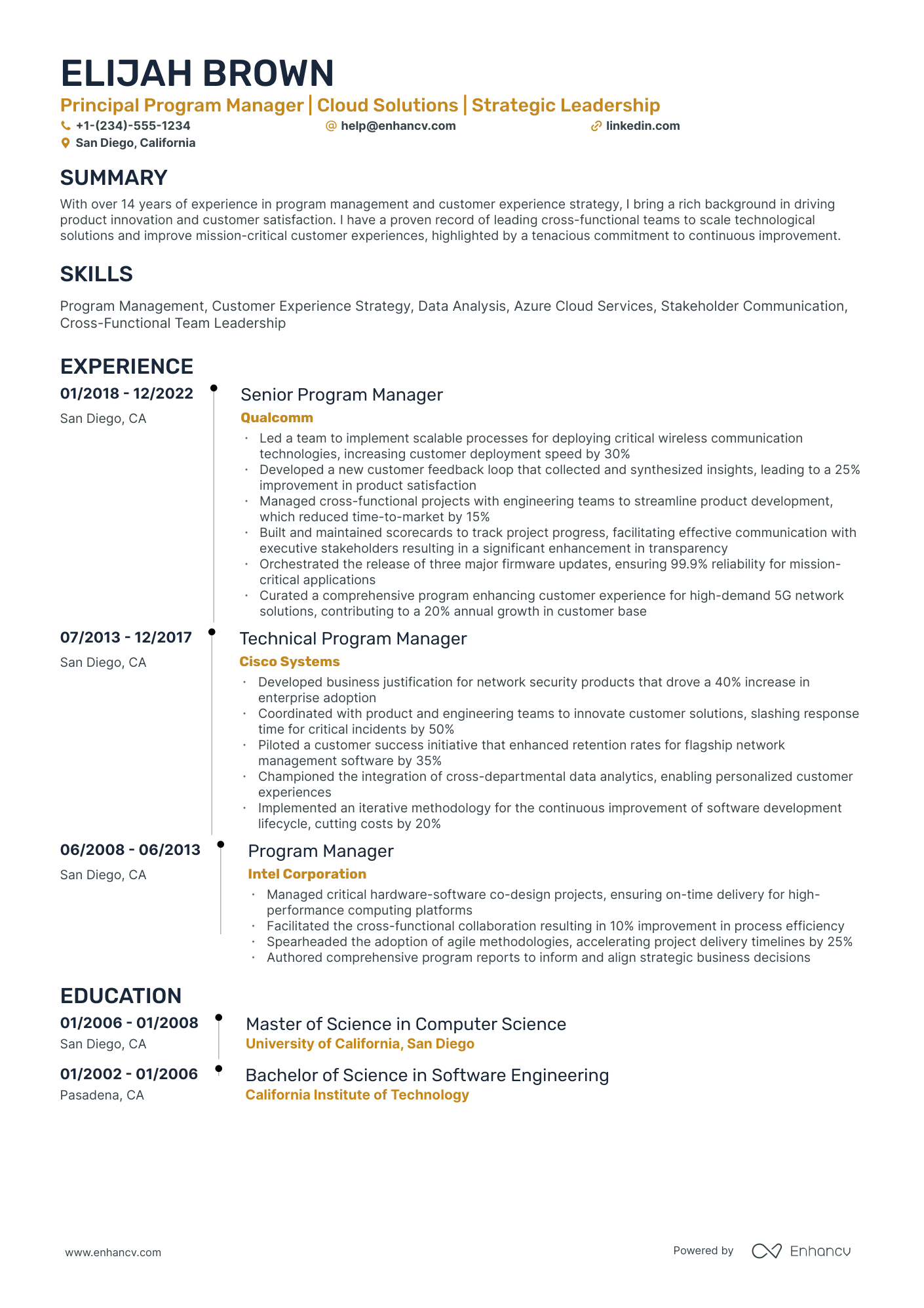
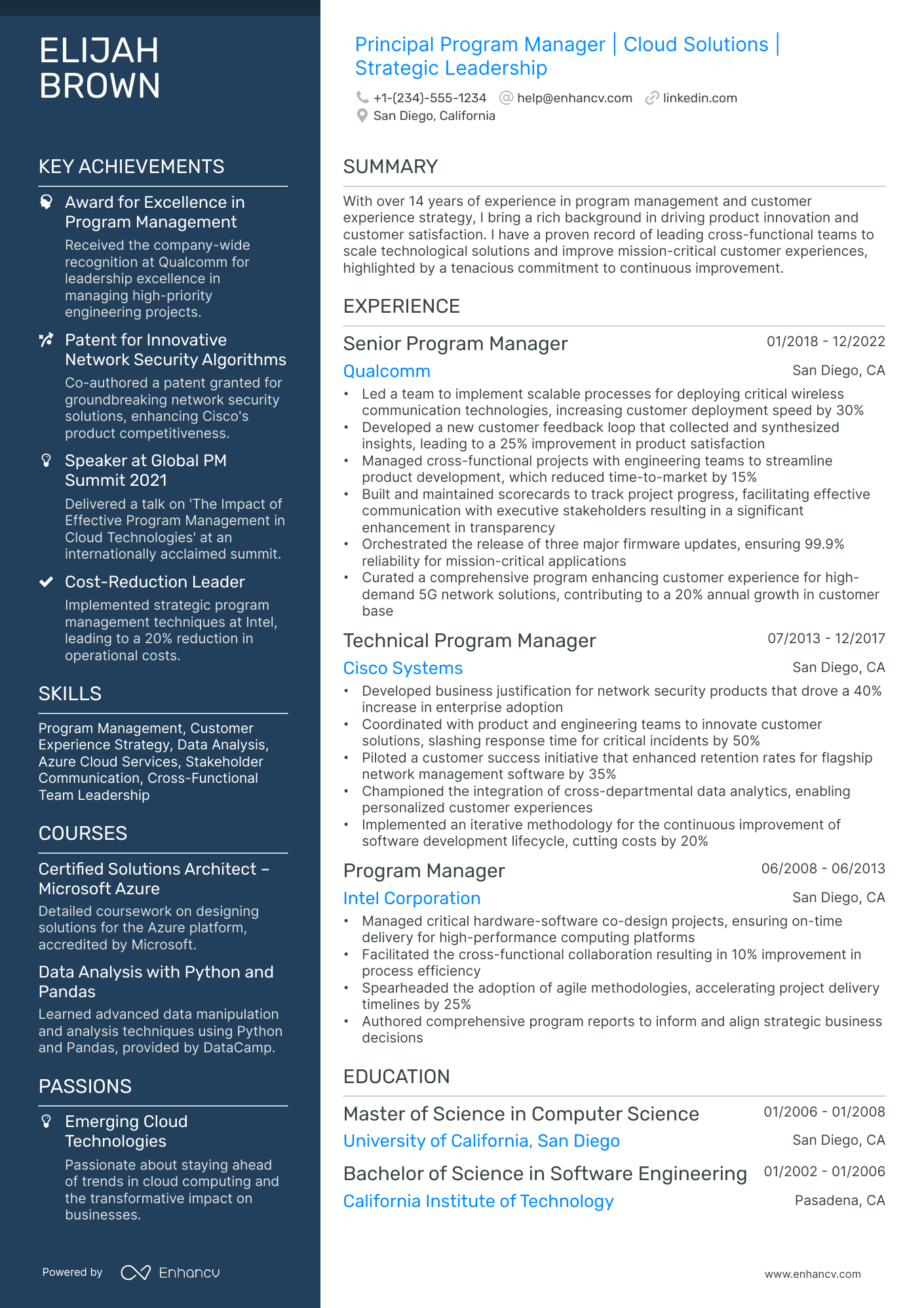
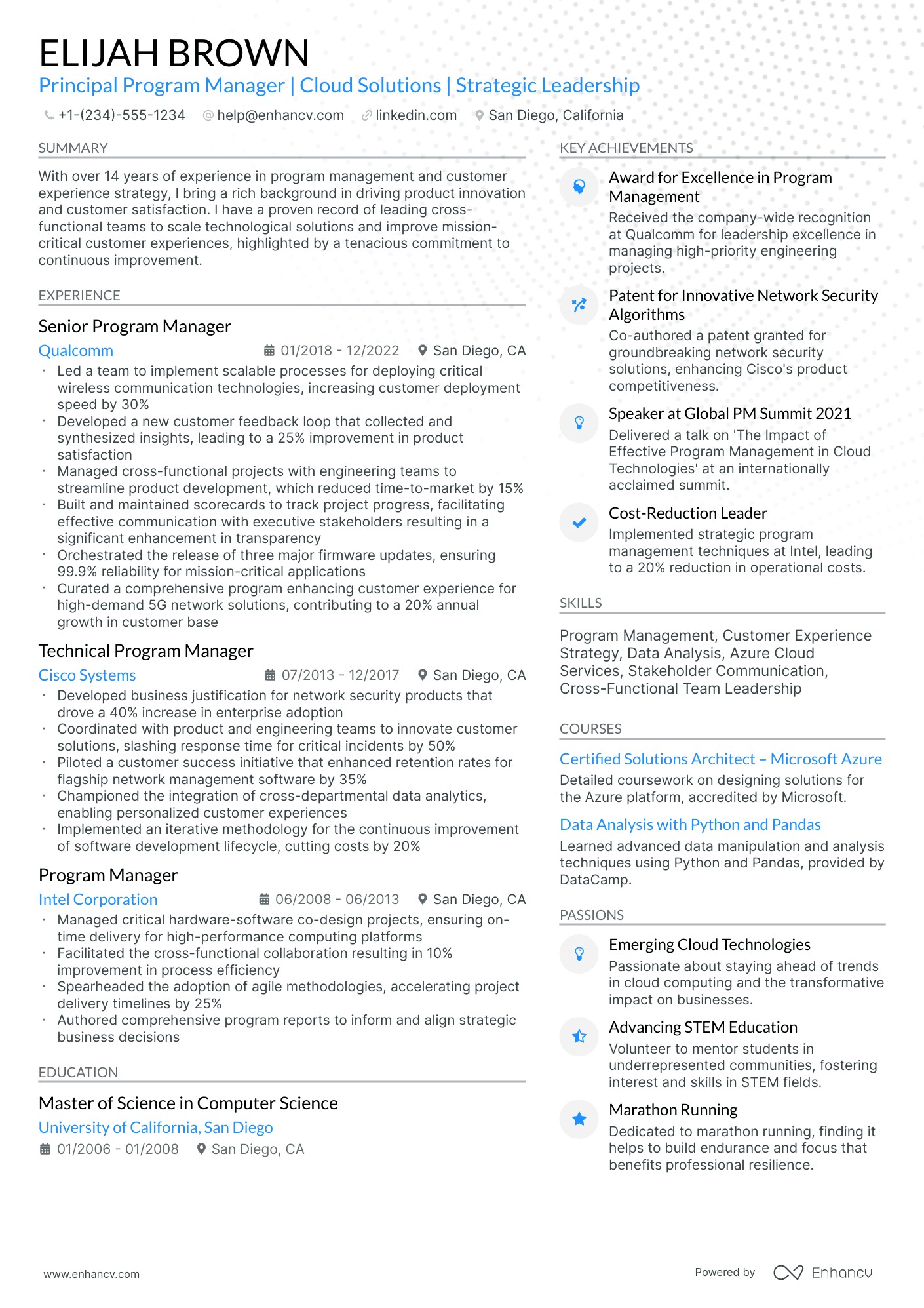
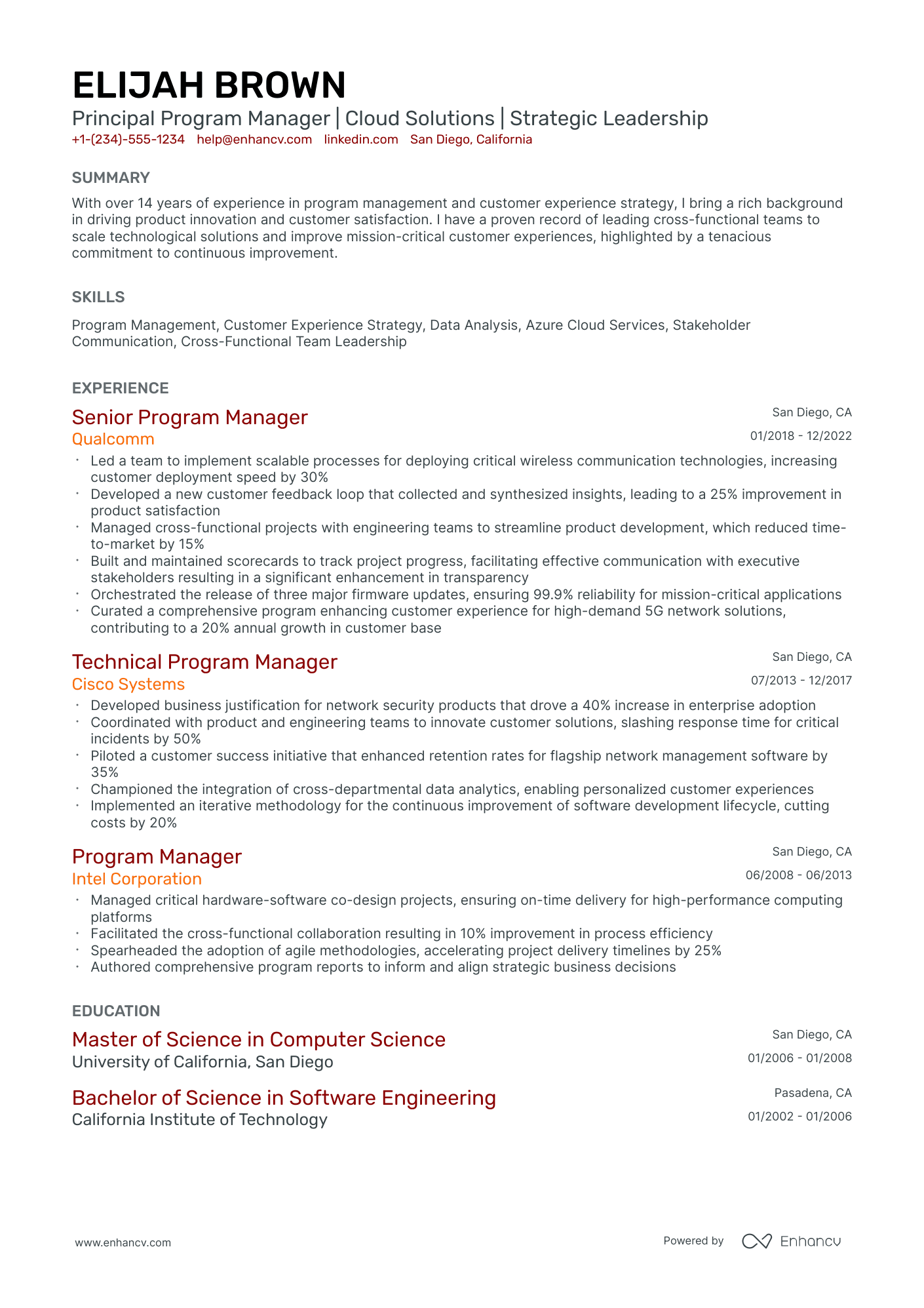
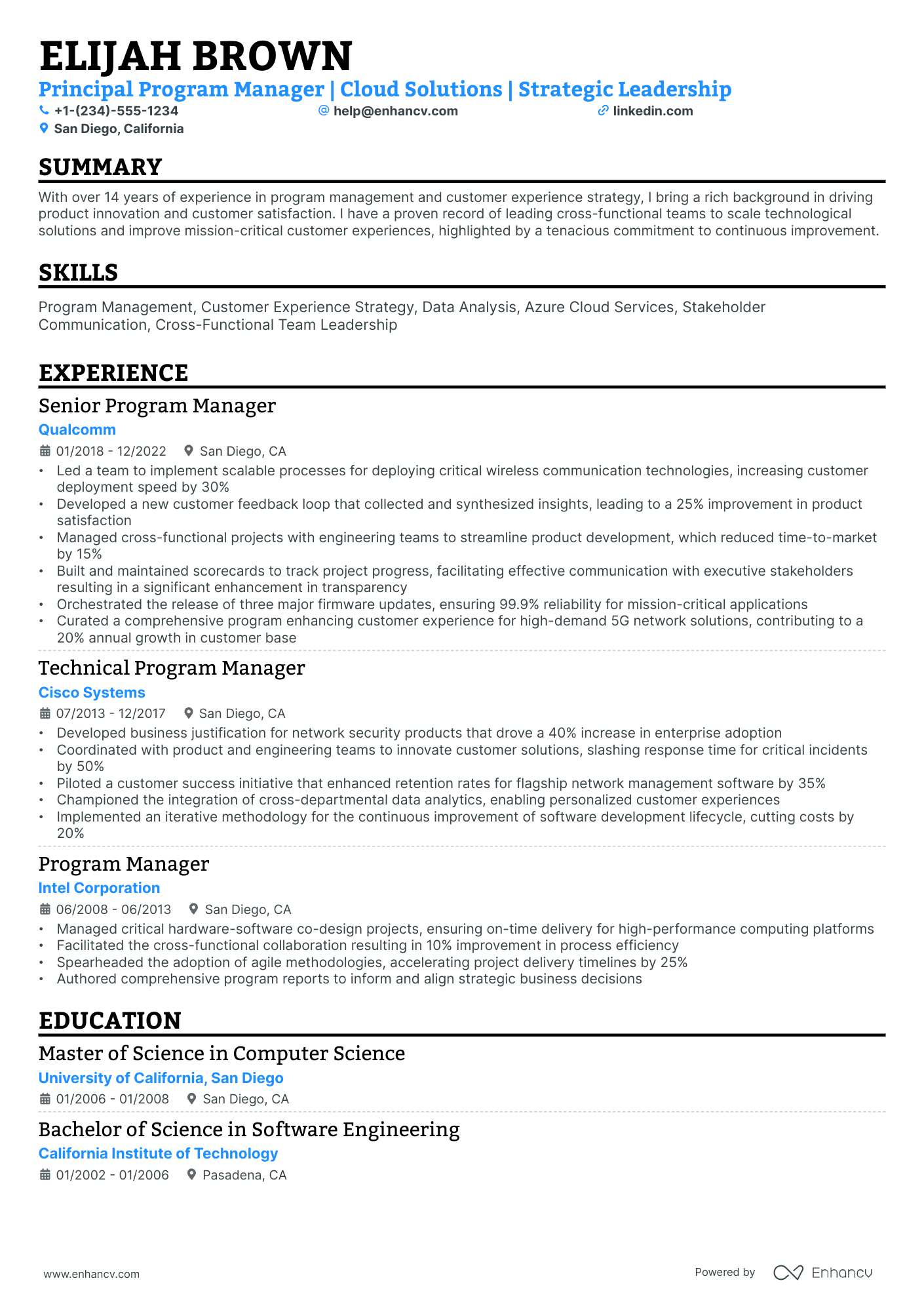
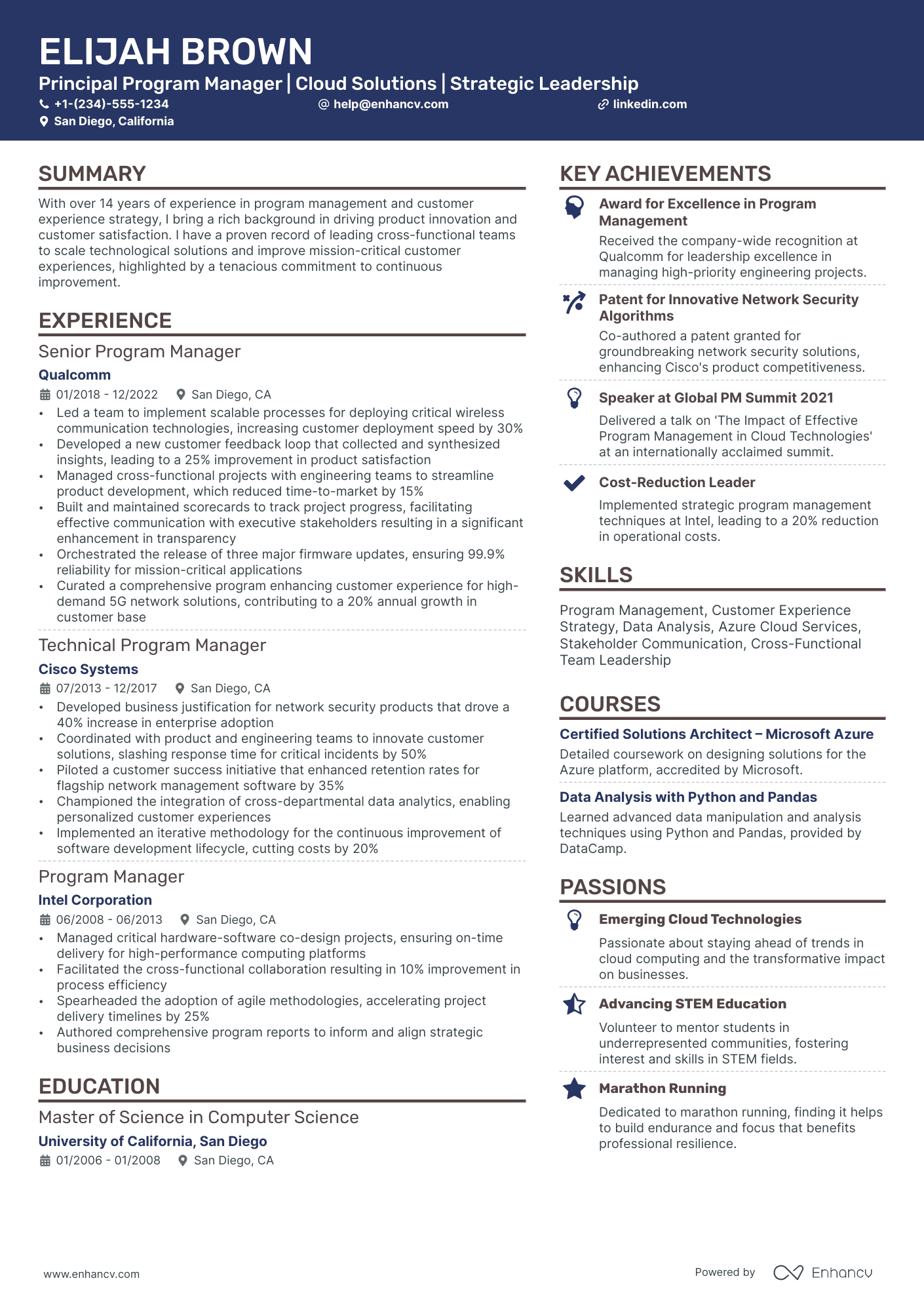

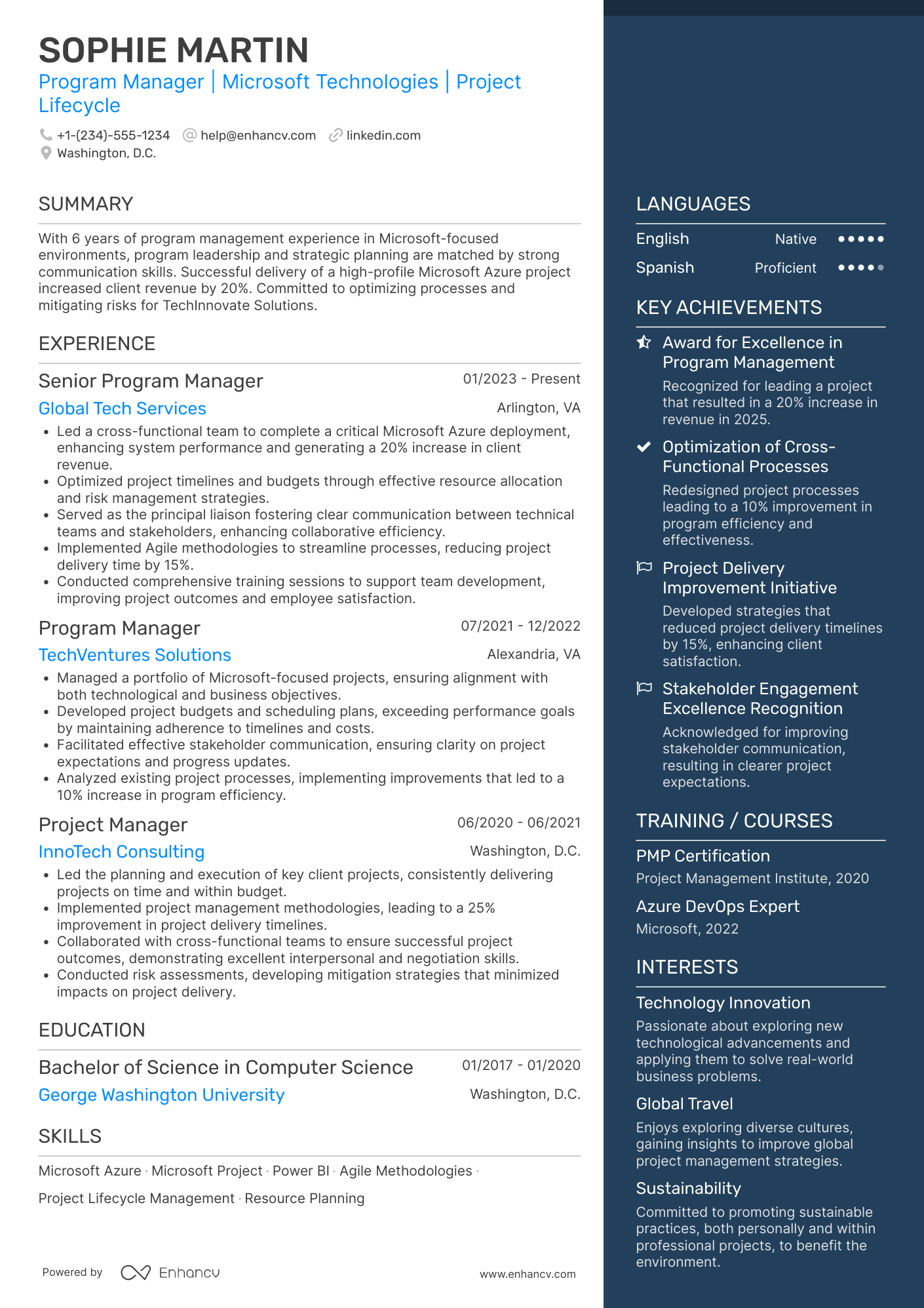
Many Microsoft program manager resume drafts fail because they read like task logs and bury measurable outcomes. That hurts in ATS screening and fast recruiter scans, where high competition rewards clear impact and precise scope.
A strong resume shows what you delivered and why it mattered. Knowing how to make your resume stand out starts with leading with metrics, program scope, delivery speed, defect reduction, adoption gains, revenue impact, cost savings, and improved customer satisfaction. Tie each outcome to decisions you drove and cross-team alignment.

Key takeaways
- Lead every experience bullet with a measurable outcome, not a task description.
- Use reverse-chronological format for senior roles and hybrid format for career switchers.
- Tailor resume language to mirror each job posting's exact tools and terminology.
- Quantify delivery speed, reliability, cost savings, and adoption in every achievement.
- Anchor skills in your summary and experience sections, not just a standalone list.
- Pair projects with scope, metrics, and tooling when you lack direct program manager titles.
- Use Enhancv's tools to tighten bullet points and align your resume with role-specific expectations.
How to format a Microsoft program manager resume
Recruiters evaluating Microsoft program manager resumes prioritize cross-functional leadership, end-to-end program ownership, and measurable business outcomes delivered across complex product or engineering initiatives. Choosing the right resume format is critical—your layout must surface these signals immediately, placing progression through increasingly strategic roles, scope of accountability, and quantified impact where hiring managers and applicant tracking systems can find them within seconds.

I have significant experience in this role—which format should I use?
Use a reverse-chronological format—it's the strongest choice for showcasing depth of program management experience at Microsoft or comparable organizations. Do:
- Lead each role entry with scope indicators: number of cross-functional teams coordinated, budget ownership, and program scale (e.g., org-wide launches, multi-year roadmaps).
- Highlight Microsoft-ecosystem proficiency—Azure DevOps, Power BI, Microsoft Project, OKR frameworks—and domain expertise such as cloud infrastructure, platform engineering, or AI/ML program delivery.
- Quantify every outcome in terms of business impact: revenue influenced, time-to-market reduction, cost savings, or adoption metrics tied directly to your decisions.
I'm junior or switching into this role—what format works best?
A hybrid format works best, letting you lead with a targeted skills section while still grounding your experience in a chronological work history. Do:
- Place a skills summary near the top that aligns directly with Microsoft program manager competencies: stakeholder management, cross-team coordination, roadmap planning, and data-driven decision-making.
- Feature relevant projects, certifications (PMP, SAFe, CSM), or transitional experience—such as technical project management, product ownership, or internal process improvement initiatives—that demonstrate program management fundamentals.
- Connect every action to a measurable result so hiring managers can evaluate your impact regardless of title seniority.
Why not use a functional resume?
A functional format strips away the timeline and context that recruiters need to evaluate how your program management capabilities developed and where you applied them, making it harder to assess readiness for Microsoft's structured, impact-driven environment.
- Edge-case exception: A functional resume may be acceptable if you're making a significant career change into program management from an adjacent discipline (e.g., engineering, consulting, or operations), have a gap of 12+ months, or lack formal PM titles—but only if every listed skill is anchored to a specific project, deliverable, or outcome rather than presented in isolation.
With your format established, the next step is determining which sections to include so each one serves a clear purpose on your resume.
What sections should go on a Microsoft program manager resume
Recruiters expect you to present product delivery ownership, cross-functional leadership, and measurable business impact in a clean, easy-to-scan format. Understanding what to put on a resume helps you prioritize the right content for this role.
Use this structure for maximum clarity:
- Header
- Summary
- Experience
- Skills
- Projects
- Education
- Certifications
- Optional sections: Awards, Publications, Volunteering
Strong experience bullets should emphasize shipped outcomes, measurable impact, end-to-end scope, and cross-team execution at scale.
Is your resume good enough?
Drop your resume here or choose a file. PDF & DOCX only. Max 2MB file size.
Once you’ve organized your resume with the right core components, the next step is to write the experience section in a way that shows impact and fits Microsoft’s program manager expectations.
How to write your Microsoft program manager resume experience
The experience section is where you prove you've shipped products, driven cross-functional execution, and delivered measurable outcomes as a program manager. Hiring managers at Microsoft prioritize demonstrated impact—real results tied to strategy, delivery, and scale—over descriptive task lists.
Each entry should include:
- Job title
- Company and location (or remote)
- Dates of employment (month and year)
Three to five concise bullet points showing what you owned, how you executed, and what outcomes you delivered:
- Ownership scope: the products, platforms, features, or cross-team initiatives you were directly accountable for as a program manager, including the scale of users, teams, or services involved.
- Execution approach: the frameworks, tools, and methods you used to drive decisions and delivery—such as roadmap planning, risk management, dependency tracking, stakeholder alignment, or agile ceremonies relevant to Microsoft's engineering culture.
- Value improved: the specific dimensions of quality, performance, reliability, efficiency, accessibility, or risk posture you changed through your program management work, tied directly to product or organizational health.
- Collaboration context: how you partnered with engineering, design, data science, marketing, legal, or external partners to align priorities, resolve blockers, and ship work across Microsoft's matrixed environment.
- Impact delivered: the business or customer outcomes your work produced, expressed through results, adoption, scale, or strategic value rather than a list of activities you participated in.
Experience bullet formula
A Microsoft program manager experience example
✅ Right example - modern, quantified, specific.
Senior Program Manager
Microsoft | Redmond, WA
2021–Present
Own cross-team delivery for Microsoft Teams calling and meetings experiences at global scale across desktop and mobile clients.
- Drove a six-month roadmap across twelve engineering teams using Azure DevOps, OKRs (objectives and key results), and weekly exec reviews, shipping eight high-impact features that increased meeting join success by 3.1% and reduced drop-offs by 9%.
- Led end-to-end rollout of a reliability initiative using Kusto Query Language (KQL), Azure Monitor, and service-level objectives, cutting P1 incidents by 28% and improving p95 call setup time by 180 milliseconds.
- Partnered with design, research, and engineering to run five A/B experiments in Microsoft Experimentation Platform, improving in-meeting controls discoverability by 14% and raising feature adoption by 11% across 30 million monthly active users.
- Authored and aligned a privacy and compliance plan with legal, security, and data governance, completing threat modeling and data retention updates that reduced audit findings from five to zero and unblocked launch in three regulated markets.
- Streamlined release governance by implementing a standardized spec and launch checklist in SharePoint and Power BI, reducing review cycle time by 35% and saving 120+ hours per quarter across product and engineering leads.
Now that you've seen what a strong experience section looks like in practice, let's break down how to tailor each element to align with Microsoft's specific expectations and job requirements.
How to tailor your Microsoft program manager resume experience
Recruiters at Microsoft evaluate program manager resumes through both human review and applicant tracking systems. Tailoring your resume to the job description ensures your qualifications register with both.
Ways to tailor your Microsoft program manager experience:
- Match tools like Azure DevOps or Jira named in the posting.
- Mirror the exact terminology used for agile or scrum methodologies.
- Reflect success criteria such as adoption rates or delivery timelines.
- Highlight cross-functional collaboration with engineering and design teams.
- Include cloud platform or enterprise software domain experience when relevant.
- Emphasize security or compliance ownership if the role requires it.
- Align your language with referenced frameworks like SAFe or OKRs.
- Showcase data-driven decision-making using metrics the posting prioritizes.
Tailoring means aligning your real accomplishments with the role's stated requirements, not forcing keywords where they don't belong.
Resume tailoring examples for Microsoft program manager
| Job description excerpt | Untailored | Tailored |
|---|---|---|
| "Drive cross-functional alignment across engineering, design, and data science teams to deliver cloud-based solutions on Azure." | Worked with different teams to complete projects on time. | Led cross-functional coordination across engineering, design, and data science teams to ship three Azure-based cloud solutions, reducing deployment cycles by 30%. |
| "Define product requirements and maintain the backlog using Azure DevOps, ensuring delivery aligns with OKRs and customer feedback loops." | Managed product backlogs and gathered requirements for software releases. | Defined and prioritized product requirements in Azure DevOps, maintaining a backlog of 200+ items tied to quarterly OKRs and structured customer feedback loops that improved feature adoption by 18%. |
| "Partner with stakeholders to develop go-to-market strategies for Microsoft 365 integrations, measuring success through adoption and retention metrics." | Helped launch new product features and worked with stakeholders on strategy. | Partnered with marketing, sales, and engineering stakeholders to build go-to-market strategies for four Microsoft 365 integrations, driving 25% higher adoption and a 12% increase in six-month retention. |
Once you’ve aligned your experience with Microsoft’s program manager expectations, the next step is to quantify your Microsoft program manager achievements so hiring teams can clearly see your impact.
How to quantify your Microsoft program manager achievements
Quantifying your work proves you shipped outcomes, not tasks. For Microsoft program managers, focus on delivery speed, reliability, quality, adoption, cost, and risk reduction across Azure DevOps pipelines, telemetry, and cross-team releases. Learning how to effectively use numbers on your resume makes each achievement more concrete and compelling.
Quantifying examples for Microsoft program manager
| Metric | Example |
|---|---|
| Delivery speed | "Cut release cadence from six weeks to three weeks by standardizing Azure DevOps templates and sprint rituals across four teams." |
| Reliability | "Improved service availability from 99.85% to 99.95% by driving incident reviews, SLO alerts in Azure Monitor, and on-call playbooks." |
| Quality | "Reduced post-release defects by 28% by adding test gates, bug bash criteria, and a Definition of Done for three feature crews." |
| Cost efficiency | "Lowered Azure compute spend by $420K annually by prioritizing autoscaling, reserved instances, and right-sizing actions from Cost Management reports." |
| Security risk | "Decreased critical security findings by 35% by enforcing threat modeling, secure release checklists, and policy-as-code in CI pipelines." |
Turn your everyday tasks into measurable, recruiter-ready resume bullets in seconds with Enhancv's Bullet Point Generator.
Once your bullet points clearly convey your impact, the next step is ensuring your skills section reinforces those achievements with the right mix of hard and soft skills.
How to list your hard and soft skills on a Microsoft program manager resume
Your skills section shows how you drive product outcomes at Microsoft, and recruiters and an ATS (applicant tracking system) scan this section to match you to the role, so aim for a balanced mix of hard skills and execution-focused soft skills.
Microsoft program manager roles require a blend of:
- Product strategy and discovery skills.
- Data, analytics, and experimentation skills.
- Delivery, execution, and go-to-market discipline.
- Soft skills.
Your skills section should be:
- Scannable (bullet-style grouping).
- Relevant to the job post.
- Backed by proof in experience bullets.
- Updated with current tools.
Place your skills section:
- Above experience if you're junior or switching careers.
- Below experience if you're mid/senior with strong achievements.

Hard skills
- Product requirements documents
- User stories, acceptance criteria
- Roadmapping, prioritization frameworks
- OKRs, KPI definition
- A/B testing, experimentation design
- SQL, data analysis
- Power BI, Excel
- Azure DevOps, GitHub
- Agile, Scrum, sprint planning
- API design basics, REST
- Go-to-market planning
- Risk management, dependency tracking
Soft skills
- Cross-functional stakeholder alignment
- Executive-ready communication
- Crisp decision-making with data
- Customer obsession in tradeoffs
- Ownership of ambiguous problems
- Driving clarity through documentation
- Influencing without authority
- Negotiating scope and timelines
- Running effective team rituals
- Managing risks and escalations
- Resolving conflicts quickly
- Bias for action in delivery
How to show your Microsoft program manager skills in context
Skills shouldn't live only in a bulleted list on your resume. Explore resume skills examples to see how top candidates weave competencies throughout their documents.
They should be demonstrated in:
- Your summary (high-level professional identity)
- Your experience (proof through outcomes)
Here's what strong, contextual skill placement looks like in practice.
Summary example
Senior program manager with 10 years driving cross-functional Azure platform initiatives. Skilled in Agile delivery, stakeholder alignment, and risk mitigation using Azure DevOps. Led a 15-team migration program that cut deployment cycles by 35%.
- Reflects senior-level experience clearly
- Names role-relevant tools and methods
- Includes a specific measurable outcome
- Signals leadership and collaboration skills
Experience example
Senior Program Manager
Vantex Solutions | Remote
March 2019–August 2024
- Directed a cross-org infrastructure modernization program across 12 teams, reducing release cycle time by 40% using Azure DevOps and Jira.
- Partnered with engineering, design, and business stakeholders to define program roadmaps, improving on-time milestone delivery by 28%.
- Established OKR-driven governance frameworks and executive reporting cadences, cutting stakeholder escalations by 55% within six quarters.
- Every bullet includes measurable proof
- Skills appear naturally within achievements
Once you’ve tied your program management strengths to real outcomes and relevant work, the next step is translating that approach into a Microsoft program manager resume when you don’t have direct experience.
How do I write a Microsoft program manager resume with no experience
Even without full-time experience, you can demonstrate readiness through:
- Capstone product roadmap and launch
- Internship program tracking and reporting
- Hackathon feature shipped to users
- Student organization project portfolio
- Volunteer cross-team rollout coordination
- Open-source backlog and triage ownership
- Case competition go-to-market plan
- Personal app telemetry and iteration
If you're building a resume without work experience, focus on:
- Clear scope, milestones, and ownership
- Metrics, impact, and tradeoffs
- User problems tied to requirements
- Tooling: Azure DevOps, Power BI
Resume format tip for entry-level Microsoft program manager
Use a hybrid resume format that leads with skills and projects, then lists experience. It highlights program outcomes when your work history is limited. Do:
- Lead with two to three projects.
- Write bullets with scope and metrics.
- Name tools: Azure DevOps, Excel.
- Show requirements, risks, and decisions.
- Add links to demos and repos.
- Owned open-source backlog in Azure DevOps, ran weekly triage, and shipped eight issues in four weeks, cutting median response time by 35%.
Once you've positioned your transferable skills and relevant projects to compensate for limited experience, the next step is ensuring your education section reinforces your qualifications for the role.
How to list your education on a Microsoft program manager resume
Your education section helps hiring teams confirm you have the foundational knowledge needed for a Microsoft program manager role. It validates technical depth and analytical training quickly.
Include:
- Degree name
- Institution
- Location
- Graduation year
- Relevant coursework (for juniors or entry-level candidates)
- Honors & GPA (if 3.5 or higher)
Skip month and day details—list the graduation year only.
Here's a strong education entry tailored to the Microsoft program manager role.
Example education entry
Bachelor of Science in Computer Science
University of Washington, Seattle, WA
Graduated 2020
GPA: 3.7/4.0
- Relevant coursework: Software Engineering, Data Structures, Product Strategy, Human-Computer Interaction, Agile Project Management
- Honors: Magna Cum Laude, Dean's List (six consecutive quarters)
How to list your certifications on a Microsoft program manager resume
Certifications on your resume show your commitment to learning, your proficiency with key tools, and your industry relevance as a Microsoft program manager.
Include:
- Certificate name
- Issuing organization
- Year
- Optional: credential ID or URL
- Place certifications below education when they are older, less relevant, or you have a strong, recent degree that anchors your qualifications.
- Place certifications above education when they are recent, highly relevant to the role, or a key requirement for your Microsoft program manager focus.
Best certifications for your Microsoft program manager resume
- Microsoft Certified: Azure Fundamentals (AZ-900)
- Microsoft Certified: Azure Administrator Associate (AZ-104)
- Microsoft Certified: Azure DevOps Engineer Expert (AZ-400)
- Professional Scrum Product Owner (PSPO I)
- Certified ScrumMaster (CSM)
- PMI Agile Certified Practitioner (PMI-ACP)
- Project Management Professional (PMP)
Once you’ve included relevant credentials in a clean, easy-to-scan format, shift to your Microsoft program manager resume summary to connect those qualifications to the impact you deliver.
How to write your Microsoft program manager resume summary
Your resume summary is the first thing a recruiter reads. A strong one instantly signals you're qualified for the Microsoft program manager role.
Keep it to three to four lines, with:
- Your title and total years of program management experience.
- The domain or product area you specialize in, such as cloud platforms or developer tools.
- Core skills like cross-functional coordination, roadmap planning, or agile methodologies.
- One or two measurable achievements, such as shipping features or improving delivery timelines.
- Soft skills tied to real outcomes, like stakeholder alignment that reduced scope creep by 30%.

PRO TIP
At this level, lead with clarity and relevance over breadth. Highlight specific tools, methodologies, and early wins that prove you can drive execution. Avoid vague phrases like "passionate team player" or "motivated self-starter." Recruiters want evidence, not enthusiasm.
Example summary for a Microsoft program manager
Program manager with three years of experience shipping cloud-based developer tools. Led cross-functional sprints across engineering and design, improving feature delivery speed by 22%. Skilled in Azure DevOps, stakeholder communication, and agile planning.
Optimize your resume summary and objective for ATS
Drop your resume here or choose a file.
PDF & DOCX only. Max 2MB file size.
Now that your summary captures your value as a program manager, make sure your header presents the essential contact and professional details recruiters need to reach you.
What to include in a Microsoft program manager resume header
A resume header lists your key identity and contact details, helping a Microsoft program manager stand out in search, build credibility, and pass recruiter screening fast.
Essential resume header elements
- Full name
- Tailored job title and headline
- Location
- Phone number
- Professional email
- GitHub link
- Portfolio link
A LinkedIn link helps recruiters verify your experience quickly and supports screening.
Don't include a photo on a Microsoft program manager resume unless the role is explicitly front-facing or appearance-dependent.
Keep the header to one or two lines per detail, match your job title to the posting, and use links that open to complete profiles.
Example
Microsoft program manager resume header
Jordan Lee
Microsoft program manager | Cloud platform delivery and cross-functional execution
Seattle, WA
(206) 555-01XX
your.name@enhancv.com
github.com/yourname
yourwebsite.com
linkedin.com/in/yourname
Once your contact details and key identifiers are set at the top, add the following optional sections to round out your Microsoft program manager resume with relevant context.
Additional sections for Microsoft program manager resumes
Beyond core experience and skills, additional sections can set you apart by showcasing unique qualifications relevant to the Microsoft program manager role. For example, listing language skills can highlight your ability to collaborate across global teams.
- Languages
- Certifications
- Publications
- Volunteer experience
- Awards and honors
- Professional affiliations
- Patents
Once you've strengthened your resume with relevant additional sections, the next step is pairing it with a well-crafted cover letter to make an even stronger impression.
Do Microsoft program manager resumes need a cover letter
A cover letter isn't required for a Microsoft program manager, and many applications move forward without one. If you're unsure what a cover letter is or when it adds value, it helps most in competitive roles, referrals, or specialized teams. It can make a difference when your resume needs context or your fit isn't obvious.
Use a cover letter when it can add specific clarity:
- Explain role or team fit by naming the product area and matching it to your program scope, partners, and decision-making experience.
- Highlight one or two relevant projects or outcomes, and connect them to Microsoft program manager responsibilities like roadmap, execution, and cross-functional alignment.
- Show understanding of the product, users, or business context by calling out a user segment, success metric, and tradeoff you've handled.
- Address career transitions or non-obvious experience by mapping your prior work to program management skills, and stating what you'll apply on day one.
Drop your resume here or choose a file.
PDF & DOCX only. Max 2MB file size.
Even without a cover letter, your resume has to carry the full weight of your candidacy, which makes using AI to improve your Microsoft program manager resume the next practical step.
Using AI to improve your Microsoft program manager resume
AI can sharpen your resume's clarity, structure, and impact. It helps tighten language and highlight results that matter to Microsoft hiring teams. But overuse strips authenticity. Once your content is clear and role-aligned, step away from AI. For specific guidance, explore these ChatGPT resume writing prompts tailored to program manager roles.
Here are 10 practical prompts you can copy and paste to strengthen specific sections of your resume:
- Strengthen your summary: "Rewrite my resume summary to clearly position me as a Microsoft program manager with cross-functional leadership and delivery expertise."
- Quantify experience bullets: "Add specific metrics and measurable outcomes to these Microsoft program manager experience bullets without inventing any data."
- Align skills to role: "Compare my skills section against current Microsoft program manager job postings and flag any missing high-priority skills."
- Tighten action verbs: "Replace weak or passive verbs in my Microsoft program manager experience bullets with stronger, more precise action verbs."
- Clarify project impact: "Rewrite this project description to clearly show scope, stakeholders, and business outcomes relevant to a Microsoft program manager role."
- Remove filler language: "Identify and remove vague or redundant phrases from my Microsoft program manager resume while preserving meaning."
- Refine certifications context: "Add one-line descriptions to each certification on my resume explaining its relevance to a Microsoft program manager position."
- Improve education relevance: "Rewrite my education section to emphasize coursework and achievements most applicable to a Microsoft program manager career path."
- Tailor to job description: "Map my Microsoft program manager resume content to this specific job description and suggest targeted adjustments for each section."
- Check overall consistency: "Review my full Microsoft program manager resume for inconsistent tense, formatting errors, and misaligned messaging across all sections."
Stop using AI once your resume sounds accurate, specific, and aligned with real experience. AI should never invent experience or inflate claims—if it didn't happen, it doesn't belong here.
Conclusion
A strong Microsoft program manager resume proves impact with measurable outcomes, relevant role-specific skills, and a clear structure. It highlights ownership, cross-functional delivery, data-driven decisions, and customer focus through concise, scannable bullets.
This approach shows you can prioritize, execute, and communicate in today’s hiring market—and adapt to near-future expectations. Keep each section focused, consistent, and easy to review, so your results and scope stand out fast.