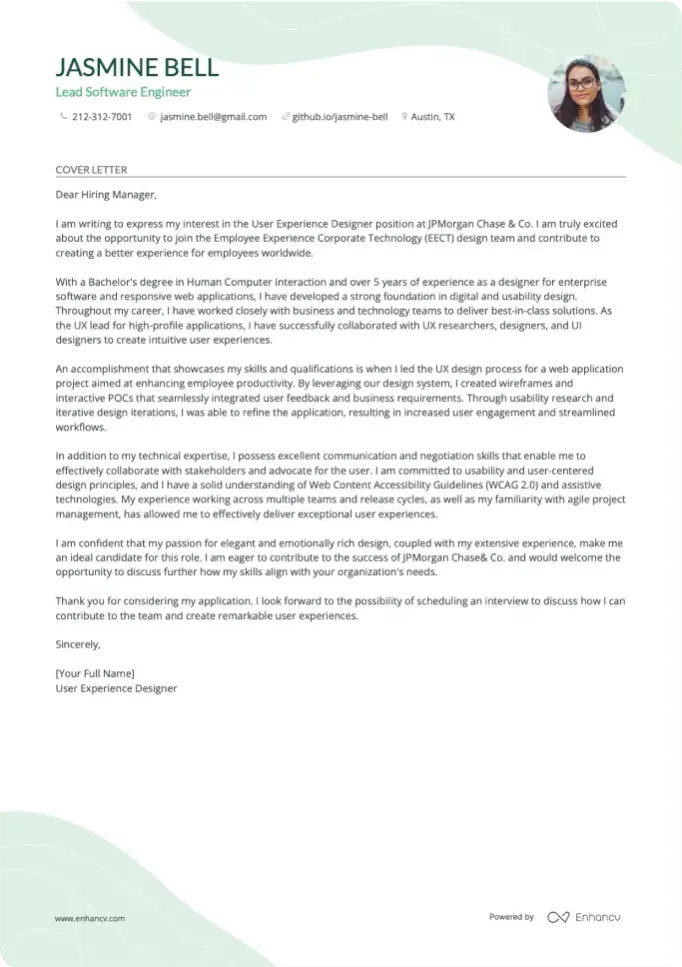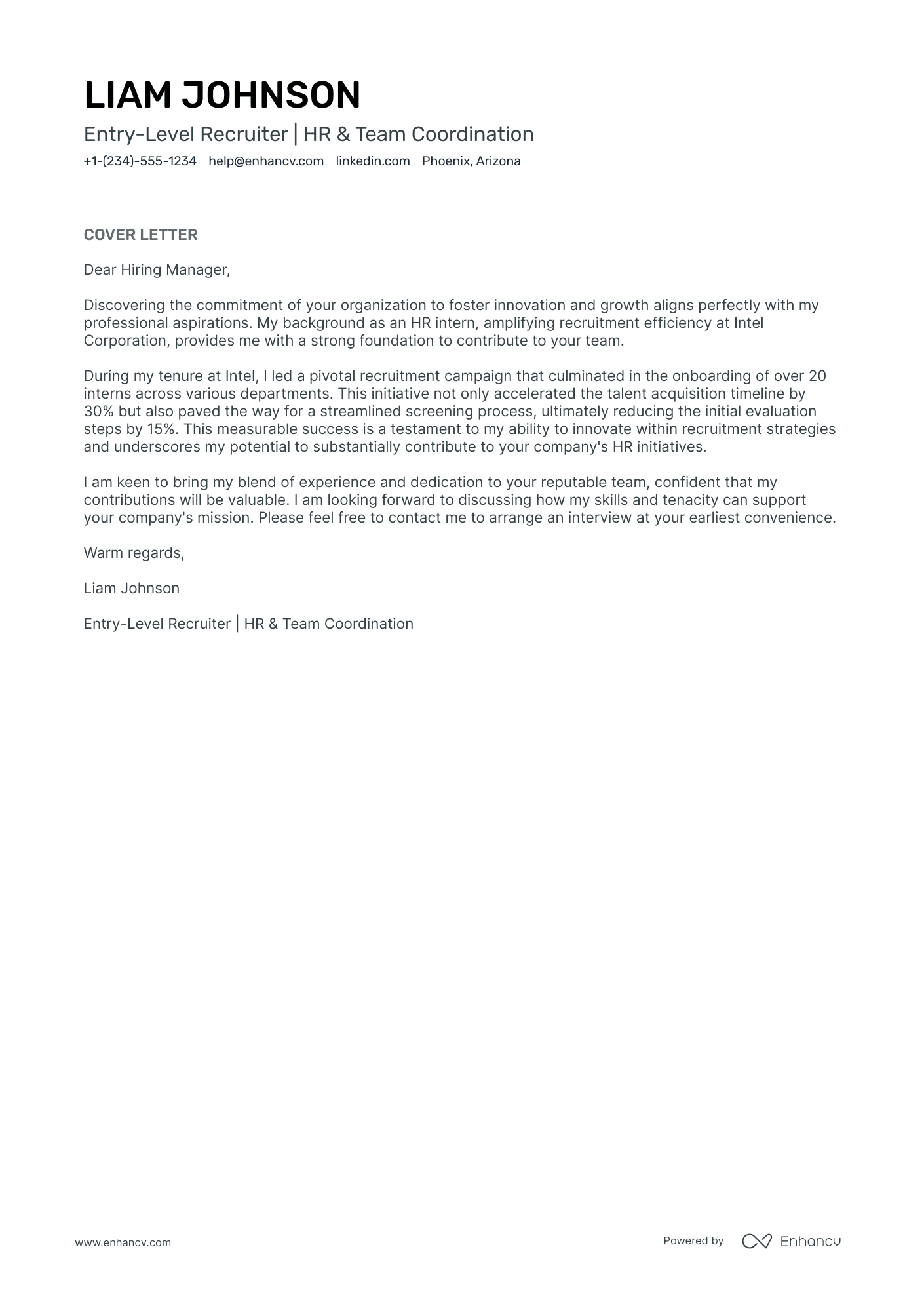
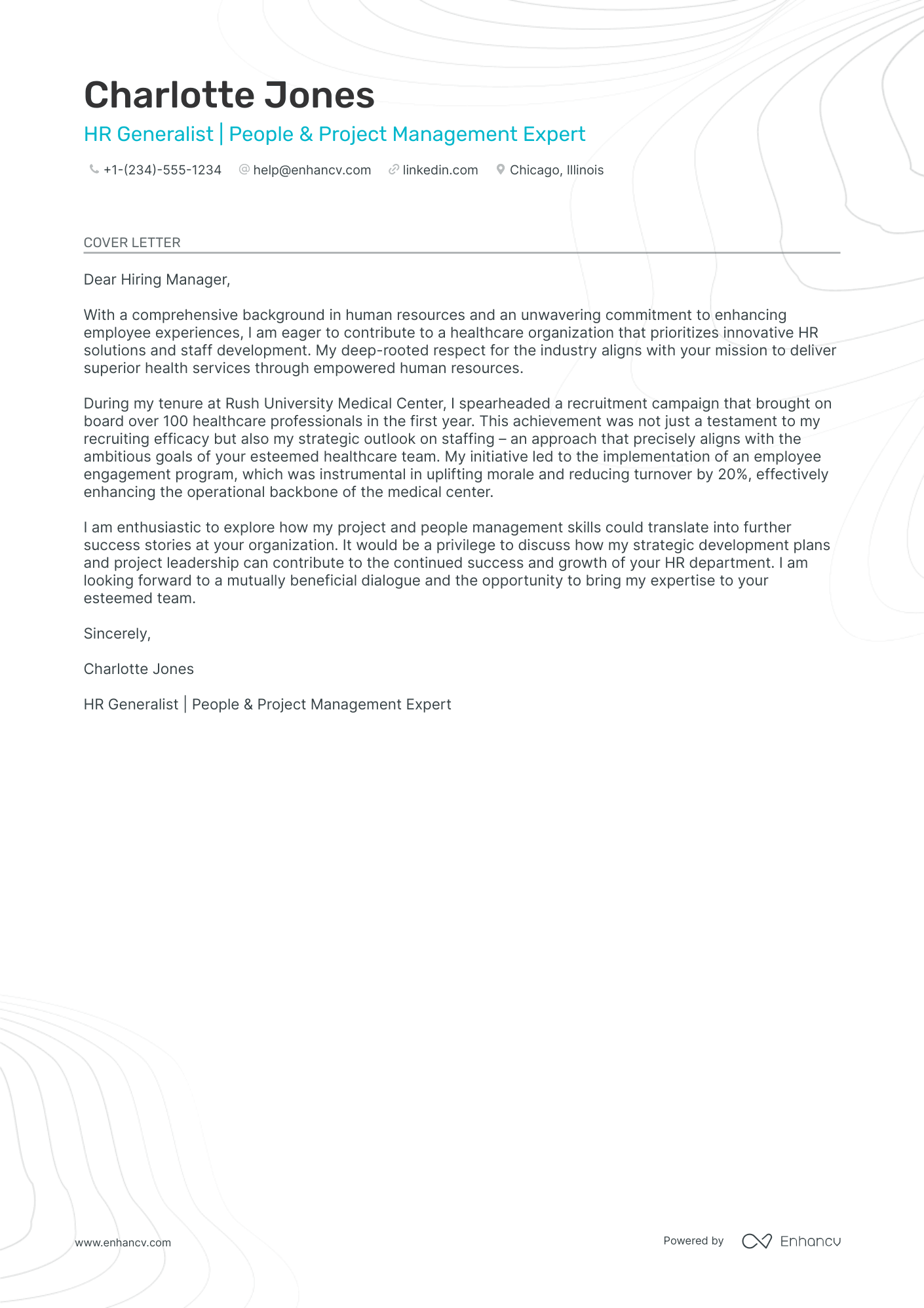
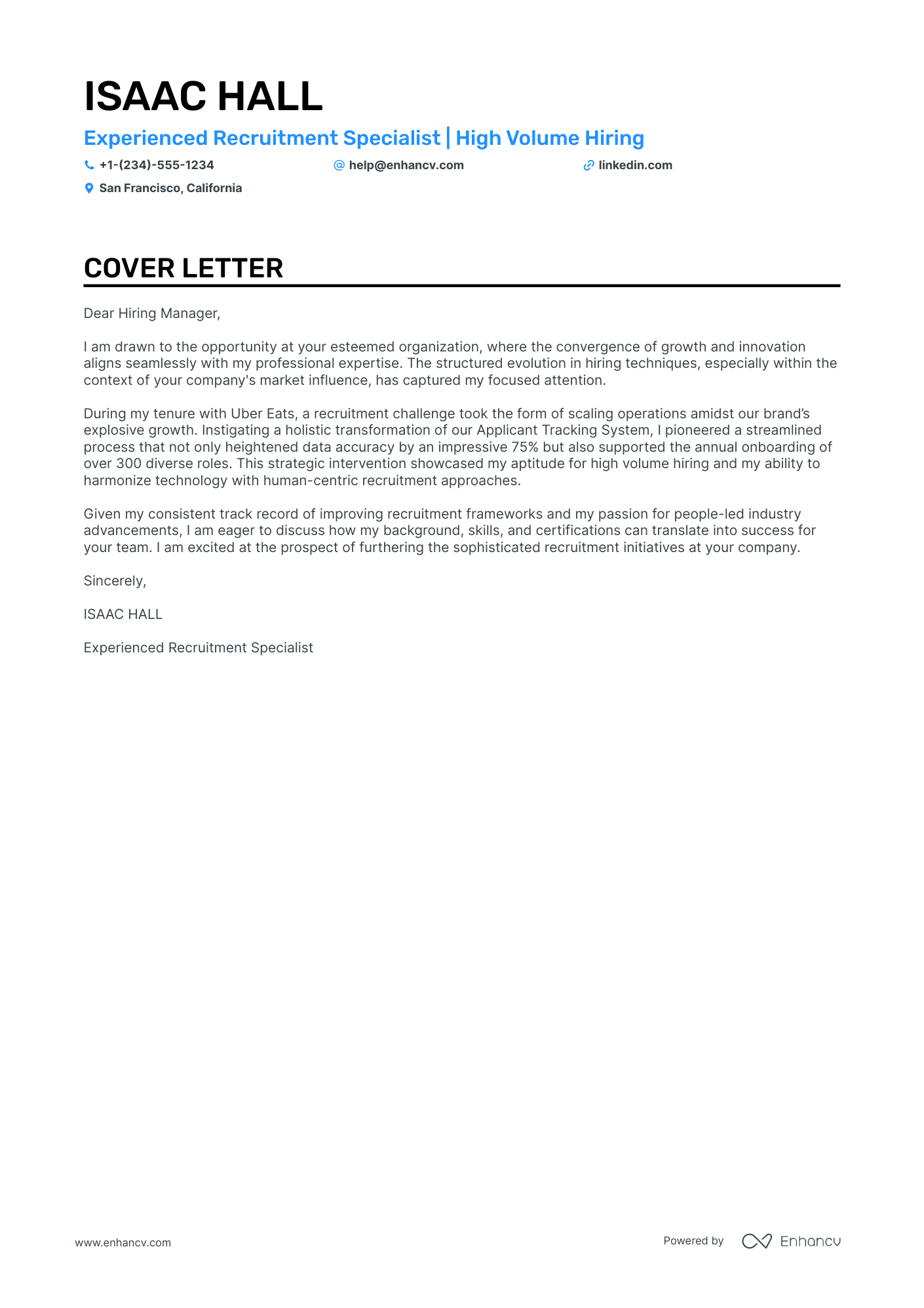
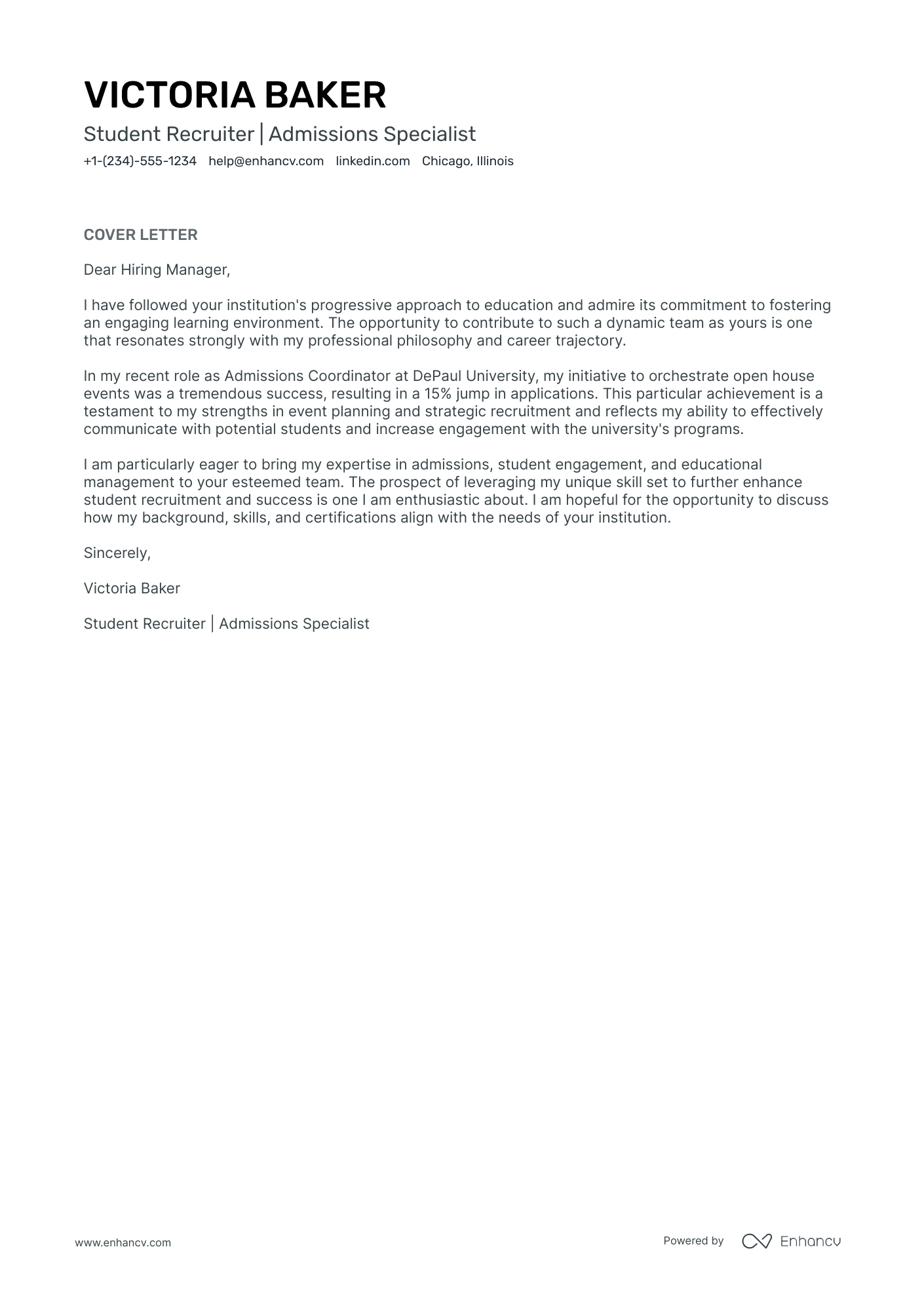
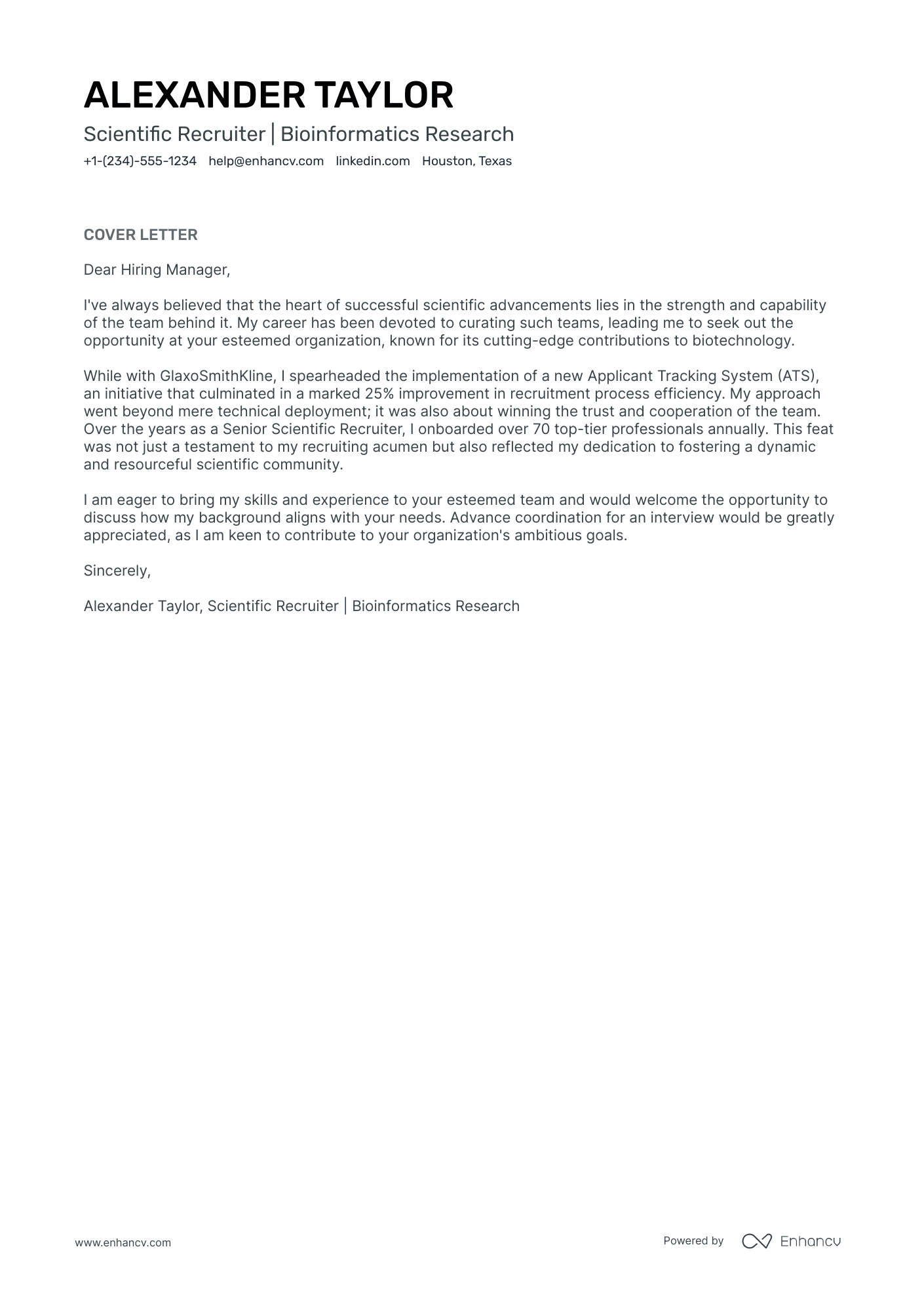
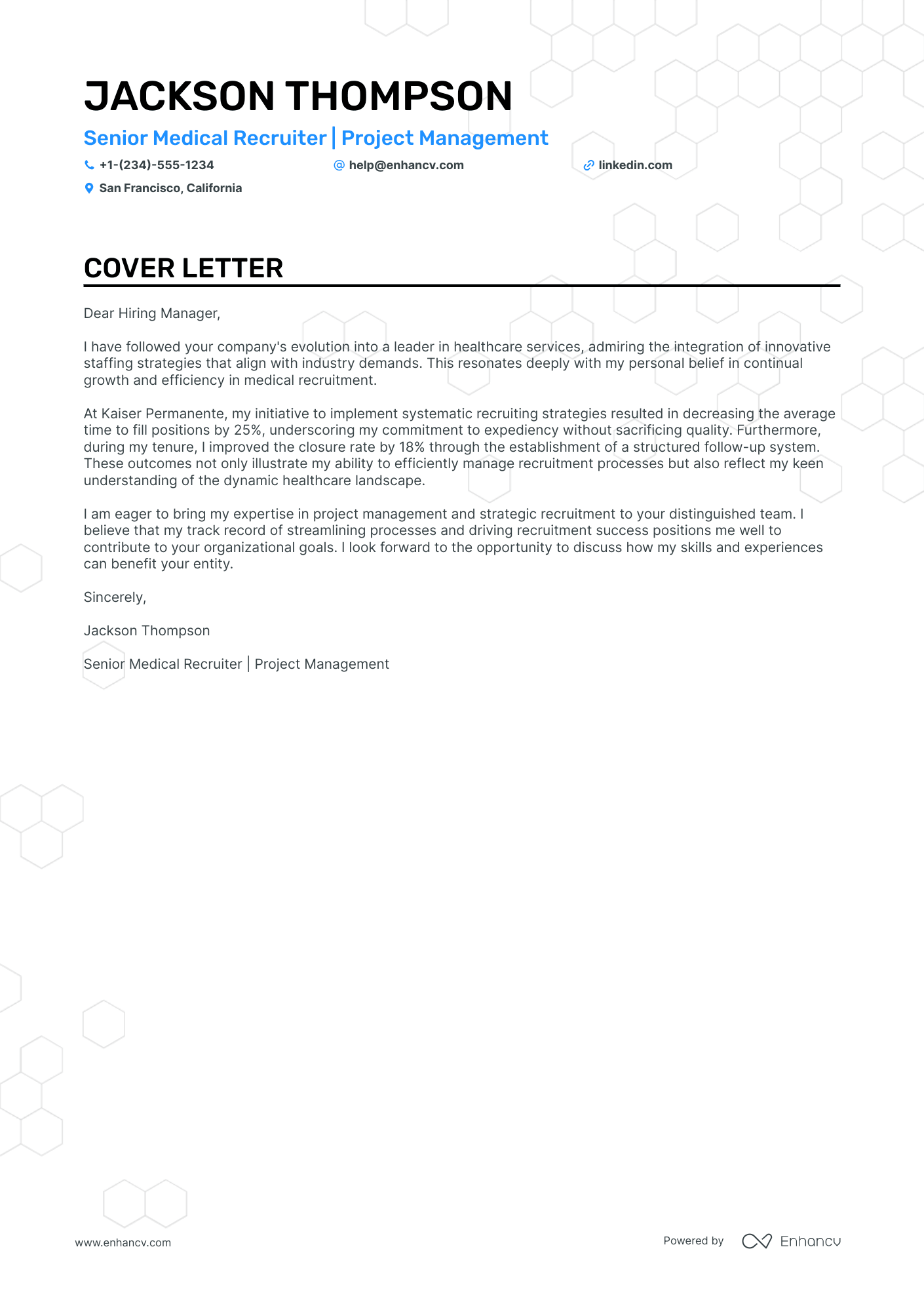
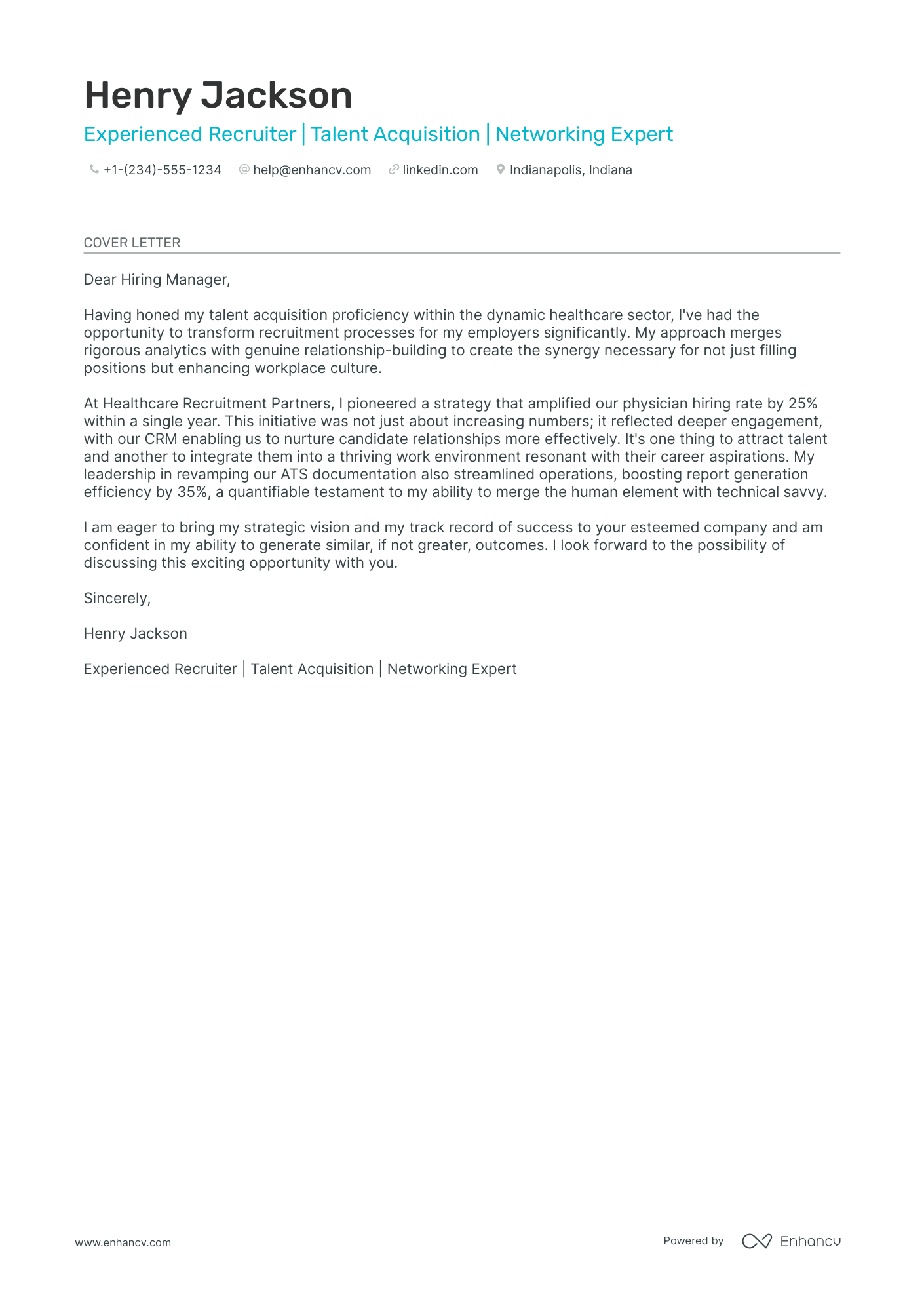
When you think about it, there's a bit of irony in writing a recruiter cover letter. Especially one that opens with "I am a results-driven professional with a passion for connecting top talent to exciting opportunities."
You're applying for a job that requires you to evaluate cover letters for a living. Yet, you opened yours with a cliche every hiring manager would skip.
The resume on the other side of the application has to hold up to a recruiter's own eye — our recruiter resume guide shows how to lead with specialty (technical, executive, clinical, high-volume), pipeline metrics, and time-to-fill numbers.
The recruiter applications that get responses are usually different. They name specific placements. They quantify time-to-fill. They describe the talent market they worked in with enough specificity that the reader can tell you actually know it.
If you want a cover letter that gets past the first ATS scan, then you should write it the way you'd advise your own candidates to write theirs. Here you will learn how to write one that actually holds the attention of hiring managers.

Key takeaways
- Lead with your recruiting specialty and the talent segment you know best: technical, sales, executive, clinical, etc.
- Include one quantified achievement: placements per quarter, time-to-fill improvement, offer acceptance rate, revenue generated if agency-side.
- Name the ATS and sourcing tools you actually use—Greenhouse, Lever, Workday, LinkedIn Recruiter, Boolean strings.
- Show you understand the talent market this company operates in—not generic "I love working with people."
- Address your sourcing methodology, not just your process.
- Use the hiring manager's name; a recruiter who can't find a name on LinkedIn has a sourcing problem.
Let’s start with an example.
In-house technical recruiter cover letter sample
Jordan Vasquez | Technical Recruitment | HR
jordan.vasquez@email.com | (214) XXX-4702 | Dallas, TX | linkedin.com/in/
Dear [Hiring Manager Name],
I am applying for the Technical Recruiter position at [Company Name]. My recent experience focuses on scaling engineering and product teams using a tech stack of Ashby, LinkedIn Recruiter, Gem, and Slack-integrated sourcing tools. I specialize in full-cycle recruitment for senior, staff, and principal-level roles across backend (Go/Rust), infrastructure, and specialized security engineering.
During my tenure at [Previous Company], I was tasked with stabilizing a chaotic hiring process for the platform engineering department. By auditing the existing funnel and removing friction points, I achieved the following:
- Time-to-Fill: Reduced from 67 days to 38 days.
- Offer Acceptance Rate: Increased from 64% to 82%.
These results weren't the product of luck, but of a complete overhaul of the hiring infrastructure. I implemented a structured sourcing pipeline that prioritized "passive-intent" candidates over high-volume, low-signal applicants. Key changes included:
- Scorecard Rubrics: I collaborated with the CTO to define non-negotiable competencies, replacing "gut feeling" feedback with a standardized rubric that reduced post-interview debrief times by 40%.
- Loop Redesign: I condensed the interview stages from six touchpoints to four, ensuring technical screens were conducted by calibrated engineers to prevent candidate fatigue.
I recognize that technical recruiting—specifically in niches like Cloud Security and Site Reliability—is currently a "candidate-first" battlefield. Traditional outreach often fails here because the talent is bombarded with generic pings.
When I was tasked with hiring a Lead Security Engineer in a zero-unemployment market, I bypassed standard templates. Instead, I mapped the contributor graphs of relevant open-source security projects and engaged candidates through technical discourse rather than a sales pitch. This non-standard approach allowed us to close a candidate who had ignored three previous reach-outs from our competitors.
I am ready to bring this same tactical, data-driven approach to [Company Name] to help you scale efficiently without compromising on the technical bar.
Best regards
Here's why this letter works:
Role and tool stack in the first paragraph.
The beginning covers ATS, sourcing platforms, and seniority levels. The head of talent knows in ten seconds whether your experience aligns with the role.
One metric with a before-and-after.
Time-to-fill dropped from 67 to 38 days. Offer acceptance went from 64% to 82%. Those numbers tell a concrete story about recruiting quality..
Shows the method.
Structured sourcing pipeline, scorecard rubric, loop redesign. The hiring manager can see exactly how the results were achieved.
Honest about difficulty.
Security recruiting is hard. Describing actual challenges and non-standard solutions shows real market knowledge.
No cliches.
Not a single mention of "passionate about connecting talent" anywhere in the letter.
Want to create a similar letter? Just use Enhancv's Cover Letter Builder.
What your recruiter cover letter needs to cover
Here’s some insider knowledge for you. Hiring managers for recruiting roles usually ask themselves four questions when they open the cover letter of a candidate. So if you answer all four of them, you’d be ahead of most of the stack.
Let’s go over each and see how to approach it.
1. What talent segment do you actually know?
Technical recruiting has its own unique facets just like all other forms of hiring. The sourcing strategies, assessment frameworks, and candidate experience expectations are specific to each segment. Therefore, you need to name your segment, specify your level (entry-level through executive), and mention the industry vertical if it's relevant to the role.
2. What are your numbers?
Mention achievements in time-to-fill, offer acceptance rate, placements per quarter, pipeline-to-offer conversion, revenue generated if you're agency-side. "Strong track record of placements" is not a number, it’s a cliche. So pick your best metric and put a before-and-after on it.
3. What's your actual sourcing methodology?
Most recruiters say they use LinkedIn. That’s not impressive at all. Strong recruiters describe their outreach sequences, their Boolean string strategy, their passive-candidate nurture cadence, and which platforms produce the best-to-worst conversion rates for their specific talent market. The real differentiation happens when you describe your specific sourcing.
4. Do you understand the company's talent challenges?
Every company has some kind of recruiting problem. For example, startup scaling pain is different from enterprise attrition. Prove you've thought about their specific situation—not just that you're a recruiter who recruits.
Sections to include in your recruiter cover letter
Generally, a recruiter cover letter should follow standard professional structure. However, the content within each section is what separates the interviews from the stack.
Check the cover letter format for the one-page structure that works.
- Header: Full name, phone, email, city and state. If you're agency-side, you can include your firm's name after your name. Match it to your recruiter resume.
- Salutation: Use the hiring manager's name. You're a recruiter—LinkedIn search takes 45 seconds. There's no excuse for a generic greeting on a recruiting application.
- Opening paragraph: State the role, your current title and company, your recruiting specialty, and the ATS and sourcing platforms you use. Two to three sentences.
- Body paragraphs: Mention your strongest quantified metric with a before-and-after and an explanation of how you got there. Then describe your sourcing methodology, a specific talent challenge you solved, or firm-specific research showing you understand their hiring context.
- Closing: Ask for a conversation. Offer to share materials (sourcing frameworks, pipeline data) that prove your approach. Keep it brief.
- Formatting: One page, clean font (font guidance), standard spacing (cover letter length), left-aligned throughout (alignment guidance).
What hiring managers look for in a recruiter cover letter

What talent acquisition leaders screen for
- Recruiting specialty and segment: technical, sales, executive, clinical, creative, or high-volume—generalists are harder to evaluate than specialists
- Quantified performance: time-to-fill benchmarks, offer acceptance rate, placements per quarter, pipeline conversion rate, or agency revenue
- ATS and sourcing tool proficiency: Greenhouse, Lever, Workday, iCIMS, SAP SuccessFactors, LinkedIn Recruiter, Gem, HireEZ, SeekOut
- Sourcing methodology: inbound vs. outbound mix, Boolean proficiency, passive-candidate outreach strategy, talent community building
- Hiring manager partnership approach: how you build relationships, align on scorecards, push back on unrealistic requirements, and manage expectations during long searches
- Evidence of genuine market knowledge: industry-specific talent dynamics, compensation benchmarking awareness, supply/demand nuance in their segment
How to address your recruiter cover letter
If you don’t use the hiring manager's name when applying for a recruiting job, you've already sent the wrong signal. Checking LinkedIn, the company's website, and a quick Google search would take you two minutes. Use them to your advantage.
If the job posting lists a generic talent acquisition email, then you should dig further. Find the TA leader or HR director on LinkedIn and address the letter to them. If you're applying through an agency or referral, ask who the letter should go to.
- Use "Dear First Name" for startup and mid-size tech company environments.
- Use "Dear First Name, Last Name]" or "Dear Title, Last Name]" for more formal organizations.
- Skip "Dear Hiring Manager"—it's the cover letter equivalent of "To the job I found online."
Our comprehensive salutation guide has options for every level of formality, including situations where a name genuinely isn't available.
How to open your recruiter cover letter
The opening either earns the next 90 seconds of attention or gets filed.
Here's the difference:
Strong opening
I'm a senior technical recruiter at Coinbase with three years of experience sourcing and closing engineers at L4 through staff-level in the backend, infrastructure, and security domains. Last year I filled 94 engineering roles with an 82% offer acceptance rate and a 38-day average time-to-fill for senior backend positions—down from 67 days when I started on the desk.
For good measure, let’s examine one that’s not so great.
Weak opening (generic and unquantified)
I am writing to express my interest in the recruiter position at your company. I am a passionate and driven talent acquisition professional with extensive experience in recruiting top talent across various industries. I thrive in fast-paced environments and am dedicated to finding the best candidates for every role.
As you can see, the weak opening could describe any recruiter at any company. It contains zero specifics about talent segment, zero metrics, and zero evidence of market knowledge.
Meanwhile, the strong version gives the reader your specialty, your level of seniority, and three concrete numbers before the second sentence. That's how to start a cover letter when you're applying for a role that screens people for a living.
How to write the body of your recruiter cover letter
The body of your recruiter cover letter needs to do what you ask candidates to do: show results, not just responsibilities.
Use this structure:
- Describe a challenge
- Explain your method
- Specify a metric
Don’t just state "I successfully recruited for technical roles."
What was the challenge? Low pipeline volume? A long time-to-fill? A tight talent market? What did you specifically change or build to address it? What moved?
Here’s an example:
"After inheriting a security engineering desk with zero existing pipeline, I built a targeted outreach sequence focused on speakers at DEF CON and open-source contributors to OWASP projects. Within three months I had 28 qualified candidates in active conversations. Six were converted to offers, and four accepted—a 67% offer acceptance rate in a market where 40% is considered strong."
That paragraph shows sourcing creativity, market knowledge, pipeline building skill, and metrics. It's the kind of recruiter specificity that makes a TA leader want to talk to you personally.
Tailoring your letter to the role
| Role type | What to emphasize |
|---|---|
| In-house technical recruiter | Time-to-fill data, offer acceptance rate, stack/level-specific sourcing strategies, hiring manager partnership approach |
| In-house HR generalist recruiter | Breadth of roles filled, ATS administration, employer branding contribution, cross-functional relationship management |
| Agency/third-party recruiter | Revenue generated, clients managed, placement volume, reqs worked per quarter, client retention |
| Executive search | C-suite and VP-level placements, discretion and confidentiality in search process, network quality |
| Campus/university recruiter | Offer-to-acceptance conversion, event strategy, intern-to-full-time conversion rate, program management |
Enhancv's Resume Tailoring Tool matches your experience to the language in the job posting. Use it alongside your recruiter resume to build a consistent application package for each role.
How to close your recruiter cover letter
Keep the closing clean and professional. You know how this works—you ask candidates to close with confidence and a clear next step. You should do the same.
Strong closing
I'd welcome a conversation about what your team is currently building. I can share sourcing frameworks, pipeline data, and references from hiring managers I've partnered with closely. Available any time this week or next.
Best,
Jordan Vasquez
Weak closing
Thank you so much for considering my application. I am very excited about this opportunity and believe I would be a great addition to your team. I am passionate about talent acquisition and look forward to potentially discussing this role further.
Best,
Jordan
The weak closing offers nothing—no evidence, no concrete next step, no specificity. The strong version offers materials that prove the applicant's approach, states availability directly, and closes confidently.
Our cover letter ending guide has more strong closing formats if you want variations.
Recruiter cover letter with no experience
If you’re a career changer or a coordinator moving into full-cycle recruiting, then you have more to work with than you realize. Sourcing , coordination and scheduling, and any hiring process exposure count.
Here’s how you can approach writing your letter when you don’t have direct experience:

New recruiter cover letter formula
[Current role and relevant transferable skills] + [recruiting-adjacent experience: sourcing, screening, scheduling, employer branding, HR coordination] + [any recruiting tools you've used, even informally] + [one outcome from your experience that maps to recruiter metrics] + [why this company and role for your first full-cycle position]
Here's what specificity looks like for a career changer:
"As an operations coordinator at a 200-person SaaS company, I owned the scheduling and coordination for 140+ interviews over 18 months, including managing four concurrent executive searches. I built the ATS workflow in Lever, trained five hiring managers on structured interview scorecards, and tracked candidate pipeline data for quarterly TA reporting. The VP of People asked me to take on a full-cycle req for an office manager role to see if I could close one end-to-end. I could—the offer was accepted in 32 days."
That's a real recruiting story from a non-recruiter background. It's far more compelling than "I am eager to begin my recruiting career."
For more frameworks on pivoting into recruiting without a traditional background, the cover letter with no experience approach of leading with adjacent outcomes applies directly here.

PRO TIP
Use Enhancv's cover letter templates to set up the layout and formatting so you can spend your time on the content. Recruiters notice when a candidate's materials are sloppy—the same applies in reverse.
Frequently asked questions about recruiter cover letters
What should a recruiter cover letter include?
Your recruiting specialty and the talent segment you know best, one quantified performance metric (time-to-fill, offer acceptance rate, placements per quarter), the ATS and sourcing tools you use, and a specific reason you're applying to this company. Skip the "passionate about connecting people" language—every recruiter says it and none of them mean it differently from each other.
How long should a recruiter cover letter be?
One page. Three to four focused paragraphs. Hiring managers in talent acquisition read fast—they do this every day. If your letter runs long, cut the section that sounds most like a LinkedIn summary. Enhancv's cover letter length guide fully outlines the one-page standard.
What makes a recruiter cover letter stand out?
Numbers and sourcing specificity. Most recruiting applications describe processes without results. A letter that leads with "82% offer acceptance rate, 38-day time-to-fill, 94 placements last year" stands out because it's falsifiable—it either happened or it didn't. Add the specific sourcing methodology behind the number and you've shown both results and method.
How do I write a recruiter cover letter with no experience?
Lead with the recruiting-adjacent experience you do have: interview coordination, ATS administration, sourcing support, employer branding work, or any full-cycle exposure on a single req. Quantify anything you can. Then explain why you're making the move to full-cycle recruiting and what you've done to build the skills—sourcing certifications, LinkedIn Recruiter practice, informational conversations with recruiters you admire. Be specific about the segment you want to work in. "I want to be a recruiter" is not a differentiator. "I want to recruit backend engineers in fintech because I've spent two years supporting those hiring processes and I know the talent market" is.