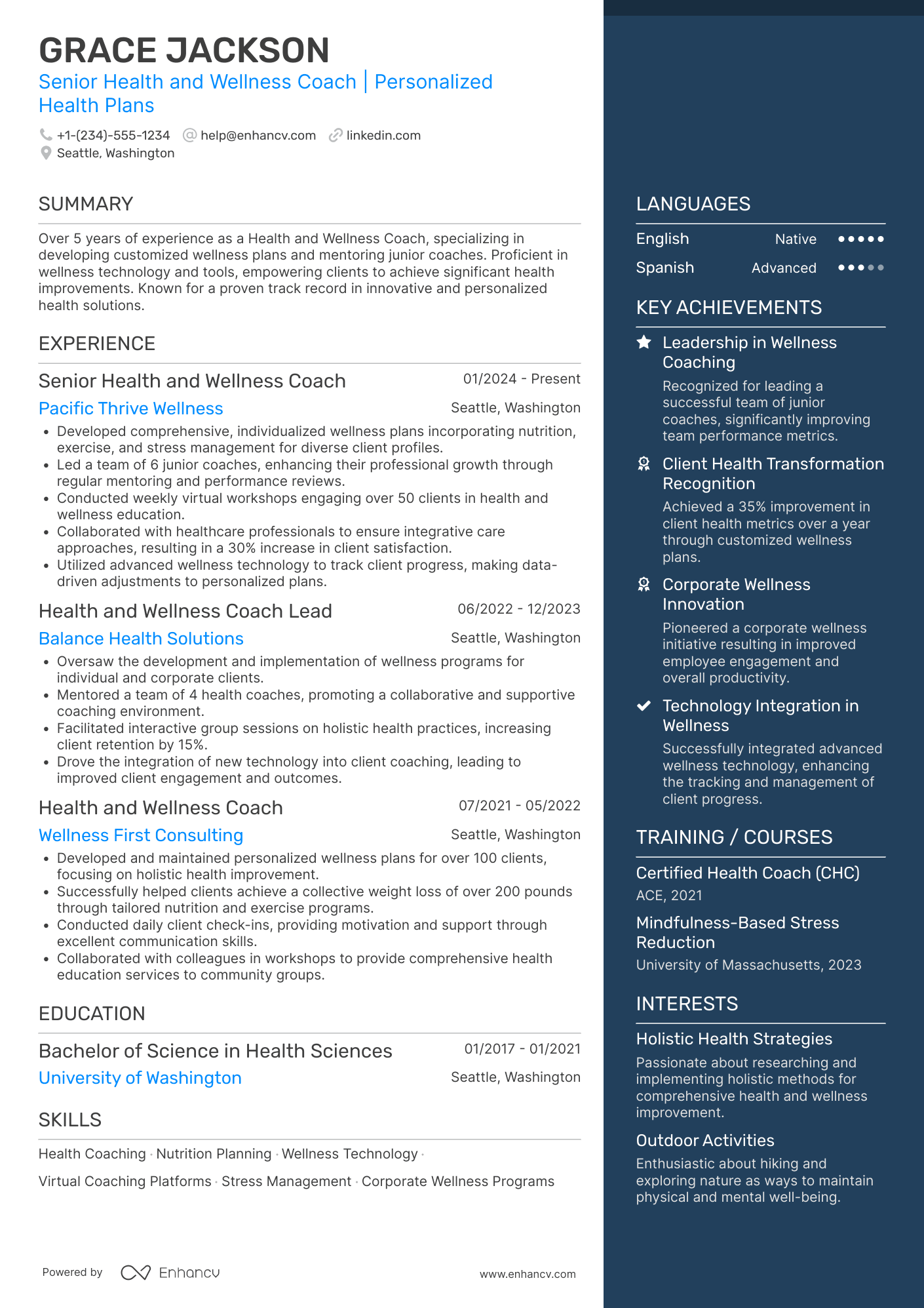
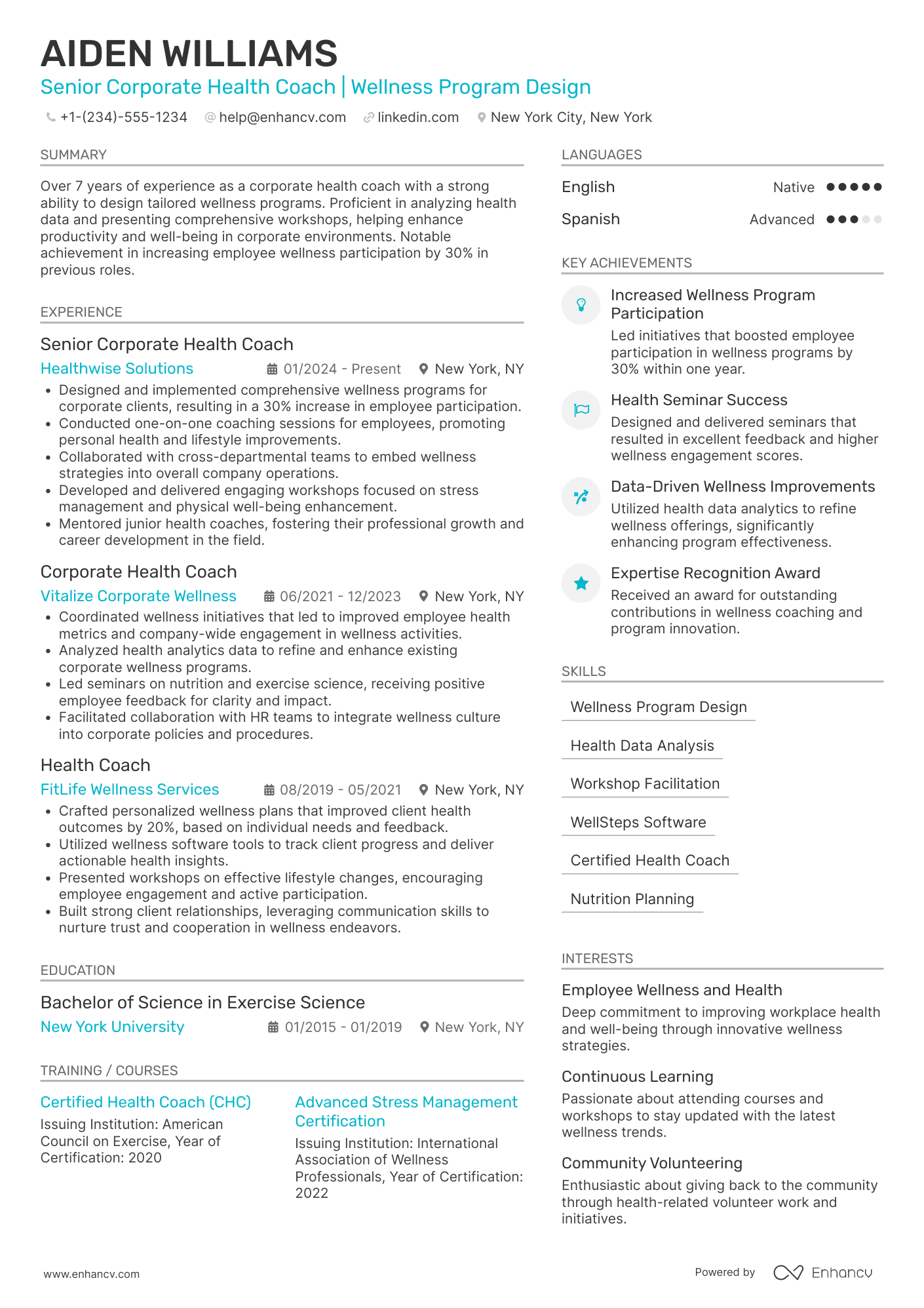
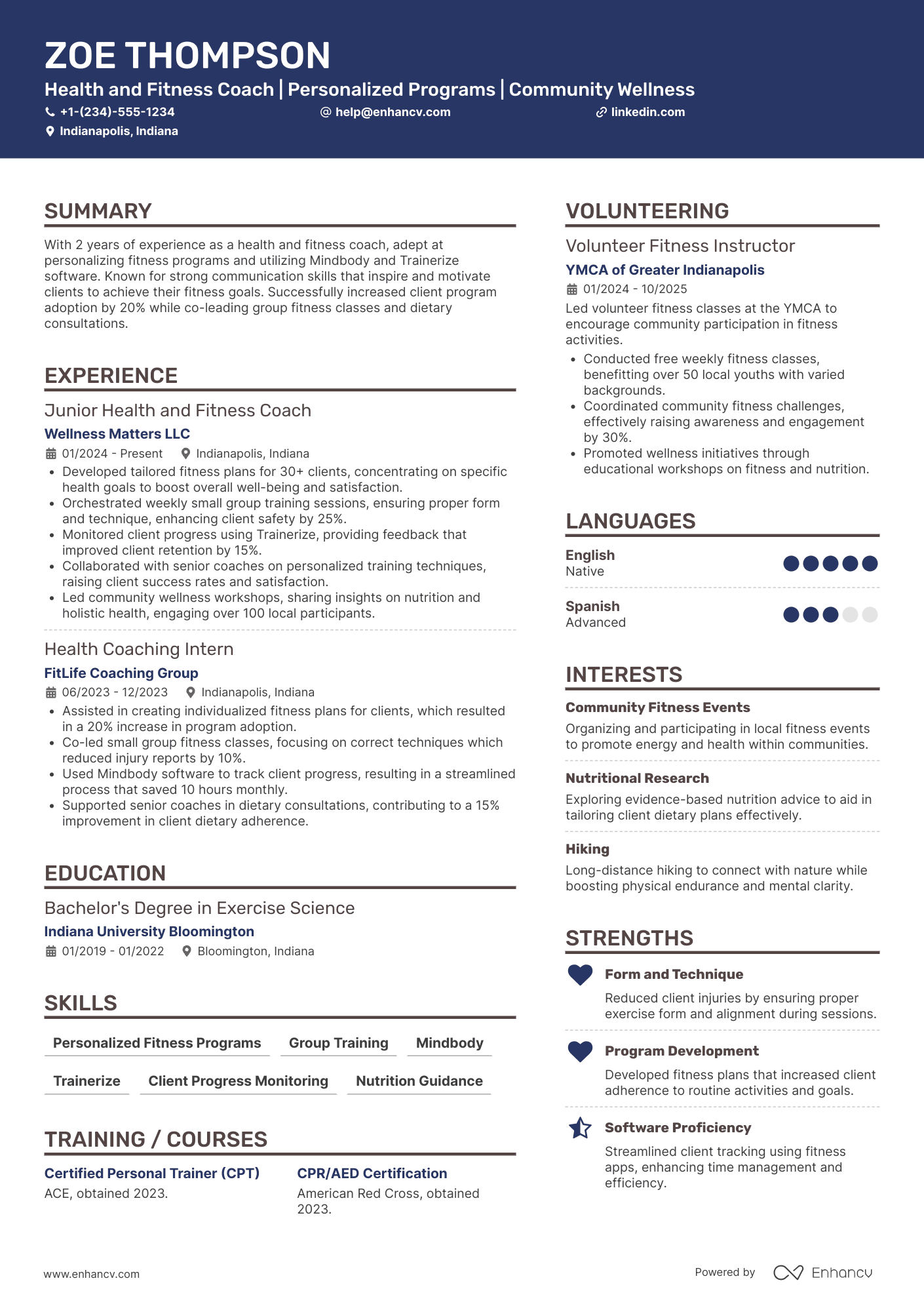
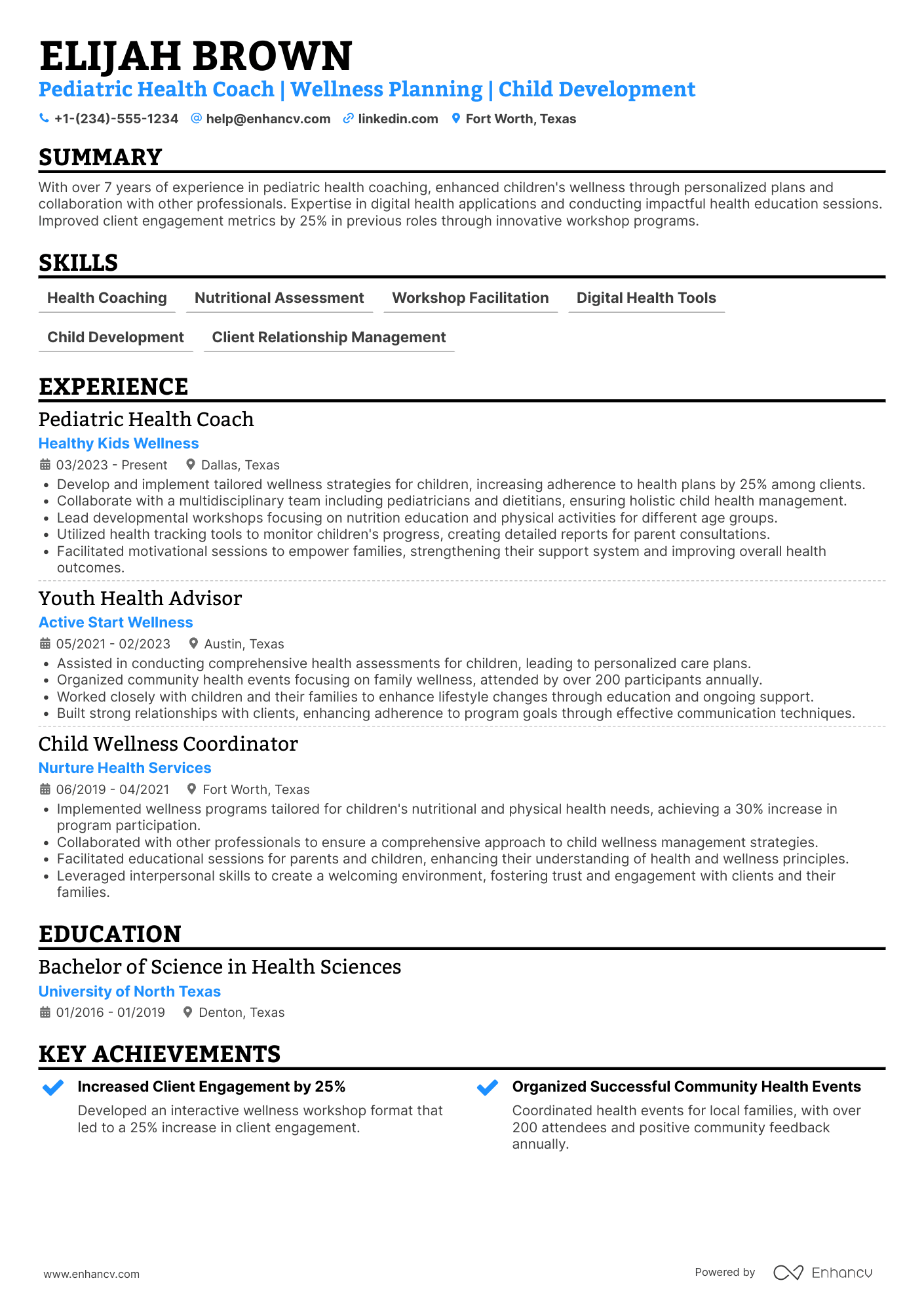
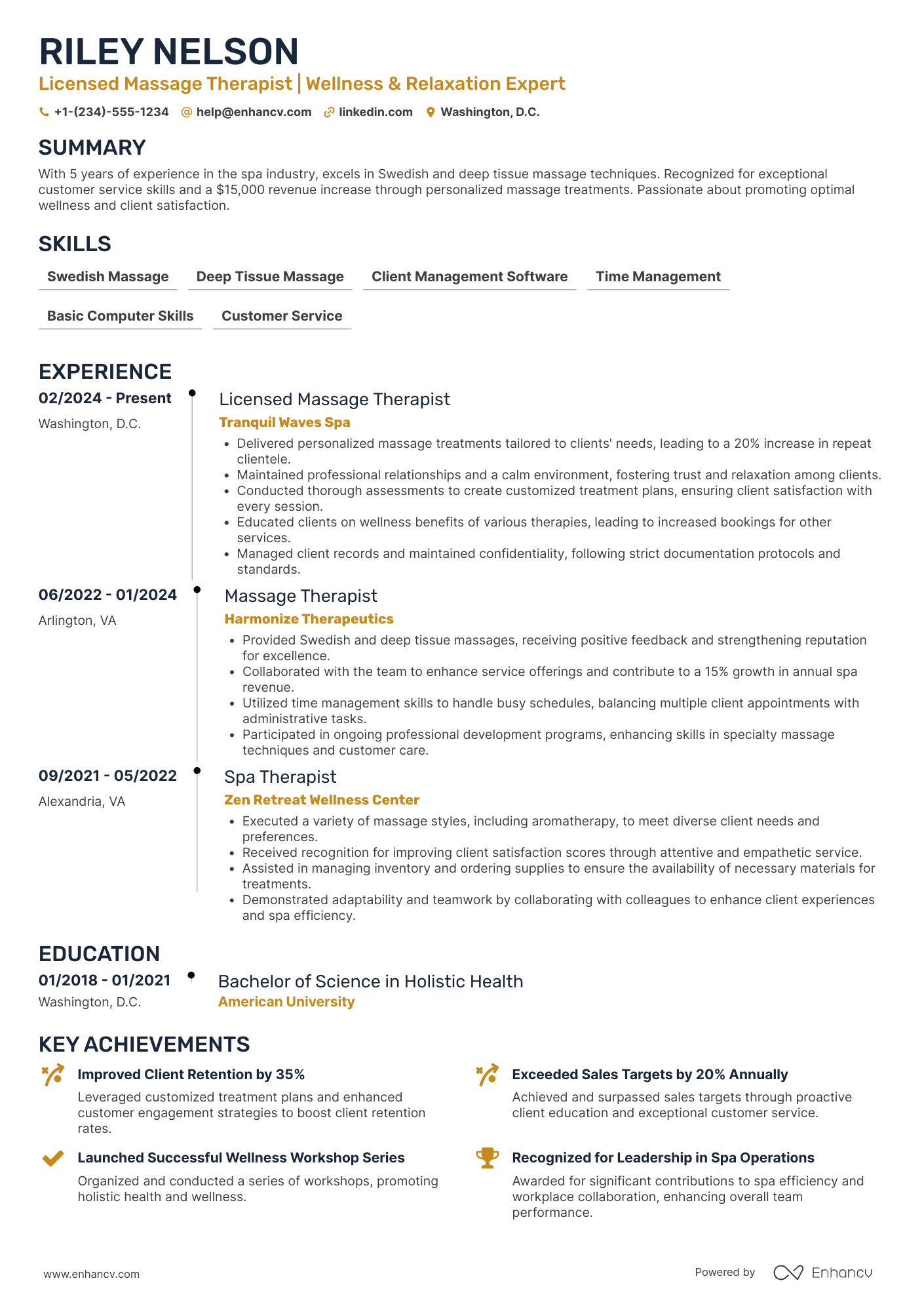
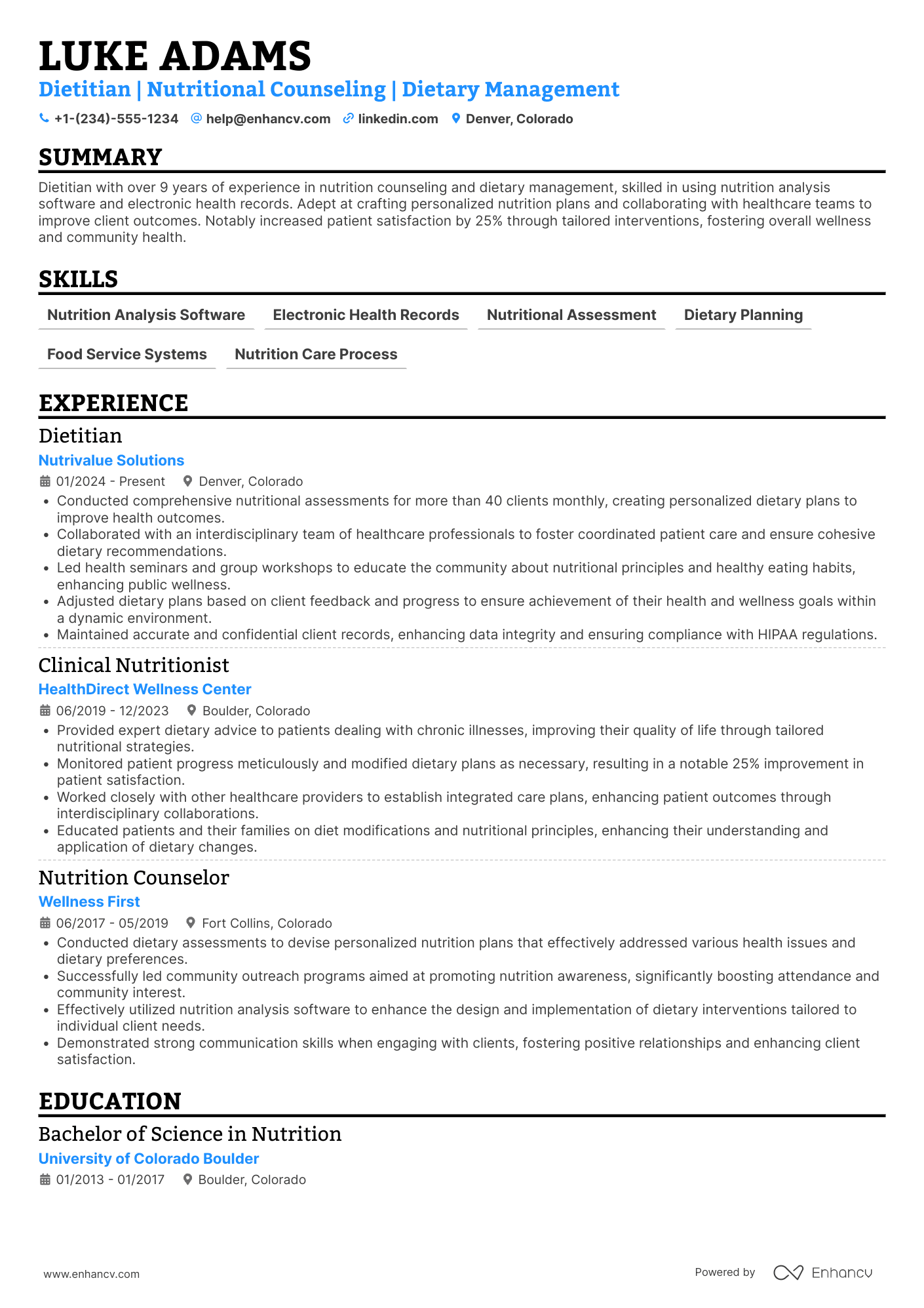
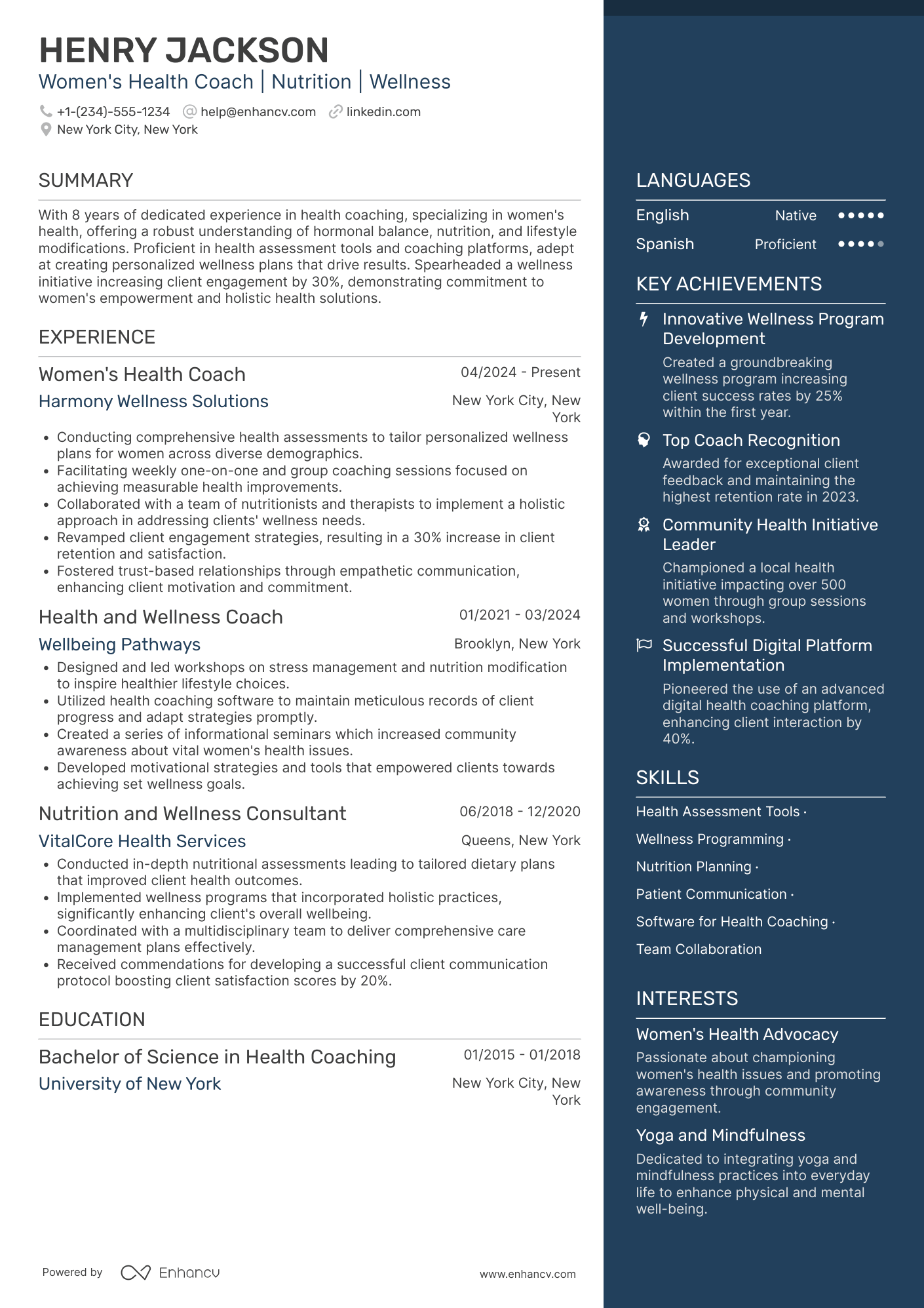
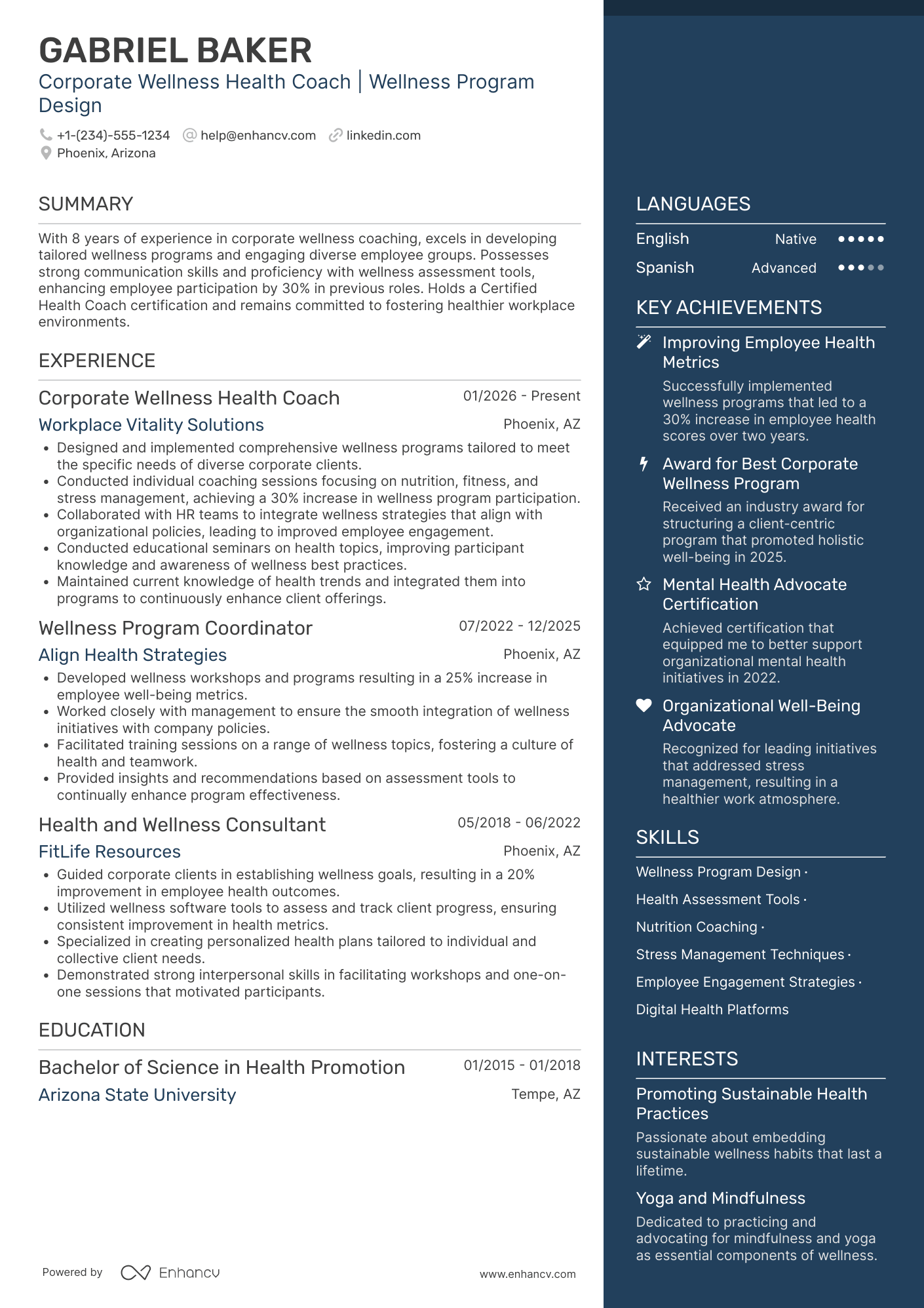
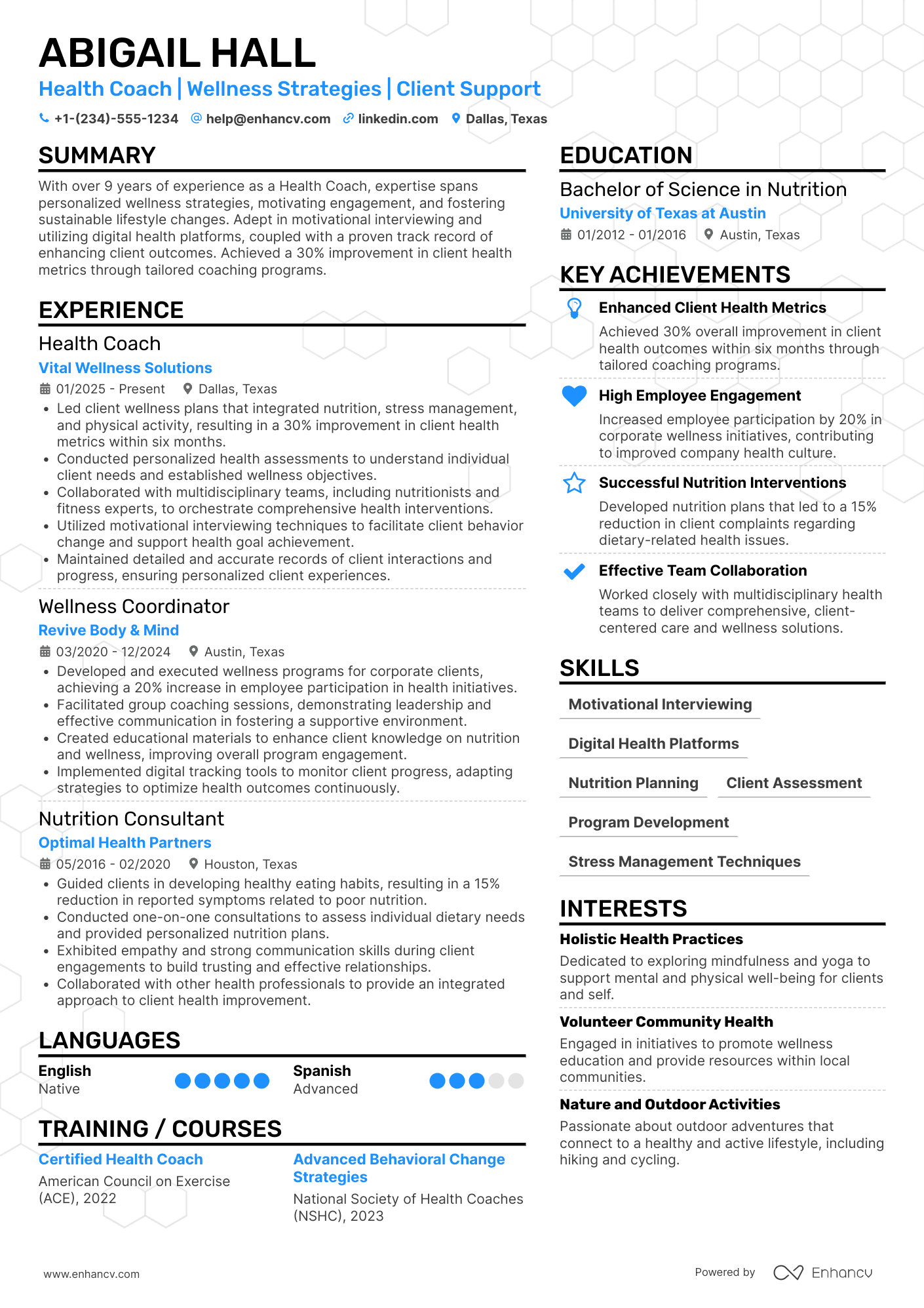
Many health coach resume drafts fail because they read like session notes, not hiring documents. A health coach resume needs clear outcomes and keywords, or an ATS (applicant tracking system) filters it out. Recruiters also scan fast in a crowded field.
Once the resume quantifies your caseload and outcomes, the matching health coach cover letter is where you connect those numbers to the program, population, or wellness model the employer actually runs.
A strong resume shows what changed because of your coaching. Knowing how to write a resume that highlights client retention, average weight or blood pressure improvements, program completion rates, and satisfaction scores is essential. You'll quantify caseload size, referral growth, and adherence gains tied to measurable health outcomes.

Key takeaways
- Quantify client outcomes like retention, adherence, and A1C improvements in every experience bullet.
- Use reverse-chronological format with proven results if you have health coaching experience.
- Tailor resume language to mirror each job posting's exact tools, methods, and populations.
- Place certifications like NBC-HWC or ACE prominently—they carry significant weight with employers.
- Demonstrate skills through measurable achievements in your summary and experience, not just lists.
- Use Enhancv's Bullet Point Generator to turn vague duties into recruiter-ready, quantified statements.
- Stop using AI once your resume accurately reflects real experience—never inflate or invent claims.
Job market snapshot for health coaches
We analyzed 125 recent health coach job ads across major US job boards. These numbers help you understand role specialization trends, regional hotspots, employer expectations at a glance.
What level of experience employers are looking for health coaches
| Years of Experience | Percentage found in job ads |
|---|---|
| 1–2 years | 11.2% (14) |
| 3–4 years | 11.2% (14) |
| 5–6 years | 25.6% (32) |
| 7–8 years | 0.8% (1) |
| 10+ years | 0.8% (1) |
| Not specified | 50.4% (63) |
Health coach ads by area of specialization (industry)
| Industry (Area) | Percentage found in job ads |
|---|---|
| Healthcare | 83.2% (104) |
| Finance & Banking | 16.0% (20) |
Top companies hiring health coaches
| Company | Percentage found in job ads |
|---|---|
| CVS Health | 39.2% (49) |
Role overview stats
These tables show the most common responsibilities and employment types for health coach roles. Use them to align your resume with what employers expect and to understand how the role is structured across the market.
Day-to-day activities and top responsibilities for a health coach
| Responsibility | Percentage found in job ads |
|---|---|
| Motivational interviewing | 28.0% (35) |
| Registered dietitian | 20.8% (26) |
| Excel | 18.4% (23) |
| Word | 15.2% (19) |
| Zoom | 15.2% (19) |
| Disease management | 14.4% (18) |
| Microsoft office suite | 14.4% (18) |
| Medical nutrition therapy | 13.6% (17) |
| Weight management | 13.6% (17) |
| Health coaching | 12.8% (16) |
| Teams | 12.8% (16) |
| Ms office | 12.0% (15) |
Type of employment (remote vs on-site vs hybrid)
| Employment type | Percentage found in job ads |
|---|---|
| Remote | 55.2% (69) |
| On-site | 37.6% (47) |
| Hybrid | 7.2% (9) |
How to format a health coach resume
Recruiters evaluating health coach resumes prioritize evidence of client outcomes, behavior-change expertise, and relevant certifications such as NBC-HWC or ACE. Choosing the right resume format ensures these signals surface quickly during both ATS parsing and the initial six-to-ten-second recruiter scan.

I have significant experience in this role—which format should I use?
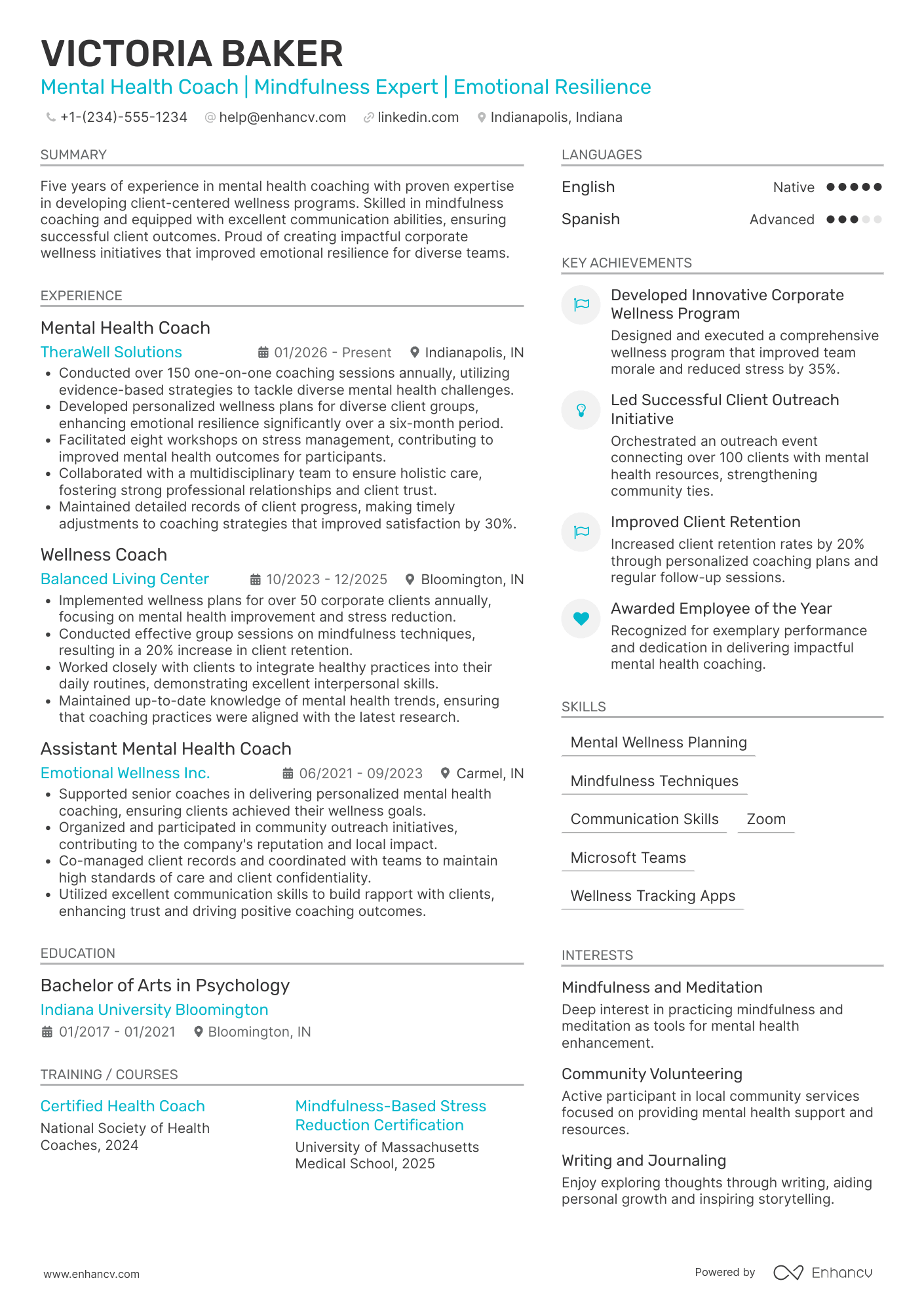
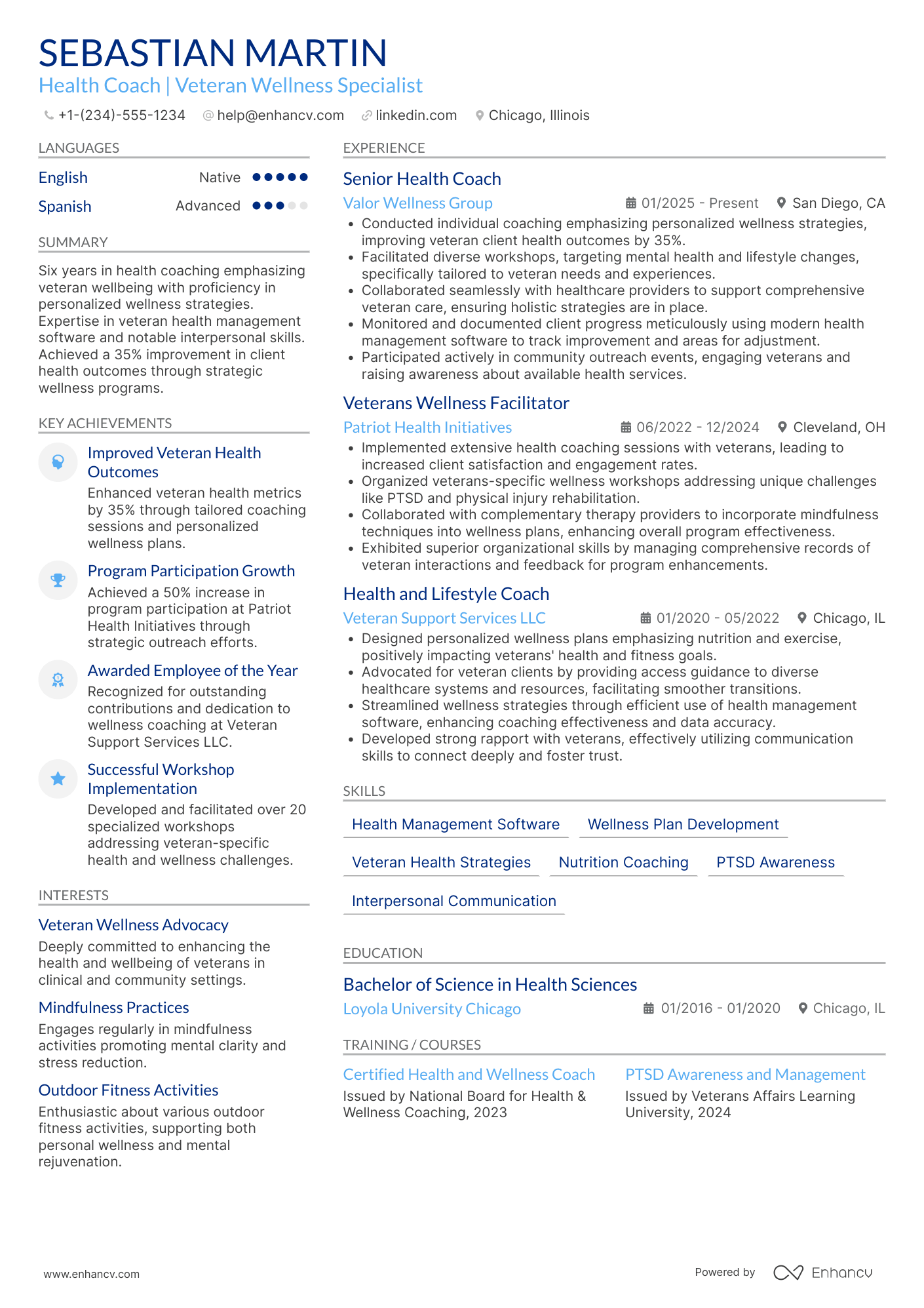
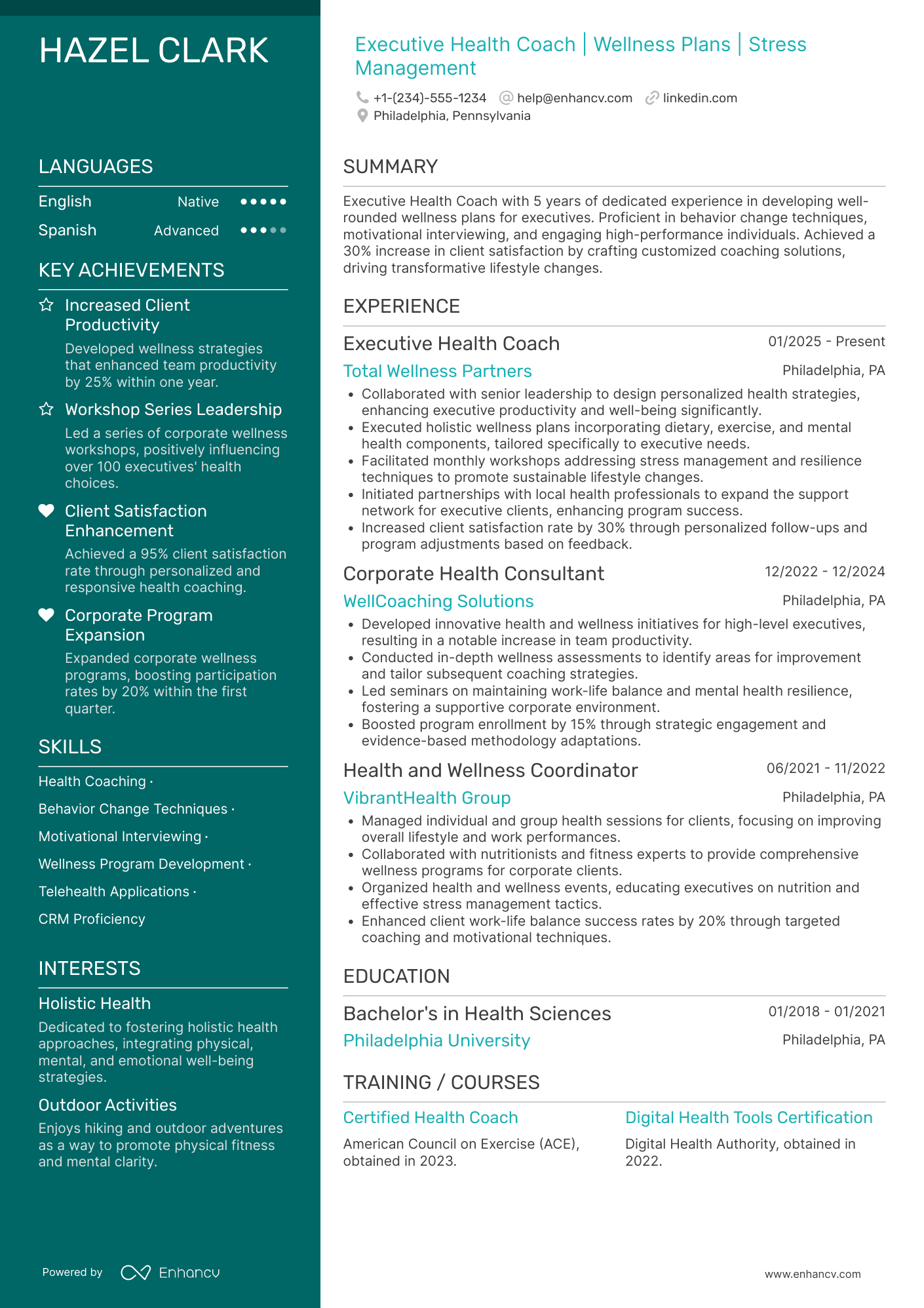
Use a reverse-chronological format to lead with your most recent and relevant health coaching positions. Do:
- Highlight the scope and ownership of your client caseload, program development responsibilities, and any team or department oversight.
- Feature role-specific tools and domains prominently—wellness platforms, motivational interviewing, chronic disease management, HIPAA compliance, and credentialing (NBC-HWC, ACSM, ACE).
- Quantify measurable outcomes tied to client health improvements, retention rates, or program ROI.
I'm junior or switching into this role—what format works best?
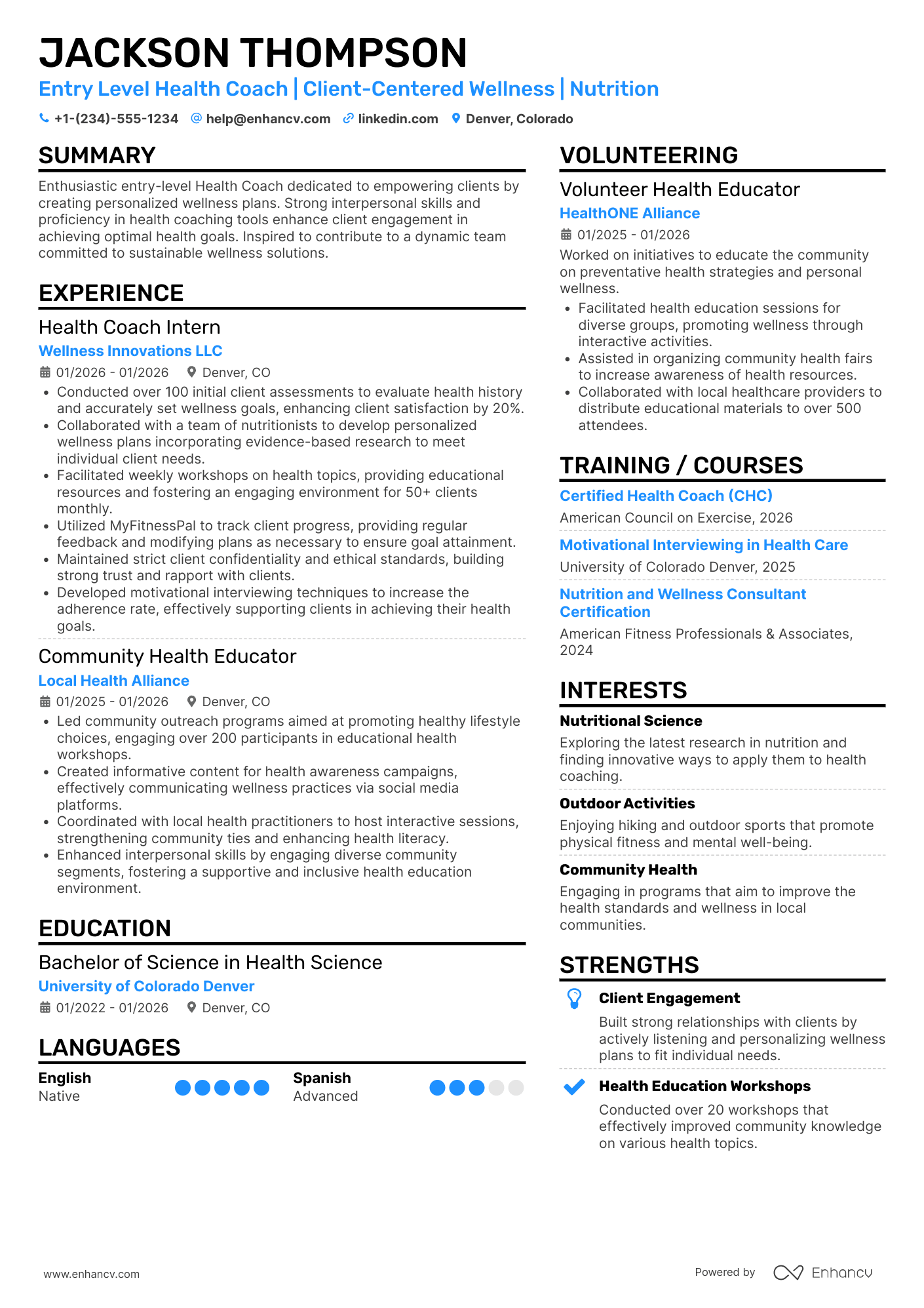
A hybrid format works best because it lets you lead with transferable coaching, nutrition, or wellness skills while still showing a clear work history. Do:
- Place a dedicated skills section near the top of your resume featuring health coaching competencies like behavior-change theory, goal setting, and motivational interviewing.
- Include practicum hours, volunteer coaching, capstone projects, or transitional experience from adjacent roles such as personal training, nursing, or nutrition counseling.
- Connect every action to a client or program outcome, even at a small scale, to demonstrate impact.
Why not use a functional resume?
A functional format strips away the timeline and context recruiters need to evaluate how your health coaching skills were applied in real client-facing settings, which weakens your candidacy even at the entry level.
- Career changers with zero coaching work history who hold a relevant certification (NBC-HWC, ACE Health Coach) and need to foreground transferable skills from a clinical, fitness, or counseling background.
- Recent graduates of accredited health coaching programs whose experience is entirely practicum- or project-based and doesn't fit neatly into a traditional employment timeline.
Once you've established a clean, readable format, the next step is filling it with the right sections to showcase your qualifications effectively.
What sections should go on a health coach resume
Recruiters expect to see clear proof you can coach clients to measurable health outcomes and sustain behavior change. Understanding what to put on a resume for a health coach role ensures you include the right details.
Use this structure for maximum clarity:
- Header
- Summary
- Experience
- Skills
- Projects
- Education
- Certifications
- Optional sections: Awards, Volunteering, Languages
Strong experience bullets should emphasize client outcomes, program scope, retention or adherence improvements, and quantified results tied to behavior change.
Is your resume good enough?
Drop your resume here or choose a file. PDF & DOCX only. Max 2MB file size.
Once you’ve organized your resume with the right components, the next step is to write the experience section so it supports each part with clear, relevant proof of your impact.
How to write your health coach resume experience
The experience section of your health coach resume should focus on work you've delivered—client programs you've designed, wellness initiatives you've launched, and measurable health outcomes you've driven using role-relevant tools and methodologies. Building a targeted resume that demonstrates impact over descriptive task lists is what hiring managers prioritize, so every line should prove you've moved the needle for clients, organizations, or communities.
Each entry should include:
- Job title
- Company and location (or remote)
- Dates of employment (month and year)
Three to five concise bullet points showing what you owned, how you executed, and what outcomes you delivered:
- Ownership scope: the client populations, wellness programs, coaching caseloads, curriculum designs, or community health initiatives you were directly accountable for as a health coach.
- Execution approach: the coaching frameworks, behavior-change models, assessment tools, telehealth platforms, or evidence-based methodologies you used to guide client decisions and deliver personalized health interventions.
- Value improved: changes to client adherence, health outcomes, program participation, lifestyle behavior, chronic-condition management, or overall wellness accessibility that resulted from your coaching.
- Collaboration context: how you partnered with dietitians, physicians, mental health professionals, corporate wellness teams, or community organizations to deliver integrated, whole-person health support.
- Impact delivered: outcomes expressed through client retention, program growth, population health improvements, or organizational wellness ROI rather than a simple list of daily coaching activities.
Experience bullet formula
A health coach experience example
✅ Right example - modern, quantified, specific.
Health Coach
Everwell Health | Remote
2022–Present
Virtual-first preventive health program supporting employers with cardiometabolic risk reduction for a 25,000-member population.
- Delivered one-on-one coaching for 180+ members using motivational interviewing, behavior change techniques, and SMART goal plans, improving average weight loss by 4.8% and reducing A1C by 0.6 points across eligible participants in six months.
- Built individualized nutrition and activity protocols in Practice Better and integrated wearable data from Fitbit and Apple Health, increasing weekly adherence to step and meal targets from 52% to 74%.
- Ran weekly group coaching sessions and asynchronous check-ins via HIPAA-compliant Zoom and secure messaging, cutting no-show rates by 22% and increasing program completion from 68% to 81%.
- Partnered with registered dietitians, primary care providers, and employer HR stakeholders to coordinate care plans and escalate clinical flags, reducing high-risk follow-up delays from five days to two days.
- Standardized documentation and outcomes reporting in the electronic health record (EHR) and Salesforce dashboards, saving six hours per week and improving audit-ready note completeness from 86% to 98%.
Now that you've seen how a strong experience section comes together, let's look at how to adapt yours to match the specific job you're targeting.
How to tailor your health coach resume experience
Recruiters evaluate your health coach resume through both human review and applicant tracking systems, so tailoring your resume to the job description matters. Tailoring your experience section ensures the right skills and qualifications stand out immediately.
Ways to tailor your health coach experience:
- Match wellness platforms or coaching tools named in the job description.
- Mirror the exact terminology used for behavior change methodologies.
- Reflect specific client outcome metrics or KPIs the employer prioritizes.
- Highlight experience with chronic disease populations mentioned in the posting.
- Emphasize compliance with health regulations or certification standards listed.
- Include group facilitation or one-on-one coaching models they reference.
- Align your language with motivational interviewing or other frameworks noted.
- Reference interdisciplinary collaboration with clinical teams when relevant.
Tailoring means aligning your real accomplishments with what the employer needs, not forcing keywords where they don't belong.
Resume tailoring examples for health coach
| Job description excerpt | Untailored | Tailored |
|---|---|---|
| "Develop personalized wellness plans using motivational interviewing techniques for clients managing chronic conditions such as diabetes and hypertension." | Helped clients improve their health through coaching sessions. | Designed individualized wellness plans using motivational interviewing for 45+ clients managing Type 2 diabetes and hypertension, achieving a 30% improvement in self-reported adherence to nutrition goals over six months. |
| "Facilitate group coaching sessions (12–15 participants) focused on stress management and mindful eating, tracking progress through the Wellable platform." | Led group sessions on various health topics. | Facilitated weekly group coaching sessions of 12–15 participants centered on stress management and mindful eating, logging attendance and progress milestones in Wellable to inform quarterly program adjustments. |
| "Collaborate with registered dietitians and primary care providers to support patients in achieving weight loss goals through behavior change strategies." | Worked with other professionals to support client wellness. | Partnered with a multidisciplinary team of four registered dietitians and six primary care providers to co-develop behavior change protocols, contributing to an average patient weight loss of 8% within 12 weeks. |
Once you’ve aligned your experience with the role’s priorities, quantify your achievements to show the measurable impact behind that fit.
How to quantify your health coach achievements
Quantifying your achievements proves you changed client outcomes, not just delivered sessions. Track retention, adherence, clinical indicators, program completion, and satisfaction across a clear time period and client volume.
Quantifying examples for health coach
| Metric | Example |
|---|---|
| Client retention | "Improved three-month client retention from 62% to 79% by adding weekly check-ins in Practice Better and a relapse-prevention plan." |
| Adherence rate | "Increased nutrition plan adherence from 45% to 68% over eight weeks using MyFitnessPal logs, meal templates, and accountability texts." |
| Health outcomes | "Helped twenty clients reduce average A1C by 0.6 points in twelve weeks through carb coaching, strength training plans, and weekly habit reviews." |
| Program throughput | "Delivered 180 one-on-one sessions per quarter while keeping documentation within twenty-four hours using SimplePractice templates and automated reminders." |
| Satisfaction score | "Raised post-session satisfaction from 4.3 to 4.7 out of five across 120 surveys by setting weekly goals and sending a two-minute recap after each visit." |
Turn vague job duties into measurable, recruiter-ready resume bullets in seconds with Enhancv's Bullet Point Generator.
Once you've crafted strong bullet points to showcase your experience, the next step is ensuring your resume also highlights the right hard and soft skills employers look for in a health coach.
How to list your hard and soft skills on a health coach resume
Your skills section shows how you deliver client outcomes, and recruiters and applicant tracking systems (ATS) scan it for job-match keywords, so aim for a practical mix of hard skills and role-specific soft skills that align with the posting. health coach roles require a blend of:
- Product strategy and discovery skills
- Data, analytics, and experimentation skills
- Delivery, execution, and go-to-market discipline
- Soft skills
Your skills section should be:
- Scannable (bullet-style grouping).
- Relevant to the job post.
- Backed by proof in experience bullets.
- Updated with current tools.
Place your skills section:
- Above experience if you're junior or switching careers.
- Below experience if you're mid/senior with strong achievements.

Hard skills
- Motivational interviewing (MI)
- SMART goal setting
- Behavior change coaching
- Nutrition coaching fundamentals
- Habit tracking protocols
- Health risk assessments
- Client intake and onboarding
- Program design and periodization
- Biometric tracking: weight, blood pressure, A1C
- Electronic health record documentation
- HIPAA compliance
- Telehealth platforms, Zoom, Google Meet
Soft skills
- Build client rapport fast
- Set clear boundaries and expectations
- Ask targeted, high-impact questions
- Listen for barriers and triggers
- Translate data into next steps
- Tailor coaching to readiness stages
- Hold clients accountable with empathy
- Collaborate with clinicians and HR
- Communicate progress in plain language
- Manage caseload and follow-ups
- De-escalate resistance and setbacks
- Maintain consistent coaching cadence
How to show your health coach skills in context
Skills shouldn't live only in a bulleted list on your resume. Browse examples of resume skills presented in context to see how effective this approach can be.
They should be demonstrated in:
- Your summary (high-level professional identity)
- Your experience (proof through outcomes)
Here's what that looks like in practice.
Summary example
Board-certified health coach with 10 years in chronic disease prevention, skilled in motivational interviewing and habit-change frameworks. Built corporate wellness programs using BioScreen analytics that reduced employee metabolic risk markers by 22% across 3,000 participants.
- Reflects senior-level expertise clearly
- Names specific tools and methods
- Leads with a measurable outcome
- Signals strong client rapport skills
Experience example
Senior Health Coach
Meridian Wellness Partners | Remote
June 2019–Present
- Designed behavior-change curricula using motivational interviewing, improving client goal adherence rates by 34% over 18 months.
- Collaborated with registered dietitians and therapists to build integrated care plans, boosting client satisfaction scores to 96%.
- Tracked outcomes through Wellable and custom dashboards, reducing program attrition by 28% across four corporate accounts.
- Every bullet includes measurable proof.
- Skills surface naturally through achievements.
Once you’ve demonstrated your capabilities through real examples, the next step is learning how to build a health coach resume with no experience that highlights those strengths effectively.
How do I write a health coach resume with no experience
Even without full-time experience, you can demonstrate readiness through practicum work, volunteer roles, and relevant projects. Learn how to build a compelling resume without work experience by focusing on the following:
- IIN or NBHWC-approved coursework
- Supervised practicum coaching hours
- Volunteer coaching at community clinics
- Client-style sessions with classmates
- Wellness program support internships
- Nutrition tracking and habit-change projects
- Group workshop facilitation experience
Focus on:
- Evidence-based behavior change methods
- Clear outcomes and tracked metrics
- Client documentation and privacy practices
- Relevant tools and program delivery
Resume format tip for entry-level health coach
Use a hybrid resume format because it highlights coaching skills and projects first, while still showing education and any related work history. Do:
- Add a "Coaching Projects" section.
- Quantify outcomes with baseline and results.
- List tools: MyFitnessPal, Cronometer, Zoom.
- Include scope: sessions, duration, population.
- Name methods: SMART goals, habit stacking.
- Led a six-week habit-change project using SMART goals and MyFitnessPal tracking for eight peers; increased weekly exercise minutes by 35% on average.
Even without traditional work experience, your education section can serve as a strong foundation for your health coach resume—here's how to present it effectively.
How to list your education on a health coach resume
Your education section helps hiring teams confirm you have the foundational knowledge needed. It validates your understanding of nutrition, wellness, and behavior change principles relevant to the health coach role.
Include:
- Degree name
- Institution
- Location
- Graduation year
- Relevant coursework (for juniors or entry-level candidates)
- Honors & GPA (if 3.5 or higher)
Skip month and day details—list the graduation year only.
Here's a strong education entry tailored for a health coach resume:
Example education entry
Bachelor of Science in Health and Wellness Promotion
Arizona State University, Tempe, AZ
Graduated 2021
GPA: 3.7/4.0
- Relevant coursework: Nutrition Science, Behavioral Health Psychology, Motivational Interviewing, and Community Wellness Programming
- Honors: Magna Cum Laude, Dean's List (six semesters)
How to list your certifications on a health coach resume
Certifications on your resume show your learning commitment, tool proficiency, and industry relevance as a health coach. They also help hiring managers trust your methods and client safety focus.
Include:
- Certificate name
- Issuing organization
- Year
- Optional: credential ID or URL
- Place certifications below education when your degree is recent and certifications add support rather than lead your qualifications.
- Place certifications above education when they are recent, highly relevant to the role, or required for the health coach position.
Best certifications for your health coach resume
- National Board Certified Health and Wellness Coach (NBC-HWC)
- Certified Health Coach (ACE)
- Health Coach Certification (NASM)
- Certified Integrative Nutrition Health Coach (IIN)
- Certified Nutrition Coach (Precision Nutrition Level 1)
- Certified Wellness Coach (Wellcoaches)
- Certified Personal Trainer (NASM-CPT)
Once you’ve presented your credentials in a clear, easy-to-scan format, you can use that foundation to write your health coach resume summary.
How to write your health coach resume summary
Your resume summary is the first thing a recruiter reads. A sharp, specific opening sets the tone and determines whether they keep scrolling or reach out.
Keep it to three to four lines, with:
- Your title and total years of health coaching experience.
- The domain you work in, such as corporate wellness, chronic disease management, or weight loss.
- Core skills like motivational interviewing, behavior change models, or nutrition planning.
- One or two measurable results, such as client retention rates or program completion improvements.
- Soft skills tied to real outcomes, like empathy that drove higher client engagement.

PRO TIP
At this level, focus on relevant skills, certifications, and early wins that prove you can deliver results. Highlight specific tools and methods you've used with clients. Avoid vague descriptors like "passionate" or "driven self-starter." Replace them with concrete actions and outcomes.
Example summary for a health coach
Certified health coach with two years of experience in corporate wellness. Skilled in motivational interviewing and habit-based nutrition coaching. Improved program completion rates by 28% through personalized client accountability systems.
Optimize your resume summary and objective for ATS
Drop your resume here or choose a file.
PDF & DOCX only. Max 2MB file size.
Now that you've crafted a summary that highlights your qualifications, make sure your header presents your contact details correctly so recruiters can actually reach you.
What to include in a health coach resume header
Your resume header is the top section with your identity and contact details, and it boosts visibility, credibility, and recruiter screening for a health coach.
Essential resume header elements
- Full name
- Tailored job title and headline
- Location
- Phone number
- Professional email
- GitHub link
- Portfolio link
A LinkedIn link helps recruiters verify experience quickly and supports screening.
Do not include a photo on a health coach resume unless the role is explicitly front-facing or appearance-dependent.
Match your job title and headline to the posting, and keep every link and contact detail current and easy to scan.
Example
Health coach resume header
Jordan Taylor
Health Coach | Behavior Change, Nutrition Guidance, and Client Accountability
Austin, TX
(512) 555-13XX
jordan.taylor@enhancv.com
github.com/jordantaylor
jordantaylorwellness.com
linkedin.com/in/jordantaylor
Once your top-of-page contact details and key credentials are clear, add targeted additional sections to round out your health coach resume with relevant supporting information.
Additional sections for health coach resumes
When your core qualifications match other applicants, well-chosen additional sections can set you apart and reinforce your credibility. For example, listing language skills can demonstrate your ability to coach diverse client populations.
- Languages
- Hobbies and interests
- Publications
- Volunteer experience
- Professional affiliations
- Conferences and workshops
- Awards and recognitions
Once you've strengthened your resume with these supplementary sections, the next step is pairing it with a well-crafted cover letter to make an even stronger impression.
Do health coach resumes need a cover letter
A cover letter isn't required for every health coach role, but it helps in competitive searches or when hiring managers expect one. If you're unsure what a cover letter is and when it adds value, it can make a difference when your resume needs context, or when fit and communication matter.
Use a cover letter to add details your health coach resume can't show:
- Explain role and team fit: Connect your coaching style to the program model, collaboration needs, and target population.
- Highlight one or two outcomes: Share a specific project, metric, or client outcome, and state what you did to drive it.
- Show product and user understanding: Reference the company's coaching approach, member journey, and how success gets measured.
- Address transitions or non-obvious experience: Translate related work into health coach skills, and clarify any gaps or shifts in focus.
Drop your resume here or choose a file.
PDF & DOCX only. Max 2MB file size.
Whether you include a cover letter or rely on your resume alone, the next step is using AI to improve your health coach resume so it better matches role requirements and highlights your strongest qualifications.
Using AI to improve your health coach resume
AI can sharpen your resume's clarity, structure, and impact. It helps you find stronger phrasing and tighten loose descriptions. But overuse dulls authenticity. Once your content is clear and role-aligned, step away from AI. If you're exploring options, learn which AI is best for writing resumes before committing to a tool.
Here are 10 practical prompts to strengthen specific sections of your health coach resume:
- Sharpen your summary: "Rewrite my health coach resume summary to highlight my coaching philosophy, target population, and top measurable outcome in three sentences."
- Quantify experience bullets: "Add specific metrics to these health coach experience bullets, focusing on client retention rates, program completion, and health outcome improvements."
- Align skills section: "Review this health coach skills list and remove generic entries. Replace them with industry-specific competencies like behavior change methodology and motivational interviewing."
- Strengthen action verbs: "Replace weak verbs in my health coach experience section with powerful, outcome-driven alternatives that demonstrate client-facing leadership."
- Tailor to job posting: "Compare my health coach resume experience bullets against this job description. Identify missing keywords and suggest where to incorporate them naturally."
- Refine certification details: "Reformat my health coach certifications section to emphasize credential authority, issuing organization, and relevance to preventive wellness roles."
- Improve project descriptions: "Rewrite this health coach wellness program description to emphasize scope, participant count, duration, and measurable health improvements achieved."
- Tighten education section: "Edit my health coach education section to highlight relevant coursework, capstone projects, and clinical practicum hours that demonstrate hands-on readiness."
- Remove redundant phrasing: "Identify and eliminate filler words, clichés, and repeated ideas across my entire health coach resume without losing meaningful detail."
- Enhance readability flow: "Restructure my health coach resume bullets so each one follows a consistent format: action verb, task, and measurable result."
Stop using AI once your resume sounds accurate, specific, and aligned with real experience. AI should never invent experience or inflate claims—if it didn't happen, it doesn't belong here.
Conclusion
A strong health coach resume highlights measurable outcomes, role-specific skills, and a clear structure. It shows client results, program impact, and retention, supported by metrics. It also reflects strong communication, behavior change support, and care coordination.
Keep your health coach resume easy to scan, consistent, and focused on what employers need now. Clear headings and targeted bullets help hiring teams assess fit fast. This approach shows you’re ready for today’s market and near-future expectations.