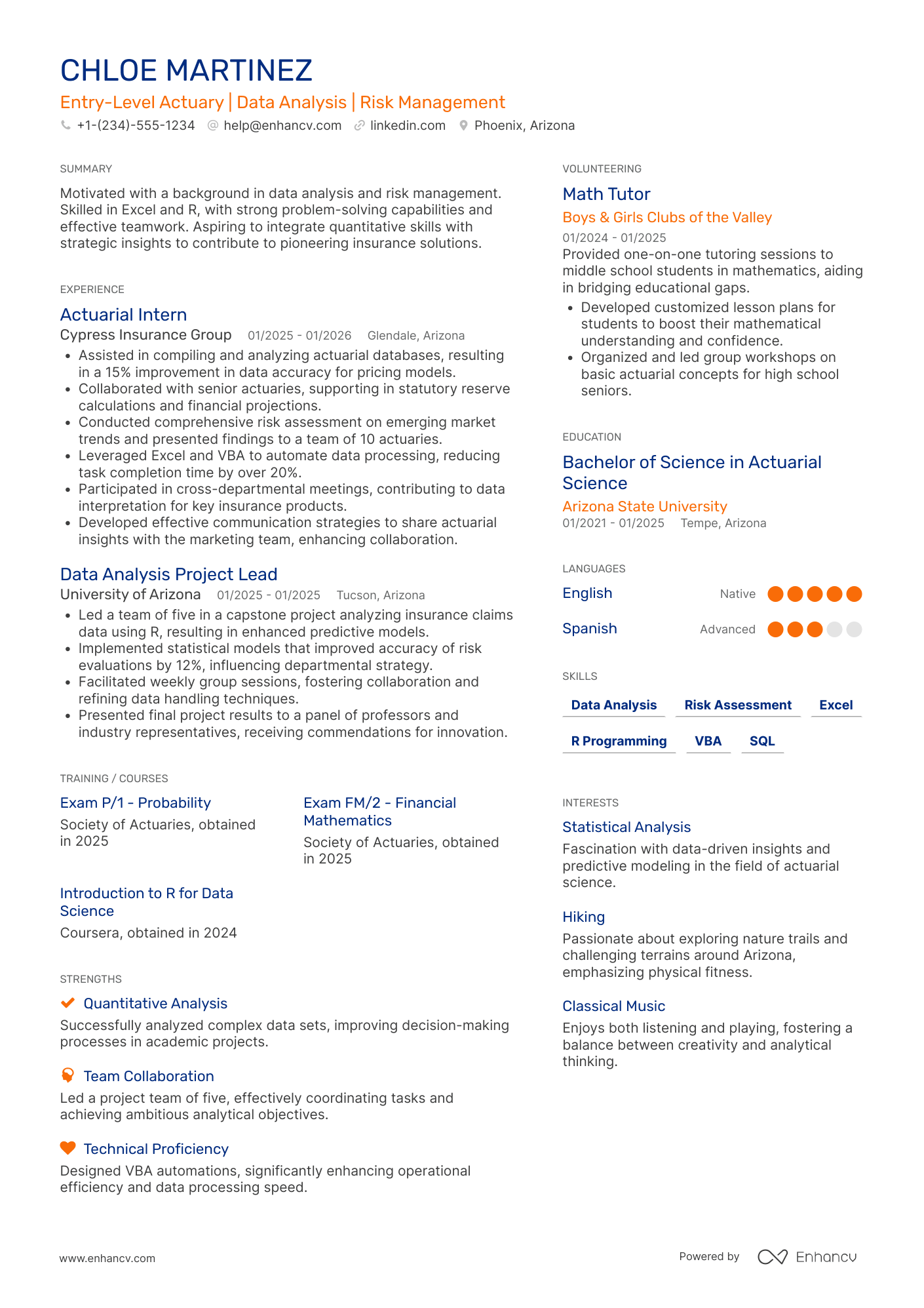
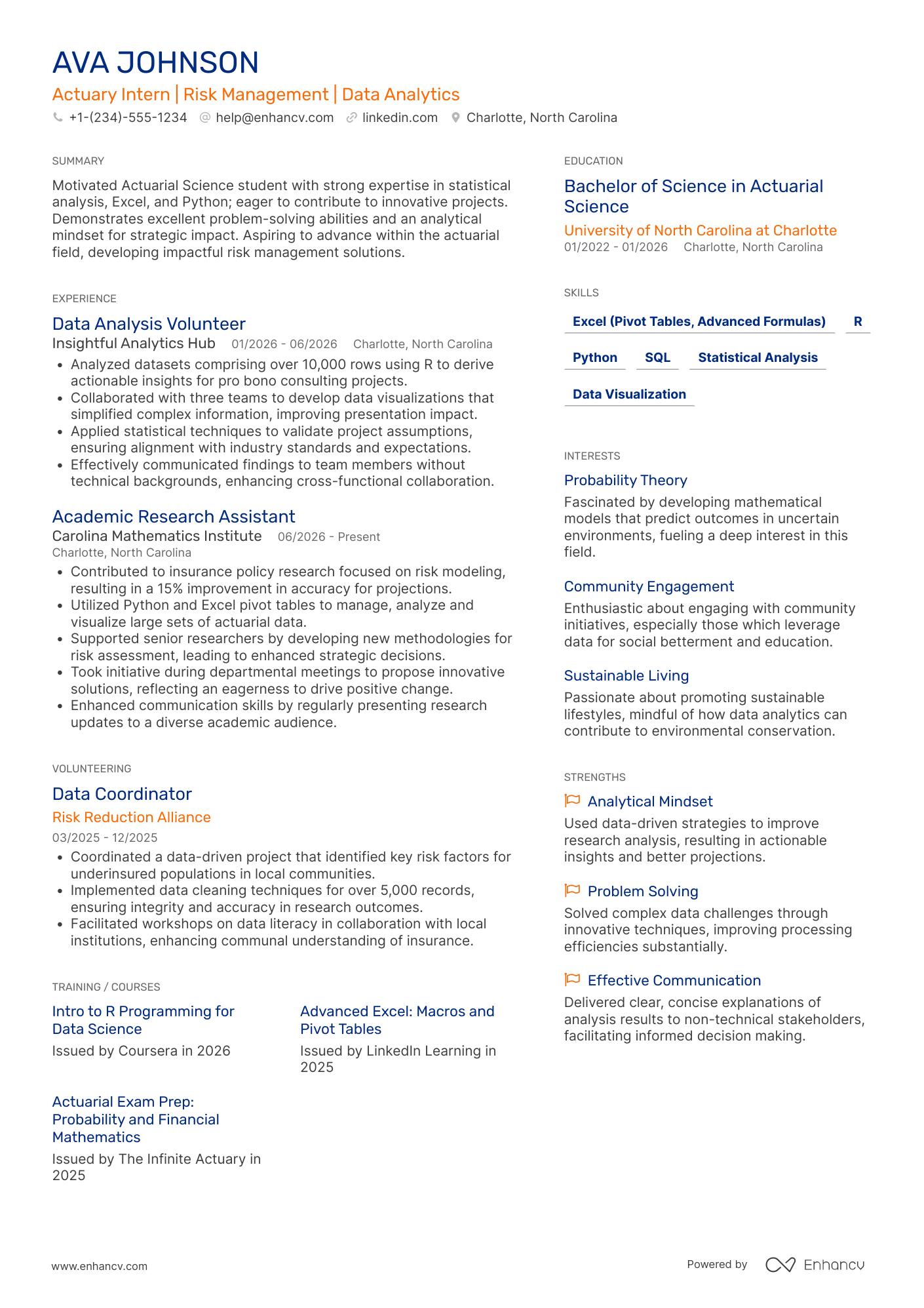
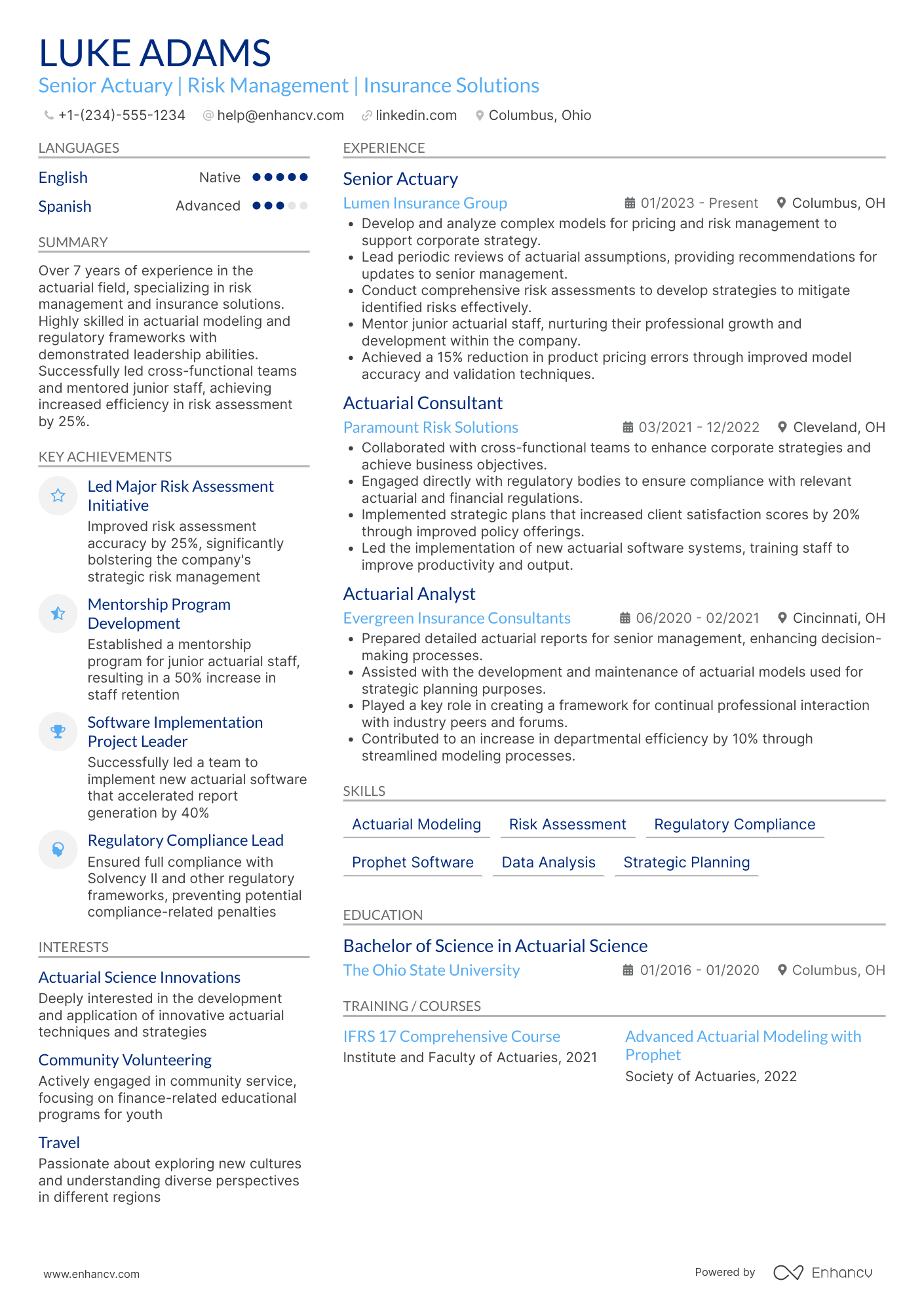
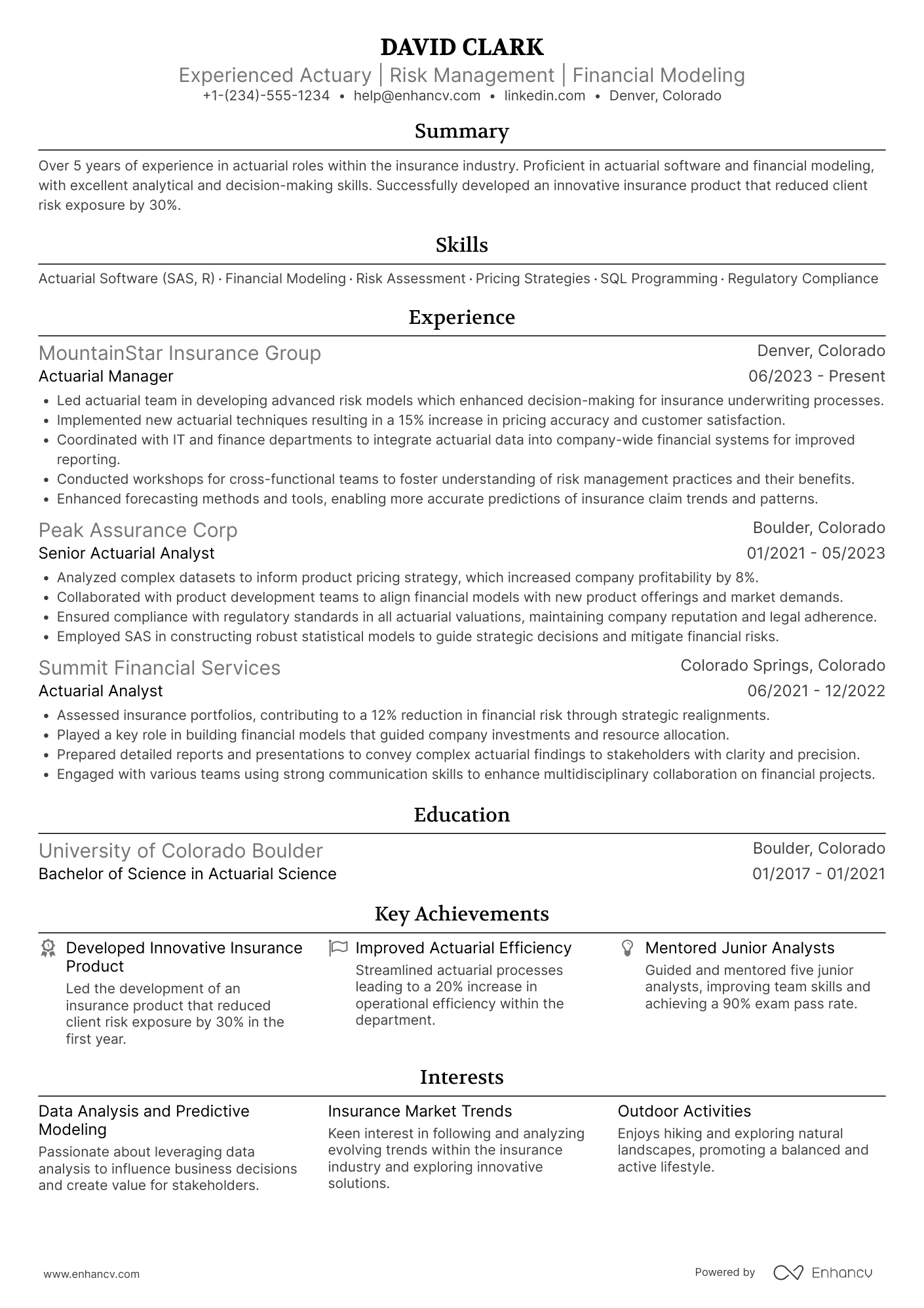
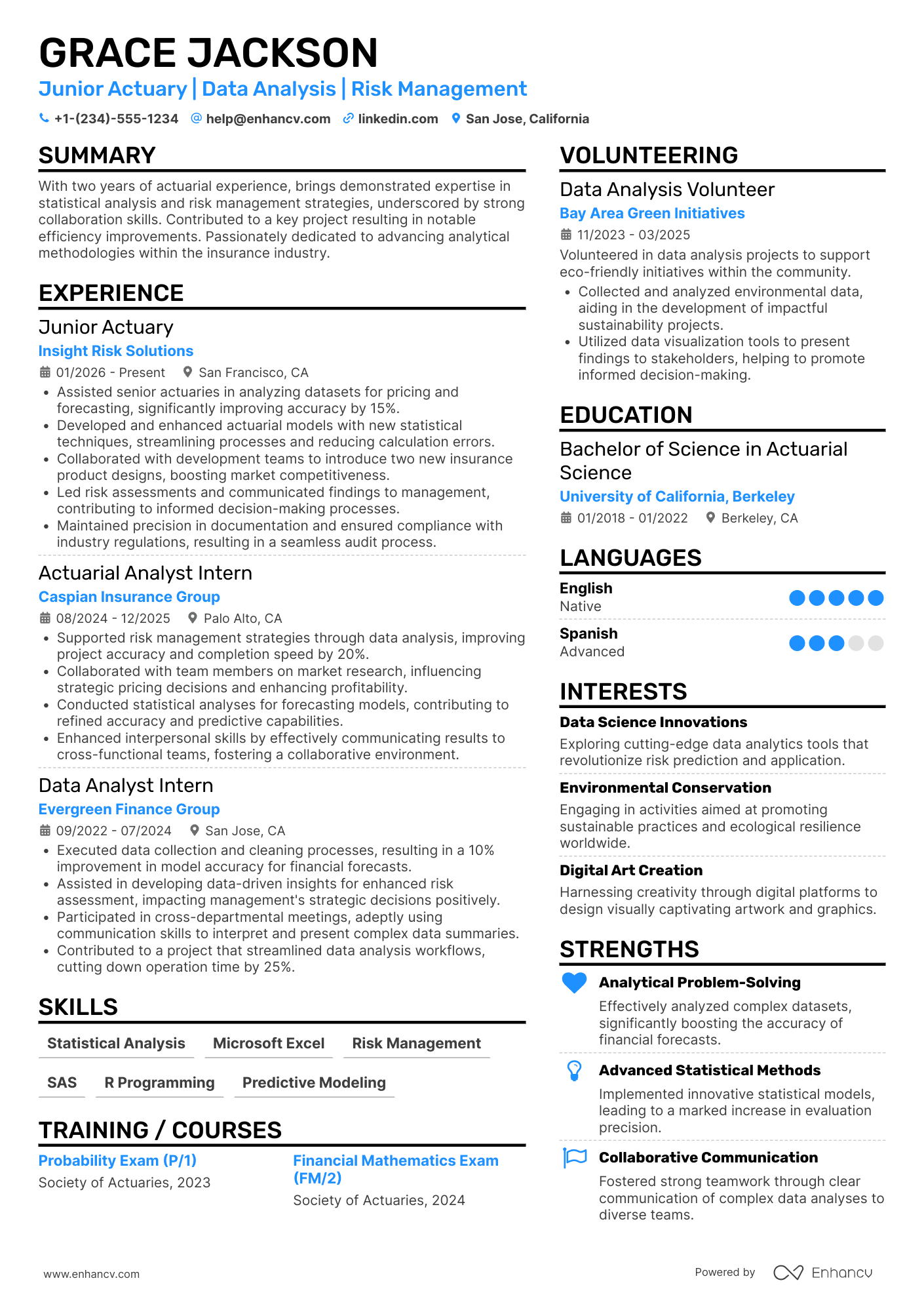
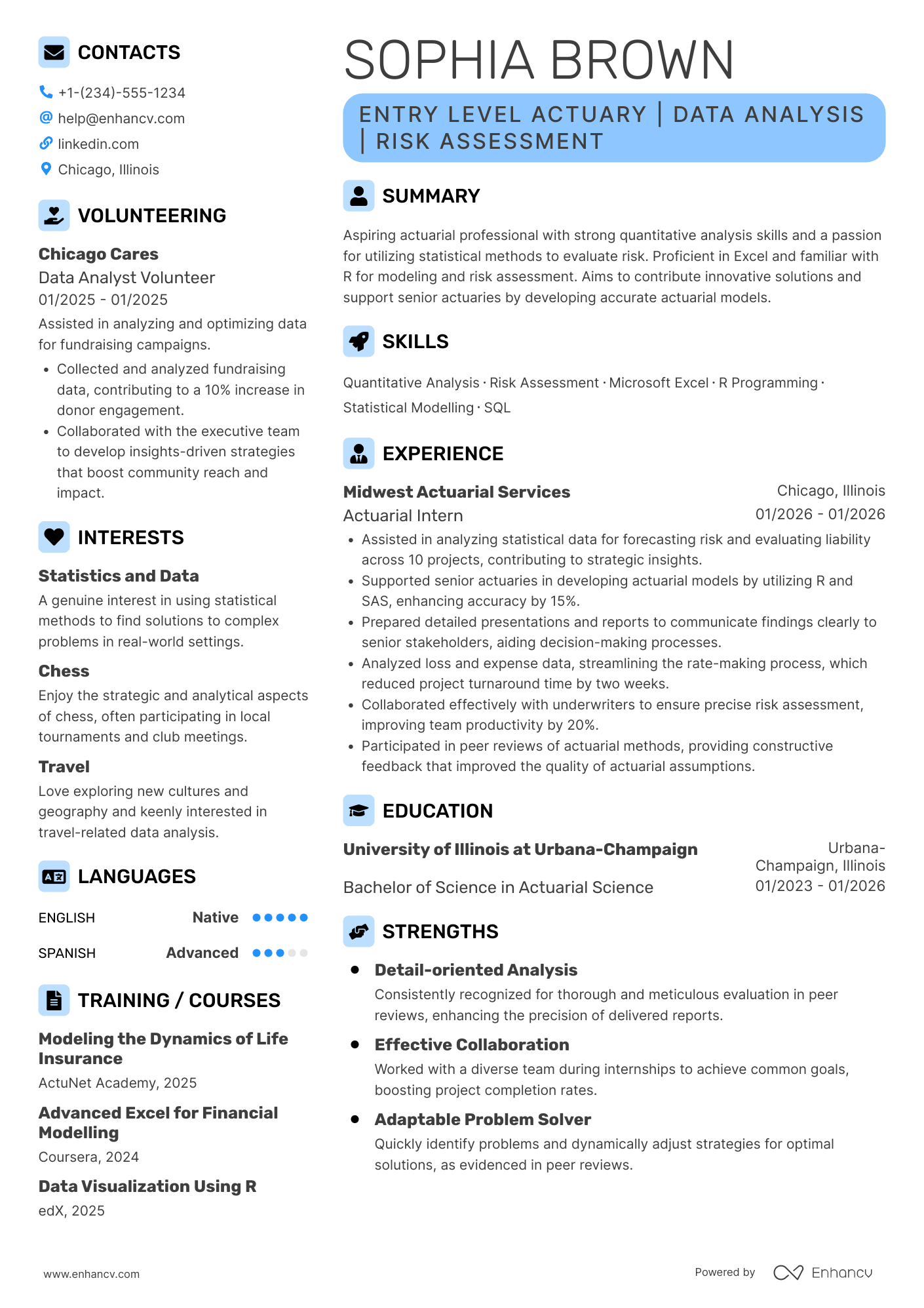
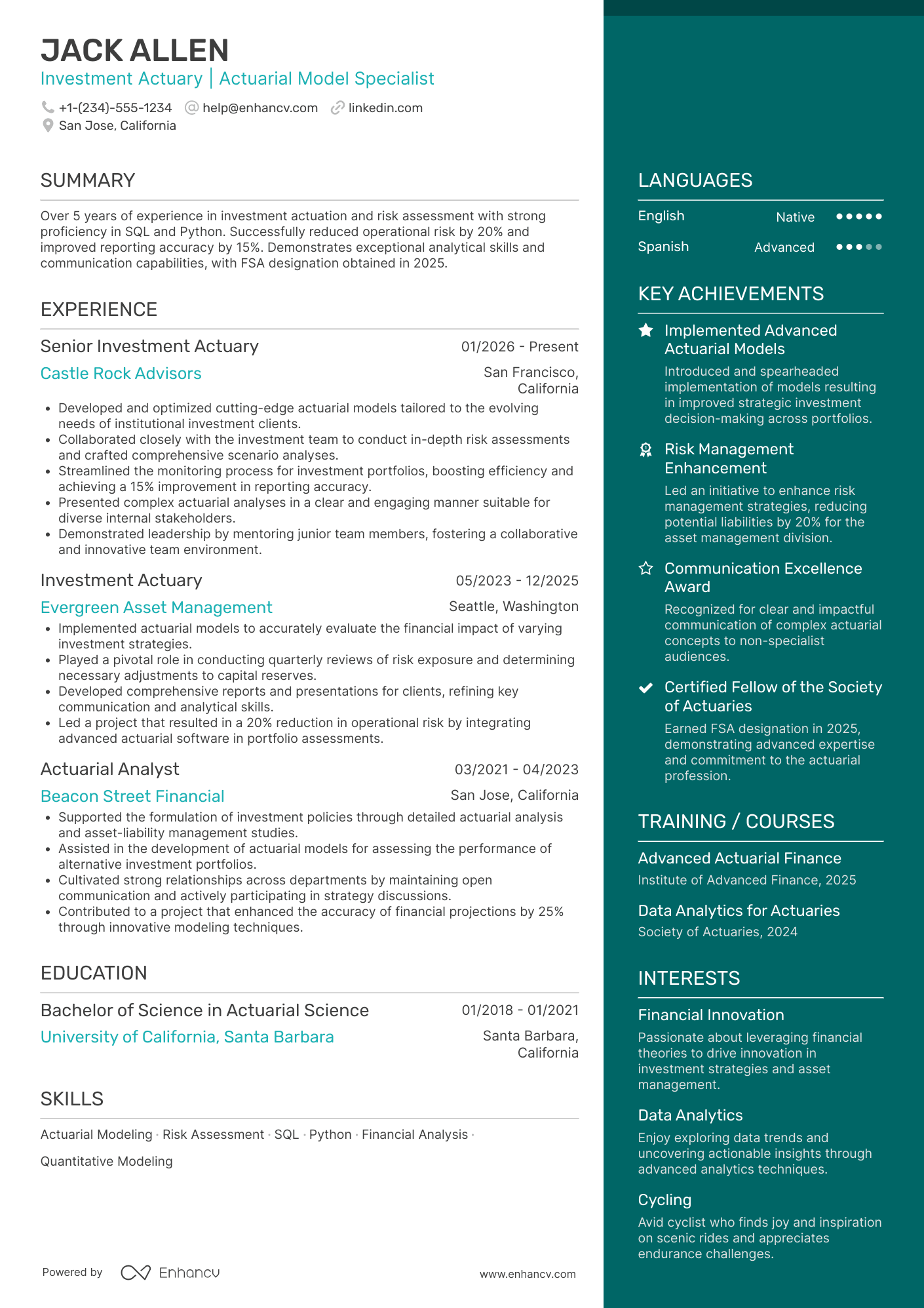
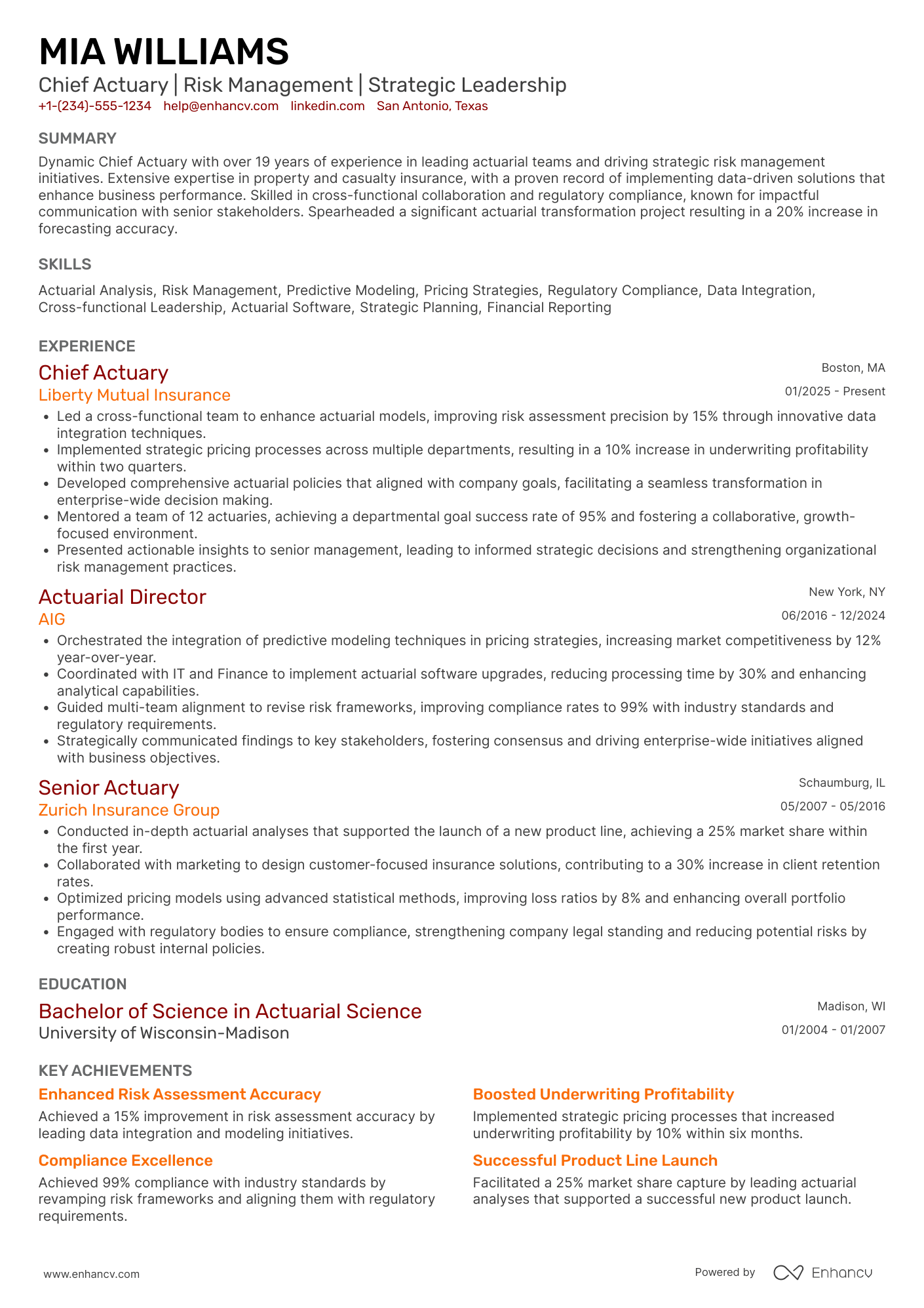
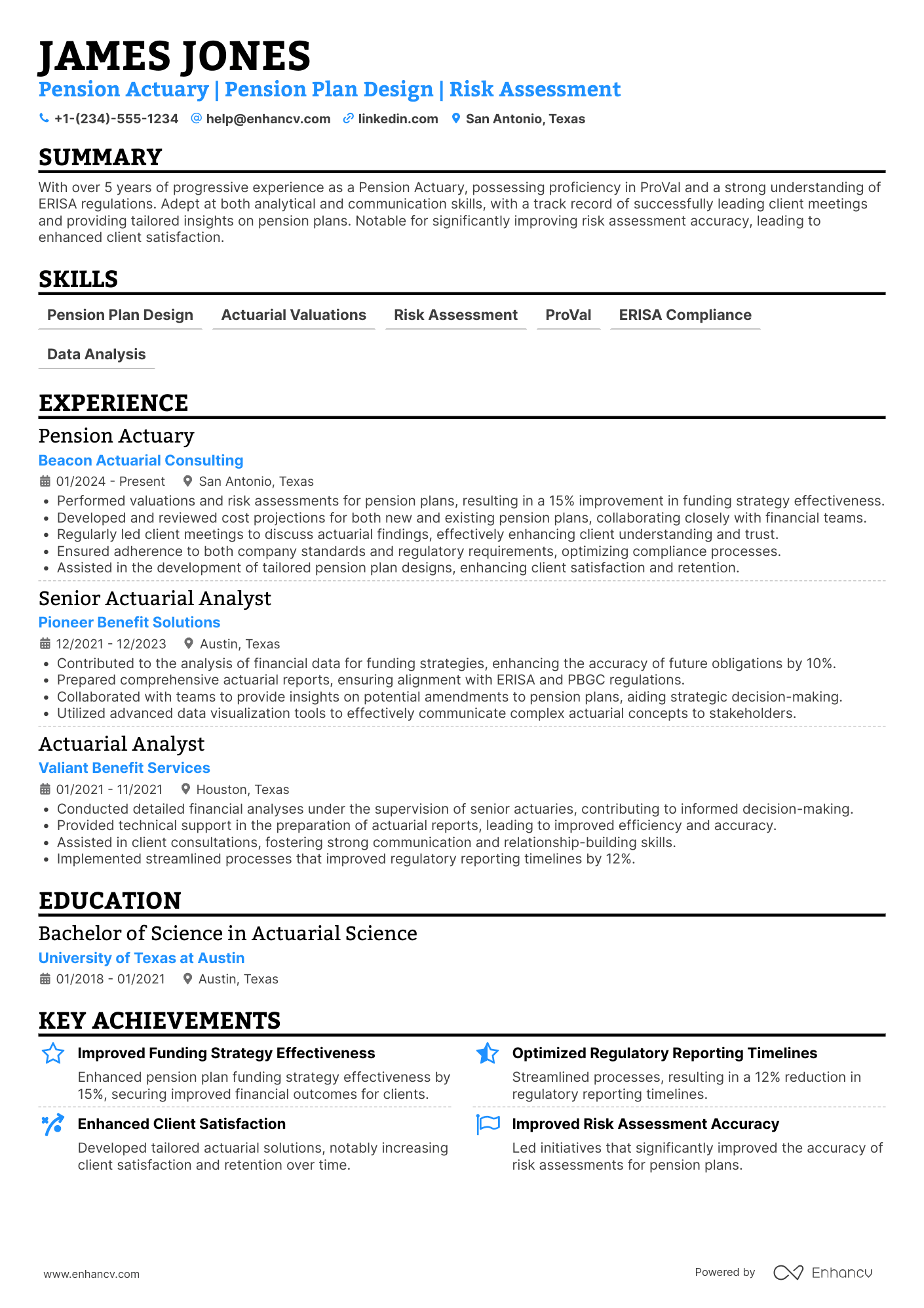
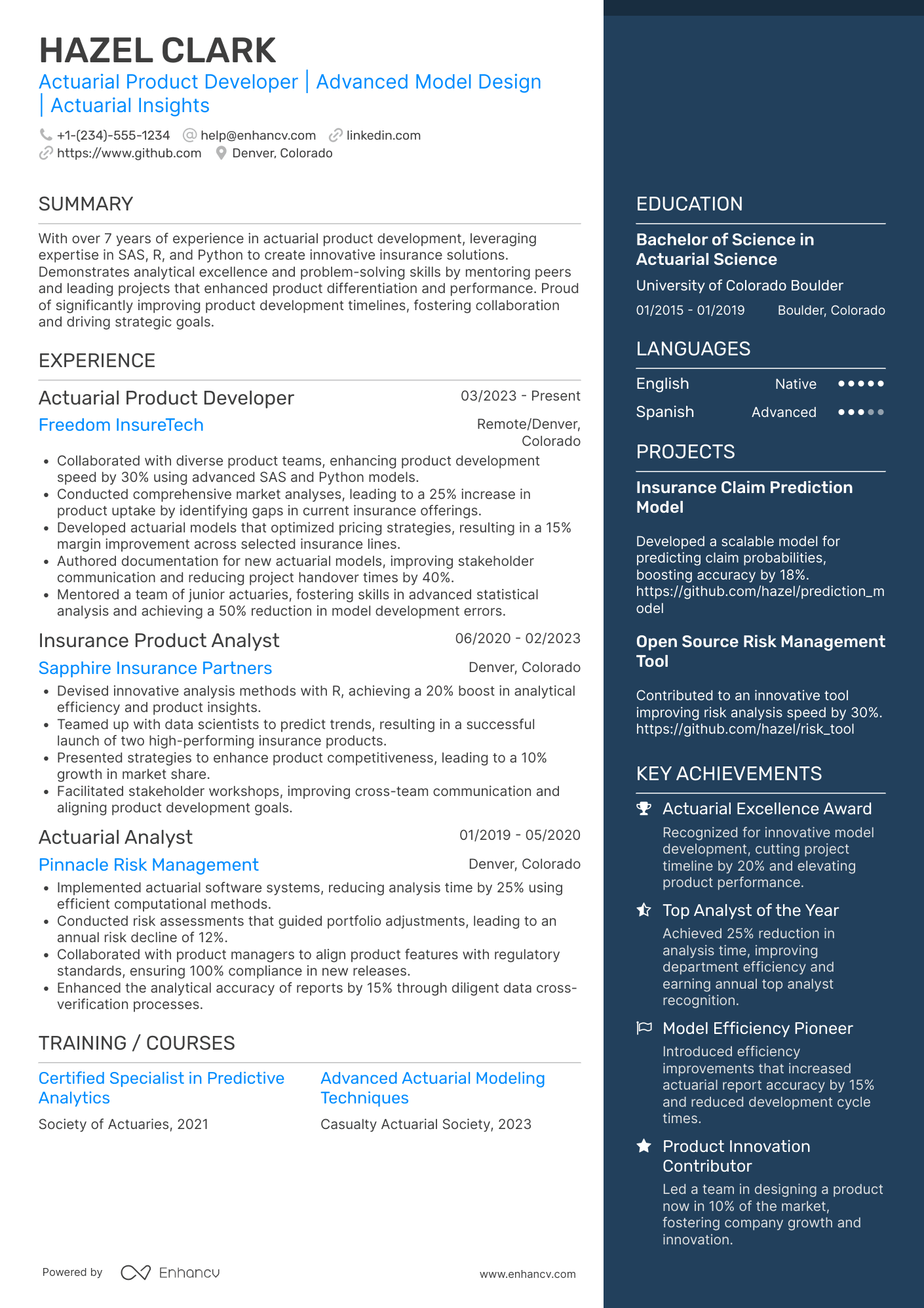
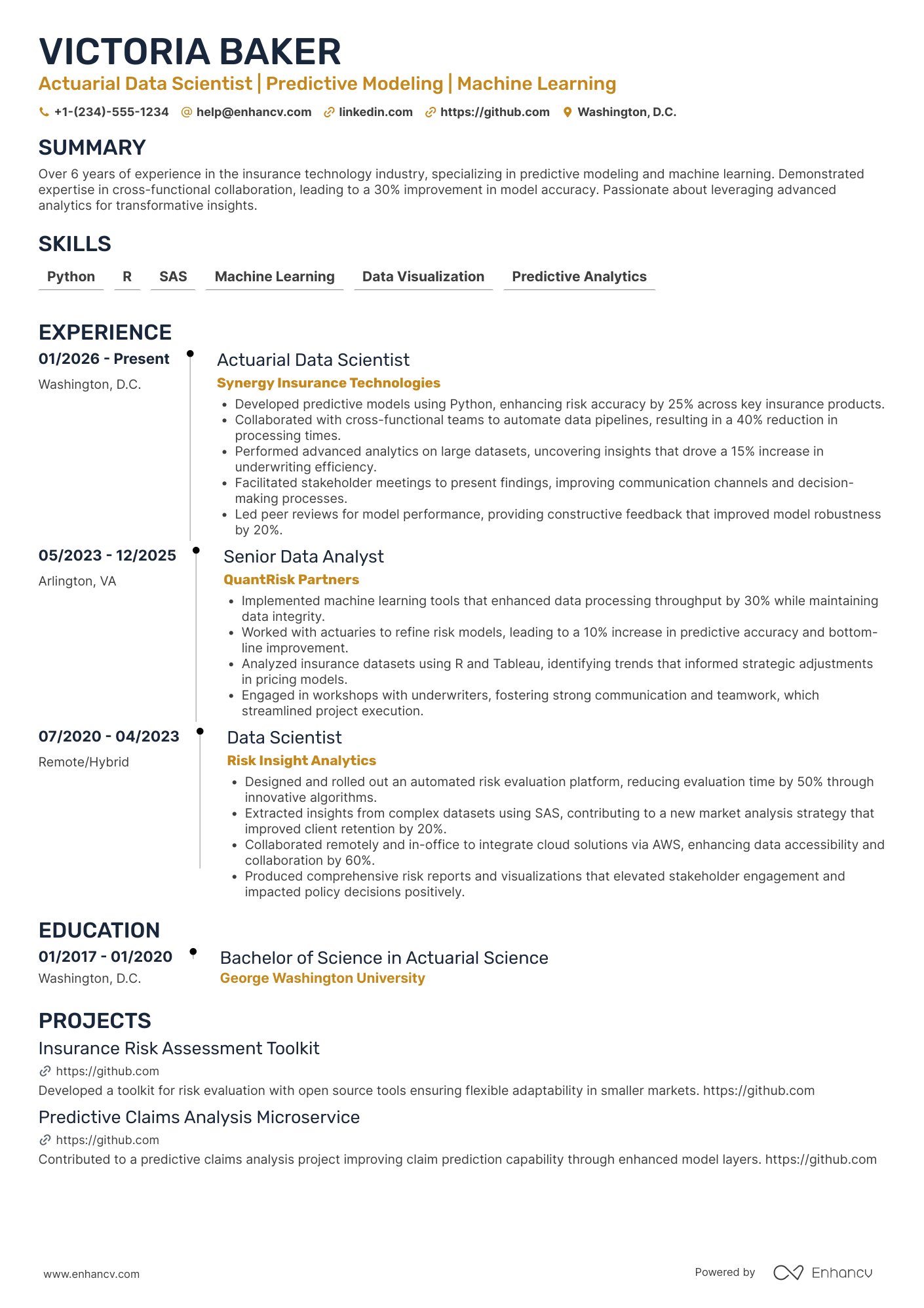
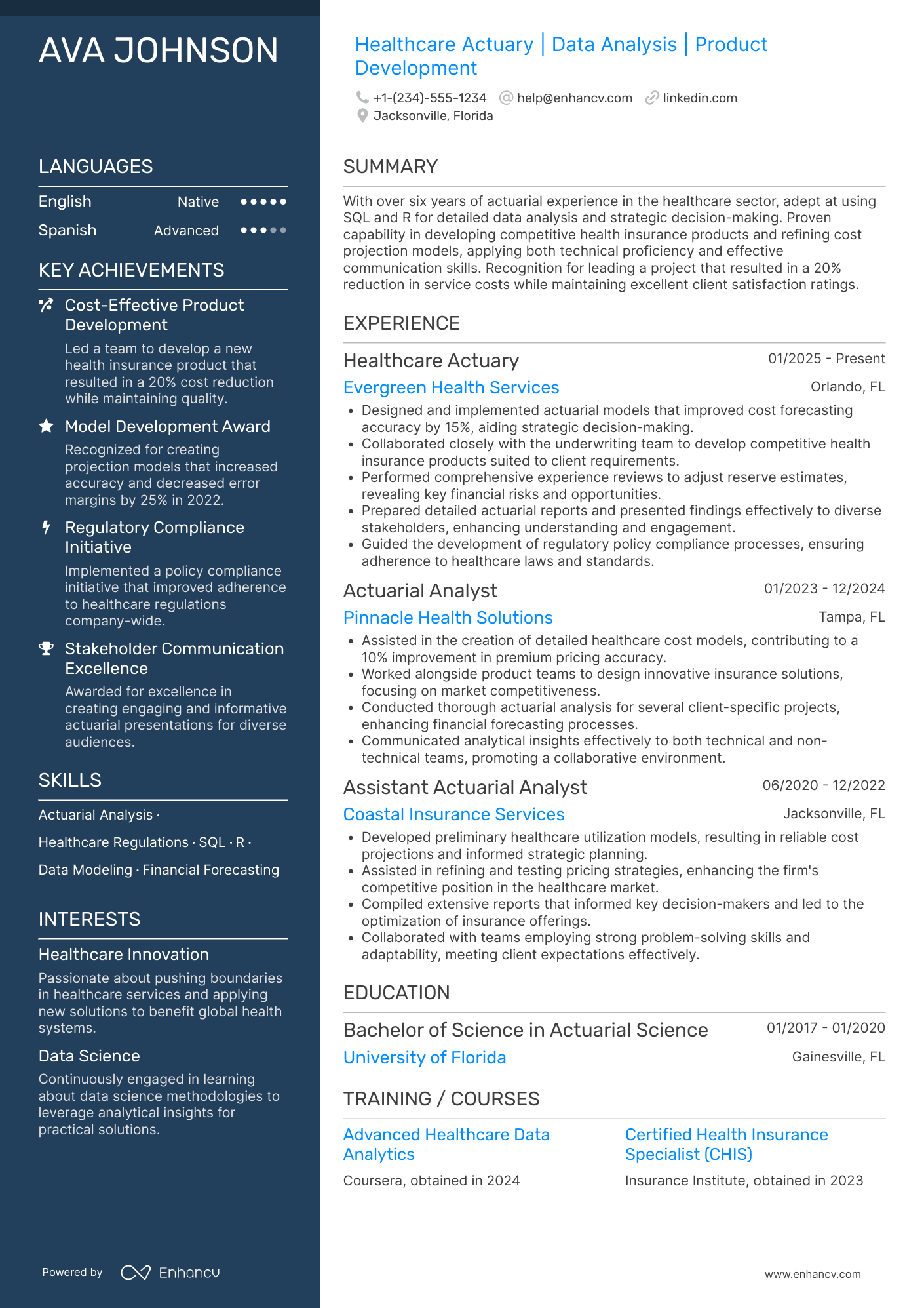
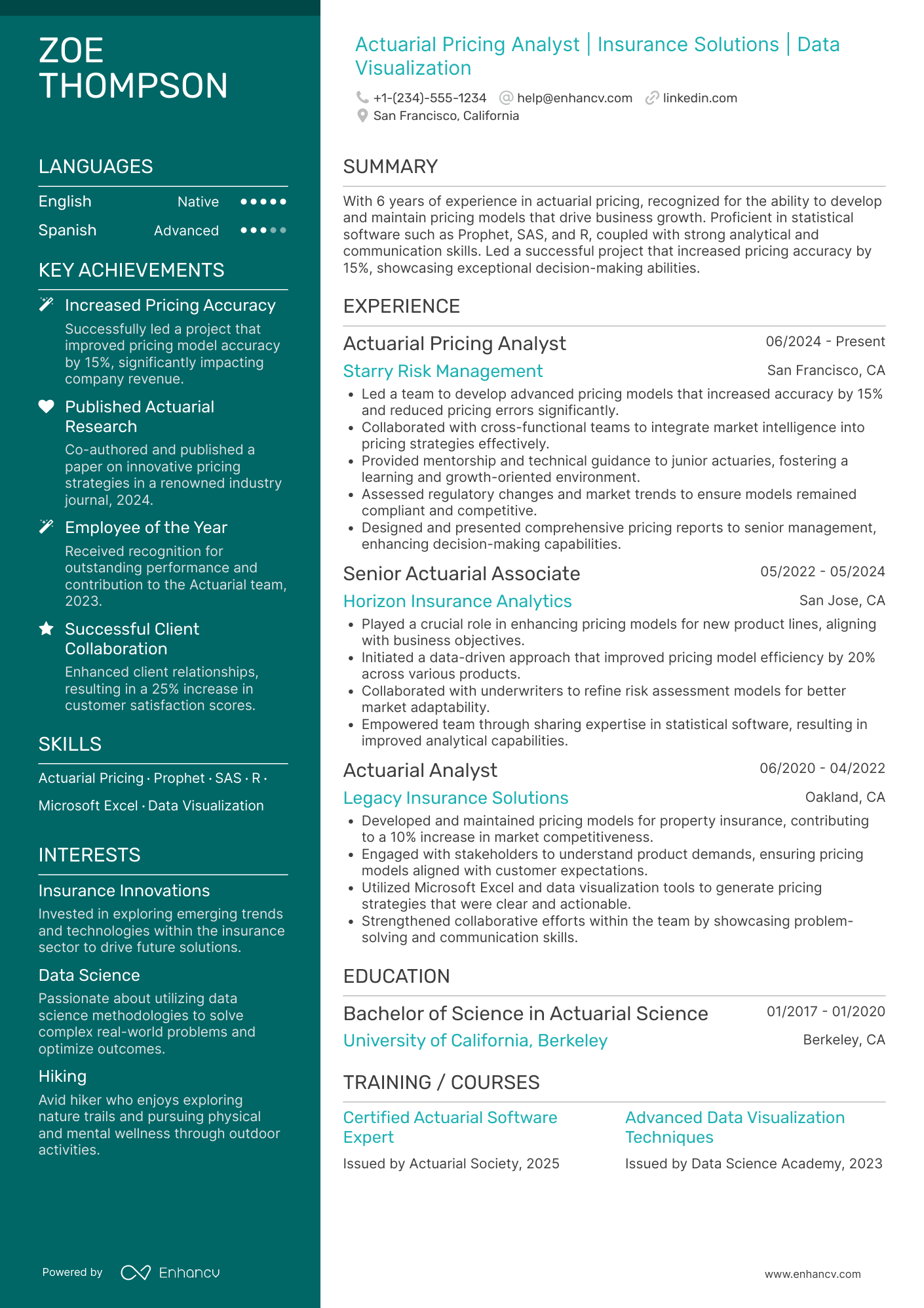
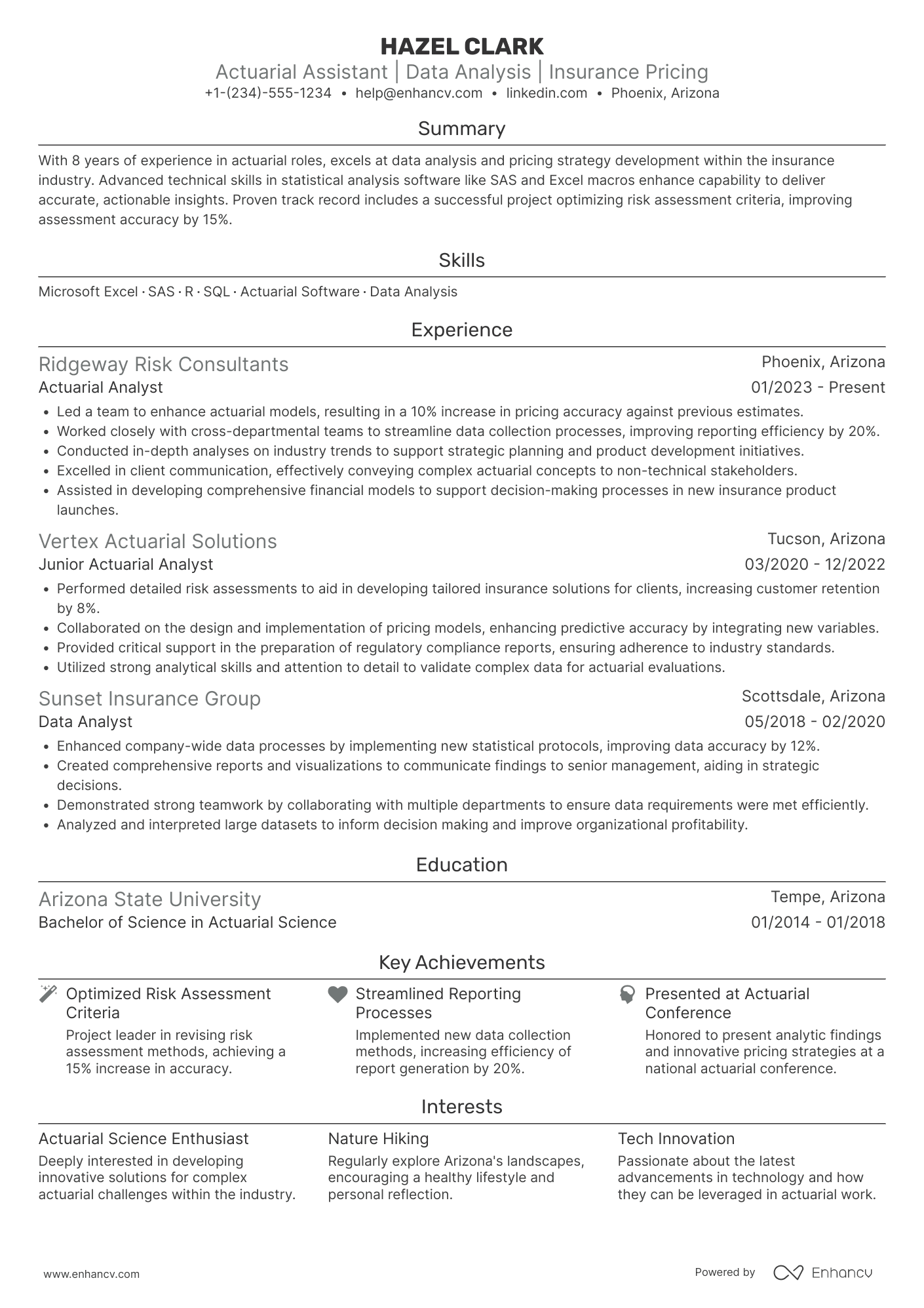
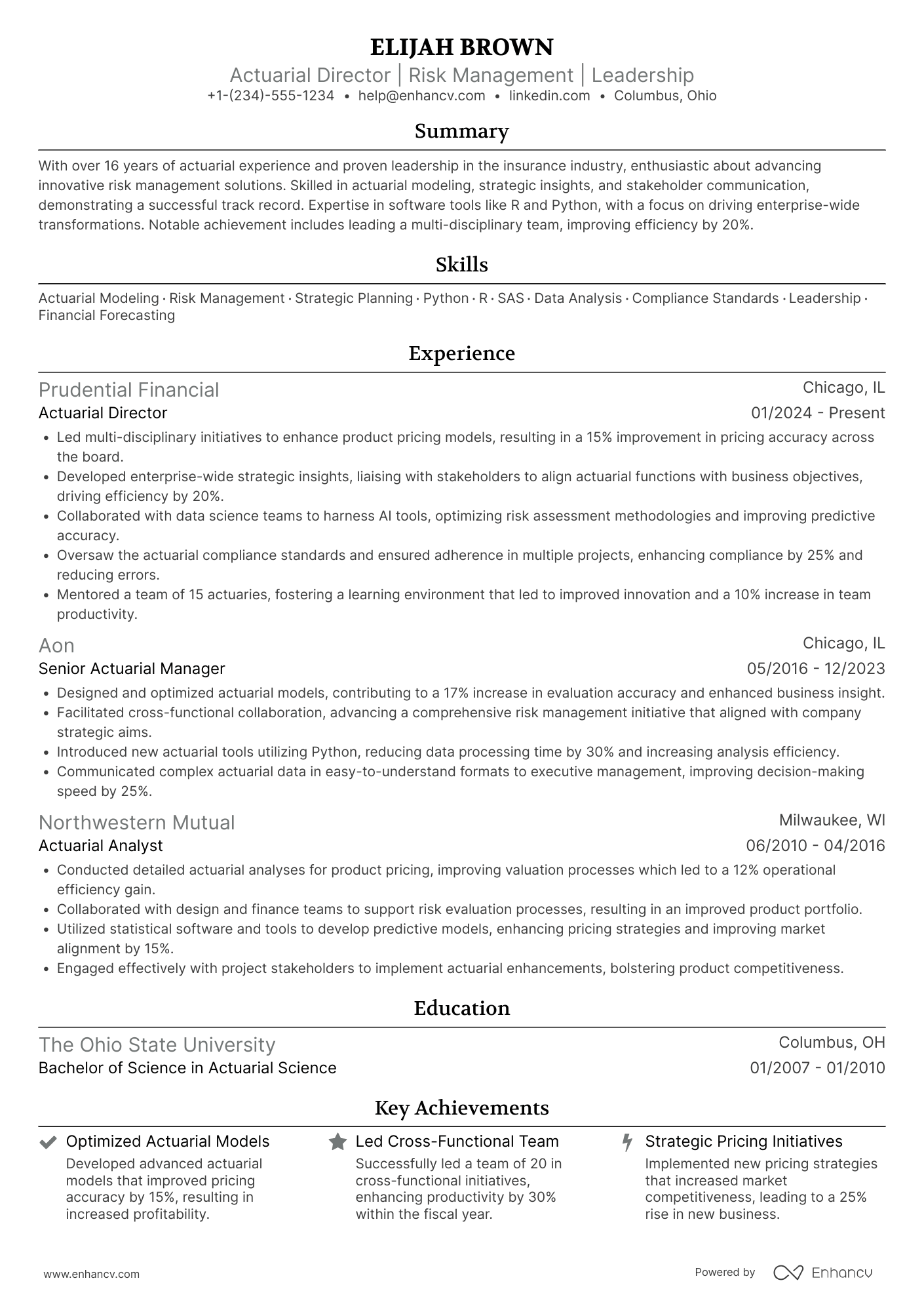
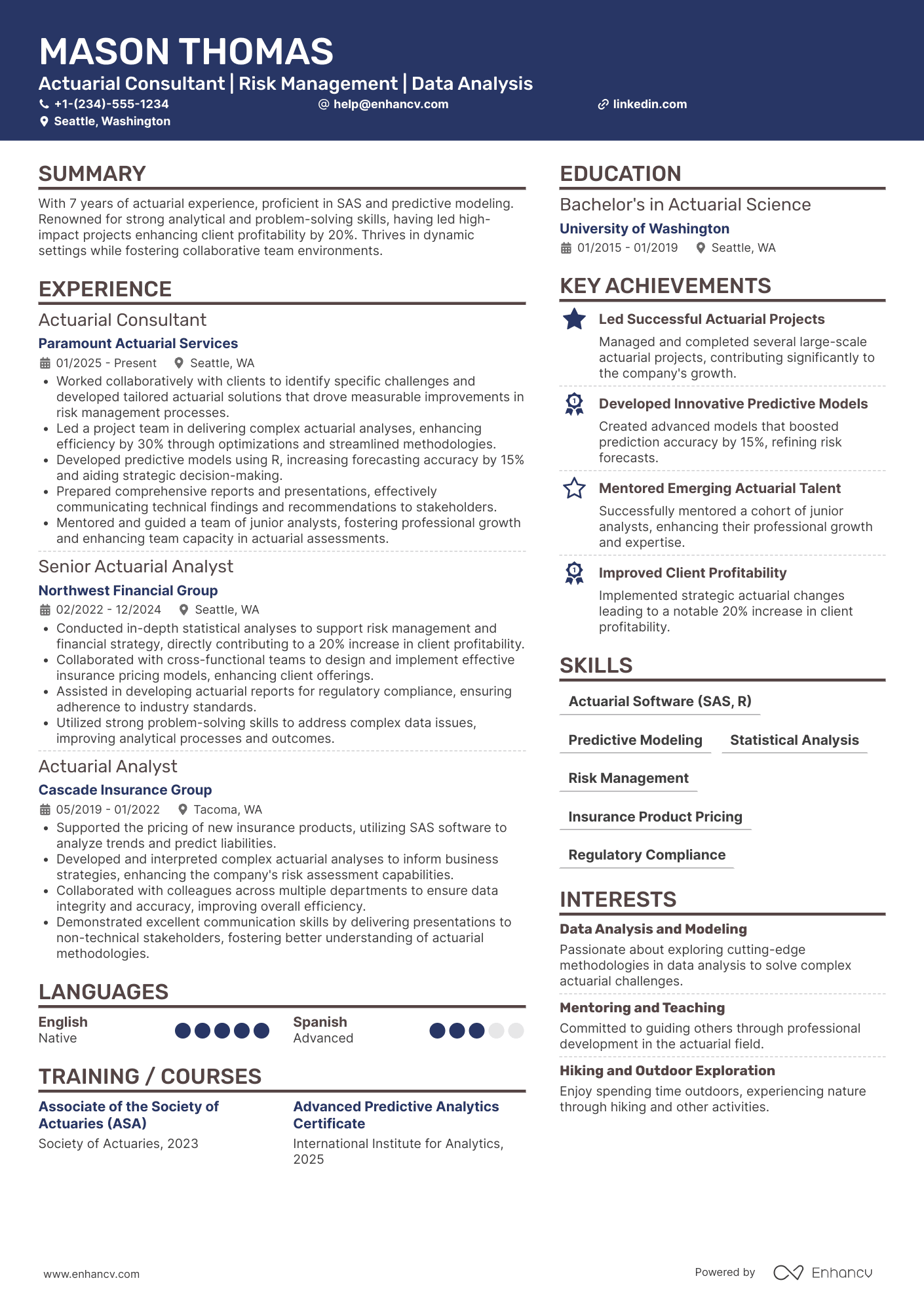
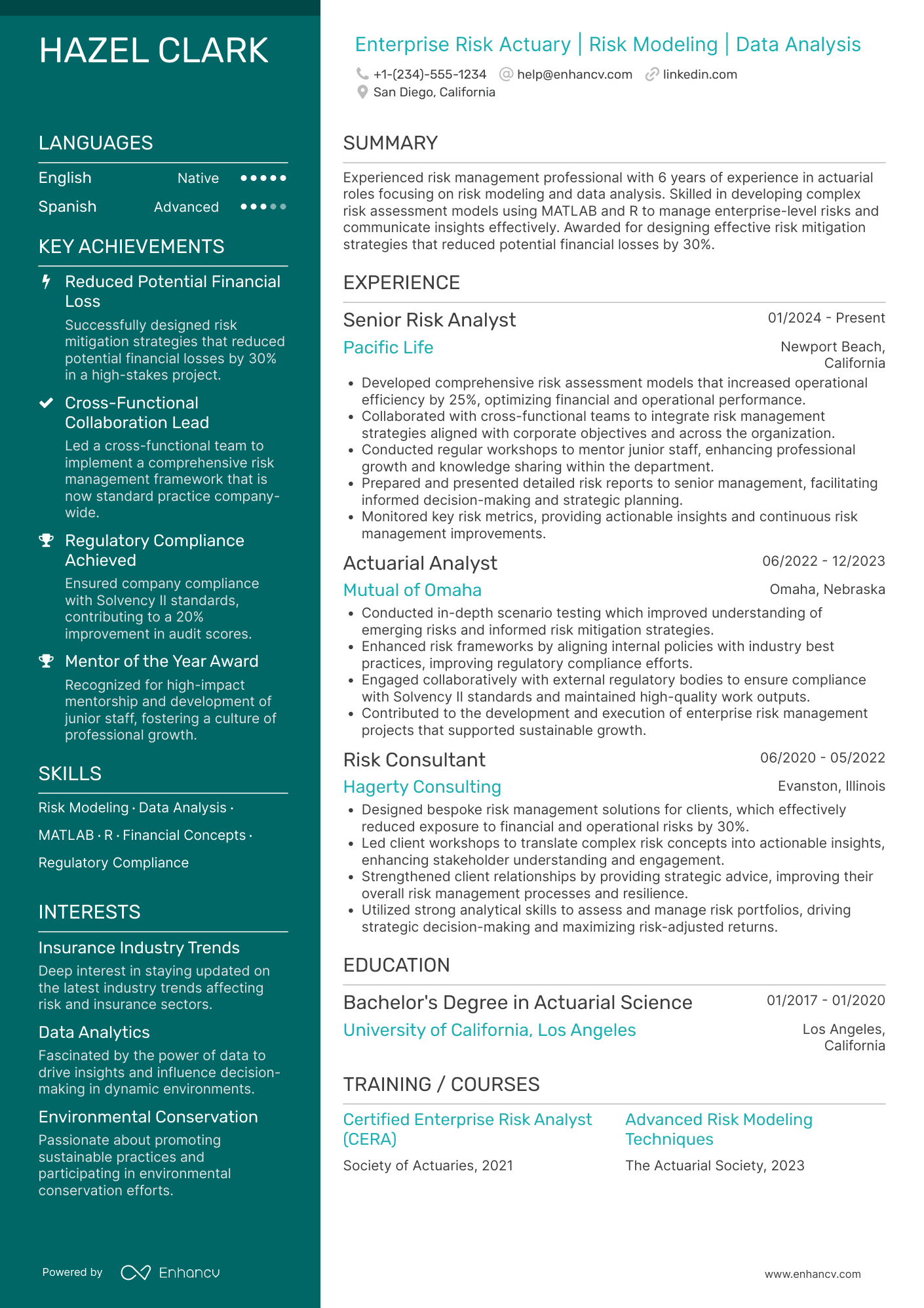
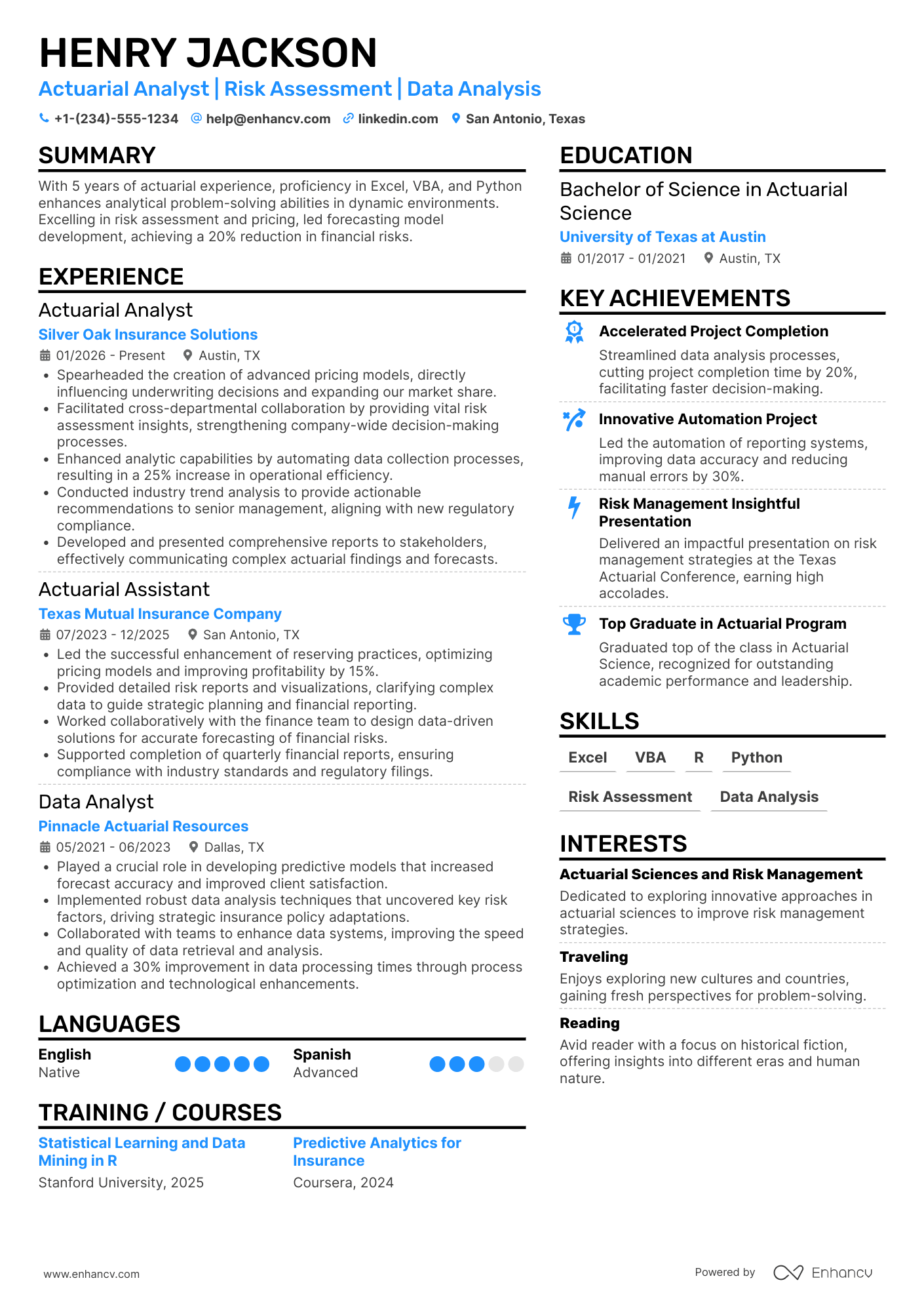
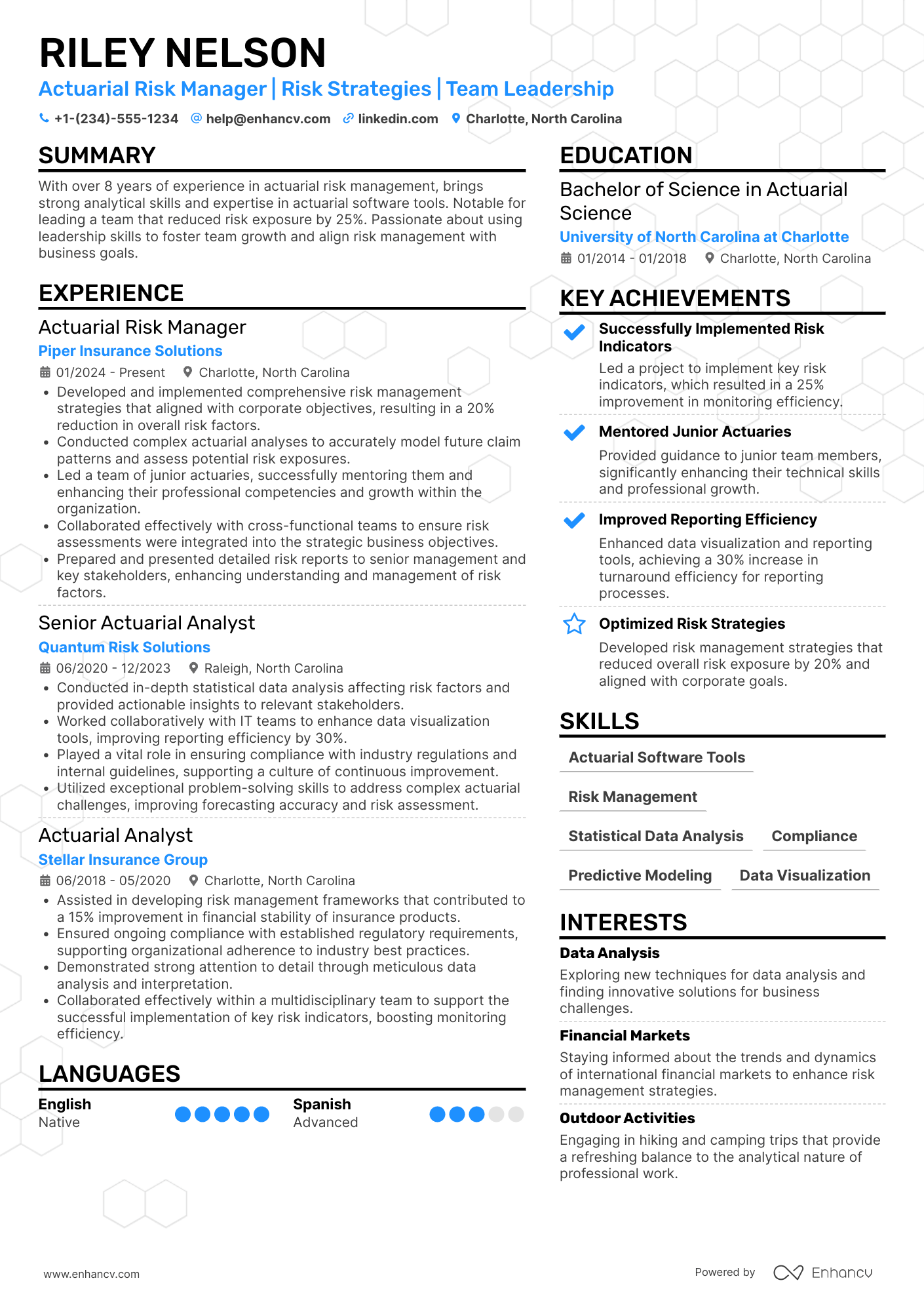
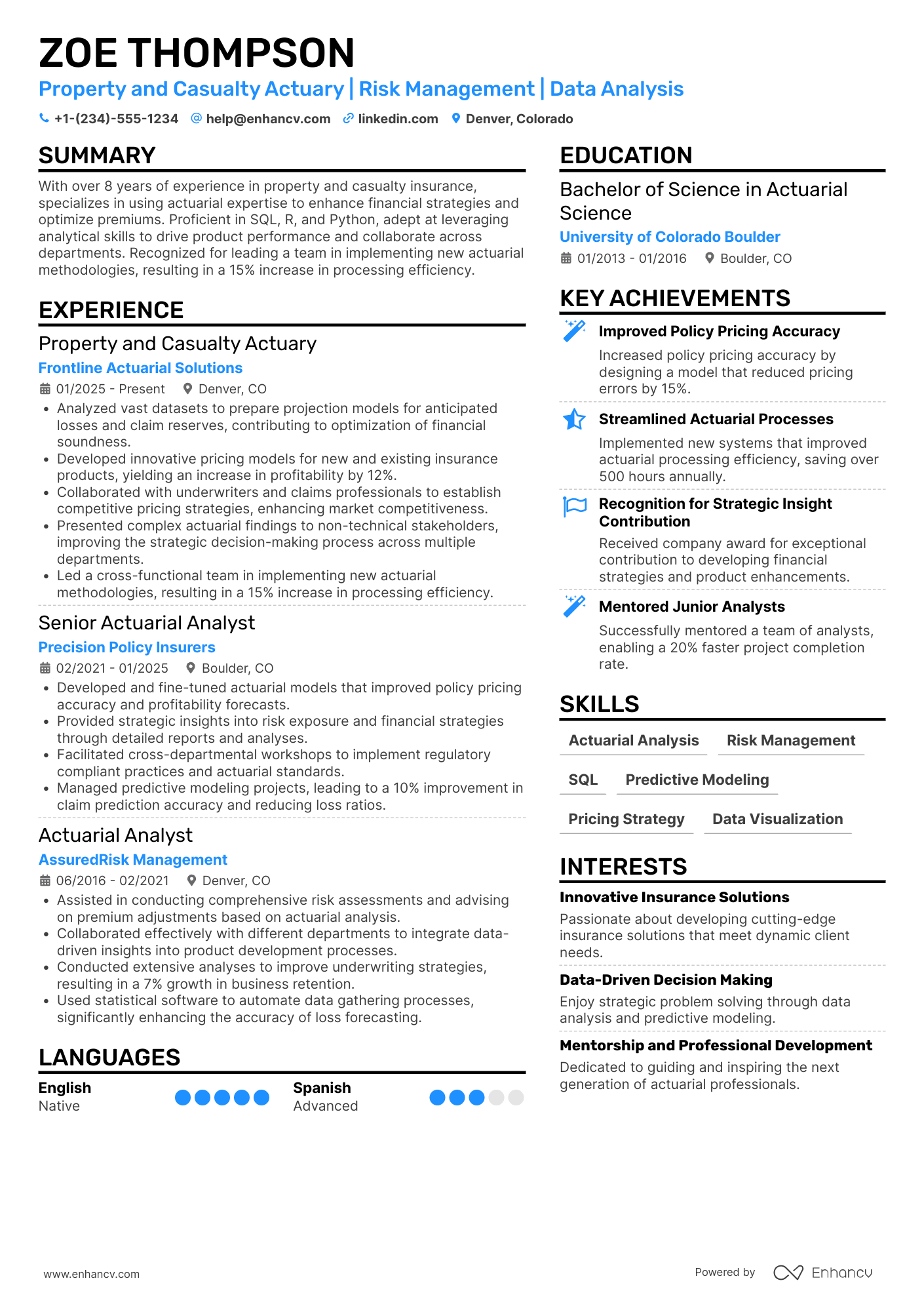
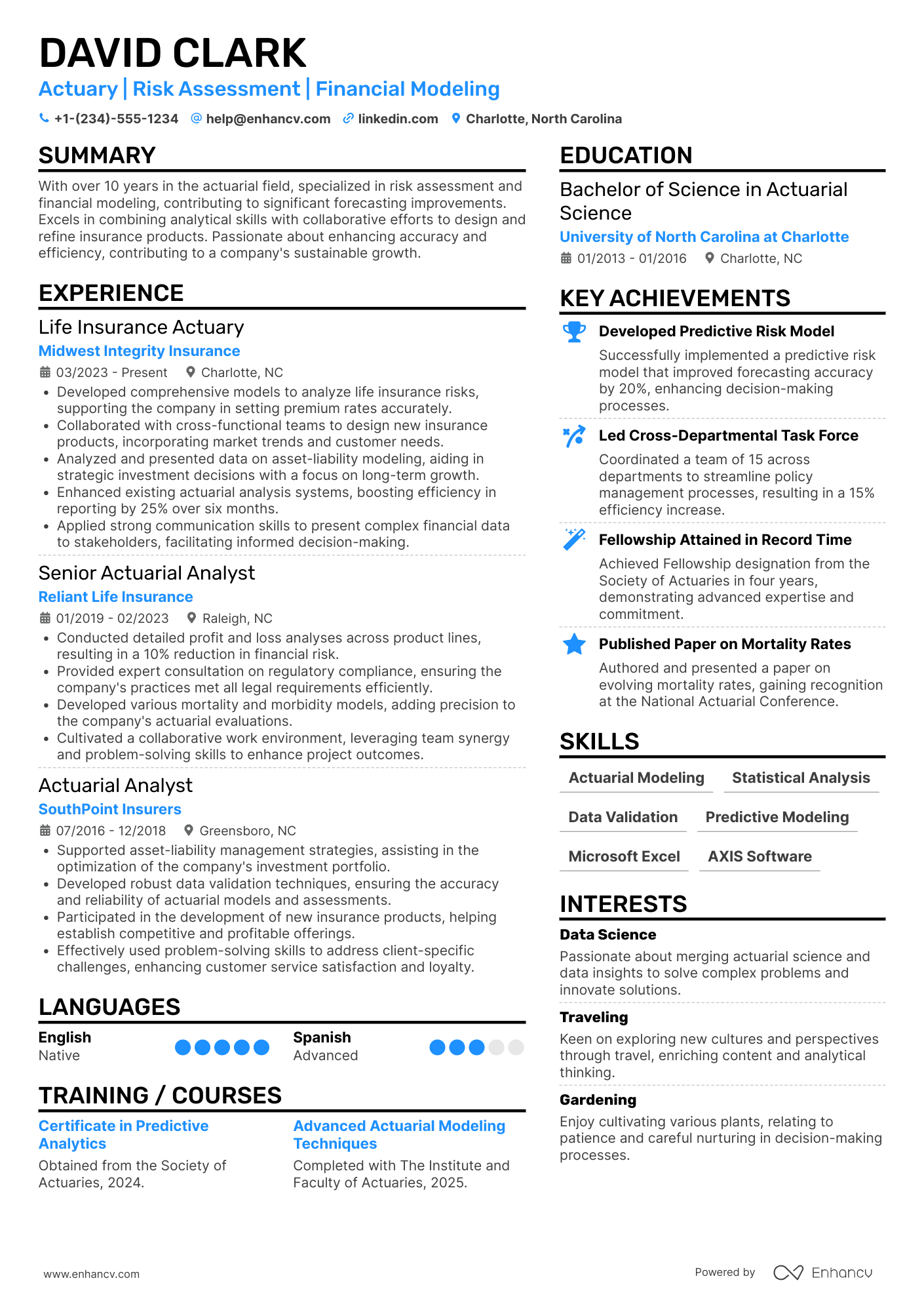
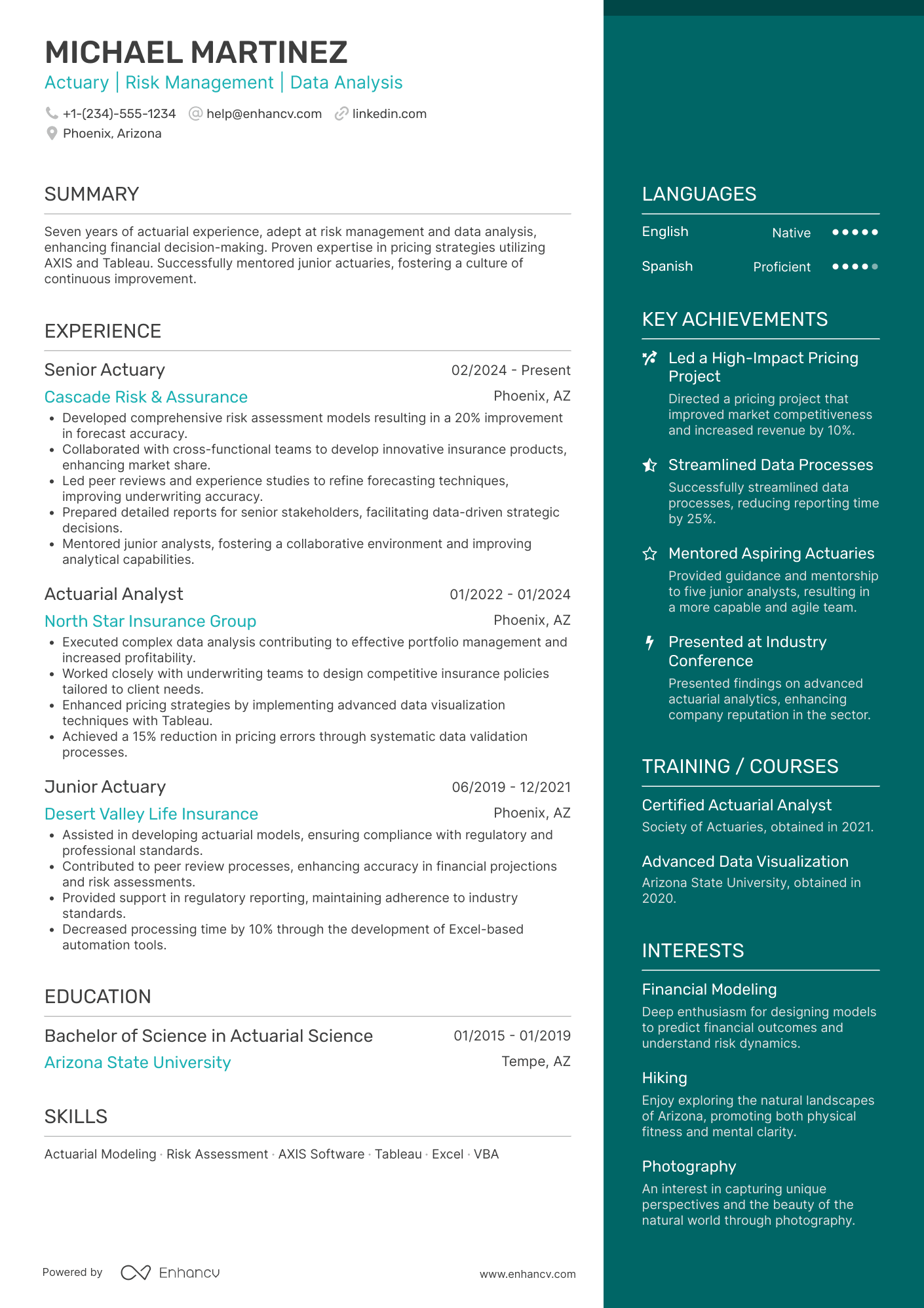
You passed Exam P, survived STAM, and built pricing models that saved your company millions. But your actuary resume reads like a job description copy-paste. That is the gap between qualified actuaries and actuaries who get interviews. The fix is not complicated — it is about showing your actuarial work the way hiring managers actually evaluate it. This guide walks you through building a resume that gets past both the ATS filter and the hiring manager's 30-second scan.

Key takeaways
- List every actuarial exam passed with dates — this is the first thing hiring managers scan for
- Quantify your impact: reserve accuracy, premium volume, loss ratio improvement, efficiency gains
- Use reverse chronological format — functional resumes raise red flags in actuarial hiring
- Tailor to the specialty: pricing, reserving, capital modeling, pension, and health use different terminology
- Name your tools: Python, R, SQL, SAS, Emblem, ResQ — generic "proficient in software" tells hiring managers nothing
- Enhancv's resume builder handles the formatting so you can focus on what actually differentiates your actuarial experience
How to format your actuary resume
Actuarial hiring managers are analytical. They scan resumes the same way they scan data — top-down, looking for patterns. Give them a clean structure and they will find what they need fast.
Use reverse chronological order. This is the standard resume format in actuarial hiring. Functional resumes raise red flags in this field — hiring managers assume you are hiding gaps or weak exam progress.
If you also need the narrative half of the application, our actuary cover letter guide shows how to translate exam history and modeling work into the one-page story a chief actuary will actually read.
Your actuarial resume should include these resume sections in this order: contact information and header, resume summary or objective, actuarial exams passed (with dates), work experience, education, technical skills, certifications and professional development.
One page is the rule for anyone under 10 years of experience. Two pages are fine for FSA or FCAS candidates with deep specialization in reserving, pricing, or ERM.
A quick note on ATS: insurers use applicant tracking systems that parse your resume into structured fields. A clean, single-column layout with standard section headers passes through without issues.
If you want a clean starting point, Enhancv's resume templates are built to handle ATS parsing while still looking polished — a decent shortcut if you do not want to fight with formatting from scratch.
Your format is the container. What goes inside it is what gets you the interview — starting with how you describe your actual work.
Is your resume good enough?
Drop your resume here or choose a file. PDF & DOCX only. Max 2MB file size.
Write your actuary experience section
The work experience section carries the most weight on any actuary resume. This is where hiring managers decide if you can actually do the job, not just pass exams.
Every bullet point should follow a simple structure: what you did, what tools or methods you used, and what resulted from it. Vague descriptions of responsibilities tell me nothing. Specific accomplishments tell me everything.
Generic bullets that waste space
- Responsible for reserving and pricing analysis
- Worked with team on quarterly reports
- Used Excel and SQL for data analysis
- Helped develop new insurance products
Strong actuary experience bullets
- Built IBNR reserve models across 4 casualty lines using chain-ladder and Bornhuetter-Ferguson methods, reducing reserve volatility by 12%
- Automated quarterly reserve reporting in Python, cutting report generation time from 3 days to 4 hours
- Developed GLM-based pricing models for commercial auto, improving loss ratio by 6 points over 18 months
- Led cross-functional team of 5 to launch cyber liability product generating $8M in first-year premium
See the difference? The bad example could describe anyone in an actuarial department. The good example describes a specific actuary with measurable results.
Start every bullet with a strong action verb. "Developed," "Built," "Automated," "Reduced," "Led" — these tell me you did the work, not that you watched someone else do it.
But strong bullets only matter if they match what the employer actually needs. That is where tailoring comes in.
Tailor your actuary resume to the job description
A generic actuarial resume sent to 50 companies will underperform a tailored resume sent to 10. Every actuarial role has a specific focus — pricing, reserving, capital modeling, pension, health — and your resume needs to reflect that focus.
Here is how to map your experience to a job posting:
Tailoring your actuary resume to job postings
| Job posting language | Your resume should say |
|---|---|
| P&C reserving experience | Built IBNR and case reserve models for GL and commercial auto lines |
| Predictive modeling | Developed GLM and gradient-boosted models for frequency/severity in personal lines |
| Cross-functional collaboration | Partnered with underwriting and claims teams to recalibrate pricing assumptions quarterly |
| SOA exam progress | ASA designation, sitting for FSA track (ERM) — FAP module completed |
| Experience with actuarial software | Built production models in Emblem, ResQ, and SAS; automated workflows in Python |
Do not copy the job description word-for-word. Translate it into your actual experience. If the posting says "predictive analytics," do not just write "predictive analytics" — write what you predicted, how you modeled it, and what it improved.
This is one area where Enhancv's resume tailoring feature saves real time — it cross-references your resume against a job posting and flags gaps you might miss.
Numbers are the language actuaries speak. Your resume should speak it fluently too.
Quantify your impact as an actuary
Actuarial work is inherently quantitative. If your actuary resume does not include numbers, you are underselling yourself. Hiring managers want to see the scale and impact of your work.
Quantify achievements on your resume with numbers specific to actuarial practice.

Metrics that belong on an actuarial resume
- Reserve accuracy: "Maintained IBNR estimates within 3% of actual across 6 consecutive quarters"
- Premium volume: "Managed pricing for $120M commercial property book"
- Efficiency gains: "Automated rate filing process, reducing turnaround from 2 weeks to 3 days"
- Loss ratio improvement: "Revised experience rating algorithm, improving loss ratio by 8 points"
- Team scope: "Supervised team of 3 actuarial analysts and 2 actuarial students"
- Model performance: "Developed frequency model with Gini coefficient of 0.42, outperforming prior model by 15%"
- Cost savings: "Identified $4.2M in redundant reserves through detailed triangle analysis"
Do not fabricate numbers. But if you contributed to a result, quantify your contribution. "Contributed to" is weak. "Led the reserving analysis that identified $4.2M in reserve redundancy" is specific and verifiable.
If you are struggling to turn your experience into measurable bullets, Enhancv's bullet point generator can help you reframe responsibilities as quantified achievements — useful when you know the impact but cannot find the right phrasing.
Numbers prove your work. But hiring managers also scan for specific skills to confirm you have the right toolkit.
Skills to include on your actuary resume
Your resume skills section needs to do two things: pass an ATS keyword scan and show a hiring manager you have the technical depth for the role.
Hard skills for an actuarial resume
- Reserving methods (chain-ladder, Bornhuetter-Ferguson, Cape Cod)
- Pricing and ratemaking (GLMs, experience rating, credibility theory)
- Predictive modeling (regression, decision trees, gradient boosting)
- Capital modeling and ERM
- Catastrophe modeling (RMS, AIR)
- Programming: Python, R, SQL, VBA, SAS
- Actuarial software: Emblem, Radar, ResQ, AXIS, MoSes
- Data visualization: Tableau, Power BI
- Microsoft Excel (advanced: pivot tables, macros, VLOOKUP/INDEX-MATCH)
- Financial reporting (GAAP, IFRS 17, statutory)
These are the technical competencies that show up in job postings. Match them to the tools and methods you actually use — do not list things you cannot discuss in an interview.
Between the hard and soft skills, there is a gap that trips up many actuaries. They list every programming language and modeling technique but forget that actuarial work is collaborative. You present findings to underwriters who do not speak your language. You negotiate assumptions with claims teams. You explain reserve uncertainty to CFOs.
Soft skills for an actuarial resume
- Cross-functional communication
- Technical presentation and data storytelling
- Stakeholder management
- Problem-solving under ambiguity
- Project management and prioritization
- Mentoring and team development
- Attention to detail and quality assurance
- Written communication (rate filings, regulatory responses)
Do not just list soft skills in a sidebar. Demonstrate them in your experience bullets. "Presented quarterly reserve analysis to C-suite, translating technical findings into actionable business recommendations" shows communication better than the word "communication" in a skills list.
For a broader look at how to organize your skills, resume skills resources can help you decide what to prioritize for your specific level.
Skills show what you can do. Credentials prove you earned the right to do it.
Certifications and education for your actuary resume
Exam progress is the single most scrutinized line item on an actuary resume. List every exam you have passed, your designation status, and what you are currently studying for. Be specific.
Here is how to list certifications on a resume for actuarial roles:
Actuarial credentials format
| Credential type | How to list it |
|---|---|
| SOA exams passed | Exams P, FM, IFM, STAM, LTAM — passed (ASA May 2024) |
| CAS exams passed | Exams 1-6, 7 — passed (ACAS September 2023) |
| FSA/FCAS track | FSA candidate, ERM track — FAP completed, sitting for FSA exam Fall 2026 |
| VEE credits | VEE: Economics, Accounting & Finance, Mathematical Statistics — approved |
| Other certifications | CERA (Chartered Enterprise Risk Analyst), CPCU |
List exams in a dedicated section near the top of your resume — not buried in education. Hiring managers look for it within the first 5 seconds.
For your education section, include your degree, major, university, and graduation year. If you are within 3 years of graduation, include your GPA if it is above 3.5. Relevant coursework in actuarial science, probability, statistics, or financial mathematics can strengthen an entry level actuary resume.
With your credentials established, you need a strong opening that pulls everything together.
Write your actuary resume summary
Your resume summary is 3-4 sentences at the top of your actuary resume that frame who you are, what you specialize in, and what you bring to the table. Think of it as your elevator pitch to a chief actuary.
Skip the resume objective unless you are a career changer or a student. Objectives tell the employer what you want. Summaries tell them what you deliver.
Summary for experienced actuary (FSA)
FSA with 8 years of P&C reserving and pricing experience across commercial and specialty lines. Built and maintained reserve models for a $450M book, consistently estimating IBNR within 4% of actual. Led a 6-person actuarial team through IFRS 17 implementation. Proficient in Python, R, and SAS with a focus on automating reporting workflows.
Summary for mid-level actuary (ACAS candidate)
ACAS candidate (Exams 1-7 passed) with 3 years of experience in personal lines pricing. Developed GLM-based rating models for auto and homeowners, contributing to a 5-point loss ratio improvement. Strong communicator who regularly presents pricing recommendations to underwriting leadership. Experienced in Emblem, SQL, and R.
Notice both summaries lead with credentials, include quantified results, and mention specific tools. They are not generic. They could not describe just any actuary.
Optimize your resume summary and objective for ATS
Drop your resume here or choose a file.
PDF & DOCX only. Max 2MB file size.

Author's take
The summary is the one section where I see actuaries play it too safe. They write things like "Detail-oriented professional seeking a challenging actuarial role." That tells me nothing. Your summary should make me think "this person has done exactly what I need done." Lead with your designation, state your specialty, drop one or two numbers, and name the tools you use daily. If it reads like it could be anyone, rewrite it.
A great summary is the capstone. But what if you do not have years of experience to summarize yet?
How to write an actuary resume with no experience
Hiring managers evaluating entry level actuary resume candidates care about three things: exam progress, technical aptitude, and the ability to learn fast. If you can demonstrate all three, the lack of a "Senior Actuary" title will not hold you back.
Here is what to emphasize on a resume without work experience:
Exam progress comes first. If you have passed P and FM and are sitting for IFM, you are already ahead of many candidates. List every exam with the date passed.
Academic projects count. Did you build a pricing model in a university course? Analyze loss data for a capstone project? Write about it the same way you would write about work experience — with methods, tools, and results.
Internships are gold. An actuary internship resume should highlight every quantitative task you performed, even if it was "just" data cleaning. "Cleaned and validated 200K+ claims records in SQL for quarterly reserve analysis" is a real accomplishment.
Technical skills fill gaps. If you have taught yourself Python, built models in R, or completed VEE requirements, list all of it.
Fill-in-the-blank template for entry-level actuaries
[Designation status] candidate with [X exams passed] and a [degree] in [major] from [university]. Completed [project/internship] involving [specific actuarial task] using [tools]. Passed Exam [most recent] in [date]. Seeking [specific role type — e.g., pricing analyst, reserving analyst] position to apply [specific skill] in a [P&C/life/health/pension] environment.
You are not pretending to have experience you lack. You are framing the experience you do have in actuarial terms.
Now let us cover the questions that come up repeatedly from actuaries building their resumes.
Frequently asked questions about actuary resumes
How many pages should an actuary resume be?
One page for anyone with fewer than 10 years of experience. Two pages for FSA/FCAS candidates with extensive specialization. A hiring manager at a top-20 insurer spends under 30 seconds on an initial screen. If your key information is on page two, it may never get read. Keep exam progress and your strongest experience bullets on page one.
Should I include a photo on my actuary resume?
No. In the US market, photos on resumes introduce bias concerns and are not expected. Some ATS systems also struggle to parse resumes with embedded images. Keep your resume header clean: name, phone, email, LinkedIn, and city/state.
How do I list actuarial exams on my resume?
Create a dedicated "Actuarial Exams" or "Professional Credentials" section placed directly below your summary. List each exam by name and number, the date passed, and your current designation (ASA, ACAS, or candidate status). If you are actively studying, note the next exam and sitting date.
Do I need a cover letter with my actuary resume?
Yes, if the application asks for one. A strong cover letter lets you explain context that does not fit on a resume — why you are switching from life to P&C, why you relocated, or what drew you to that specific company.
What if I am an actuarial analyst, not a credentialed actuary?
An actuarial analyst resume follows the same structure. Emphasize your exam progress, technical contributions, and the impact of your analytical work. The title matters less than what you have actually done. Many actuarial analysts are doing FSA-track work — your resume should reflect that scope.
Is a pension actuary resume different from a P&C actuary resume?
The structure is the same, but the terminology shifts. Pension actuaries should emphasize IRS funding calculations, PBGC filings, ASC 715/960 reporting, and plan design experience. P&C actuaries focus on reserving, pricing, catastrophe modeling, and rate filings. Tailor the language to the specialty.
In conclusion
A strong actuary resume is not about fancy formatting or padding your experience. It is about clarity.
Lead with your exam progress — it is the first thing every actuarial hiring manager looks for. Quantify everything you can. Tailor your resume to each role instead of sending the same document to 50 companies. And write bullets that show impact, not just responsibility.
Your actuarial resume is a one-page argument for why you belong in the room. Make every line count.